
The Best Boxing App for Your Equipment: Bag, Rope, Ladder
Most boxing app comparisons ignore the one thing that decides whether you’ll use the app twice: what you have in the room with you. An app packed with heavy bag rounds is useless in a third floor apartment, and a pure shadow boxing app leaves a bag hanging in your garage doing nothing. So here’s a breakdown by equipment, with what the Shadow Boxing App gives you in each case, and where it falls short.
If you have a heavy bag
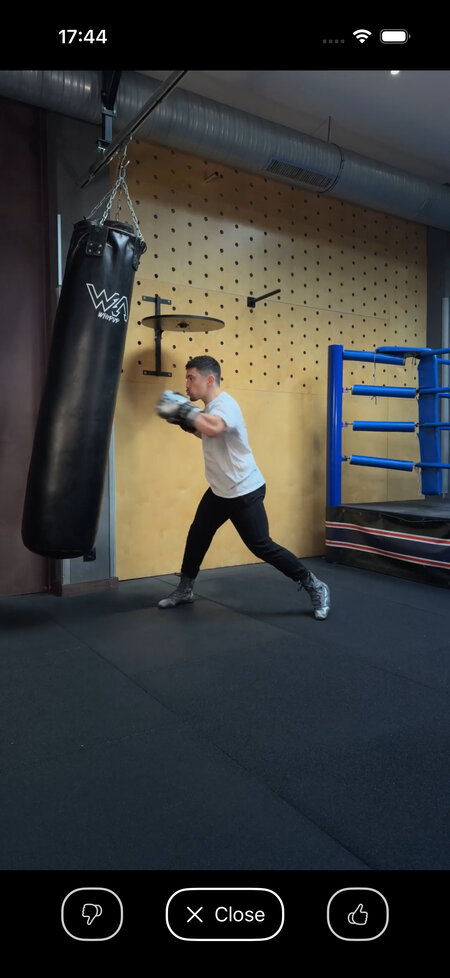
A bag changes what a boxing app needs to do. You don’t need much guidance on the shape of a punch anymore, you need someone calling combinations at a pace you wouldn’t set for yourself while your arms are burning.
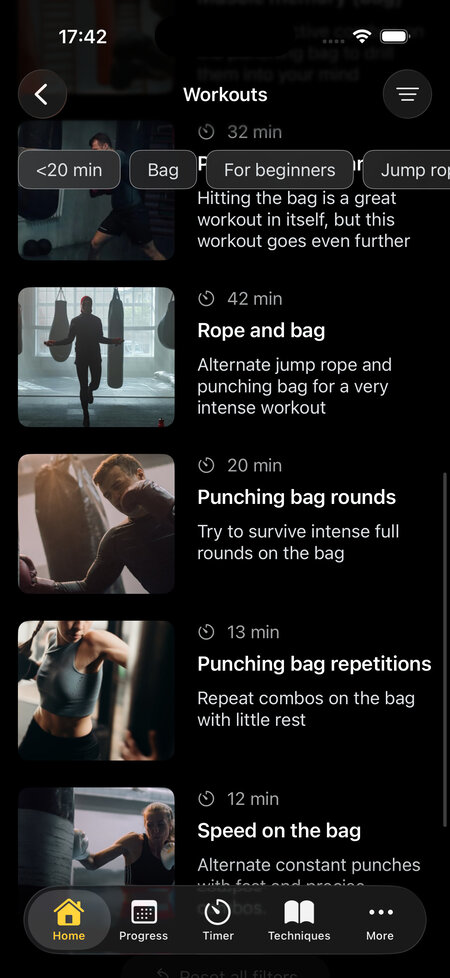
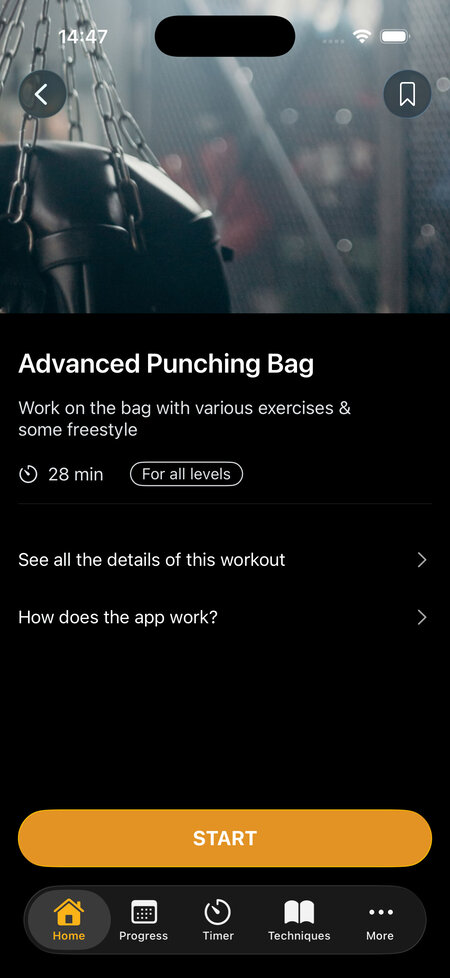
There are many bag exercises in the app, and they pull in different directions on purpose. Some rounds keep you flat out, alternating fast punches with power shots until your shoulders give up. Others park you on a single combo for three minutes so it stops being something you think about. A few make you slip or roll before you’re allowed to answer, or make you hit hard and get straight back out of range.
The same goes for the workouts built from them: short and brutal, long and technical, cardio focused, defense focused. Pick one according to what you have left in the tank that day, or take the Hitting the Bag program and let it decide for eight days. We covered the starting point in more detail in getting into heavy bag training with the app.
What no app can do is tell you whether the shot landed with anything behind it. The bag does that, which is why it’s still worth the money and the wall anchor.
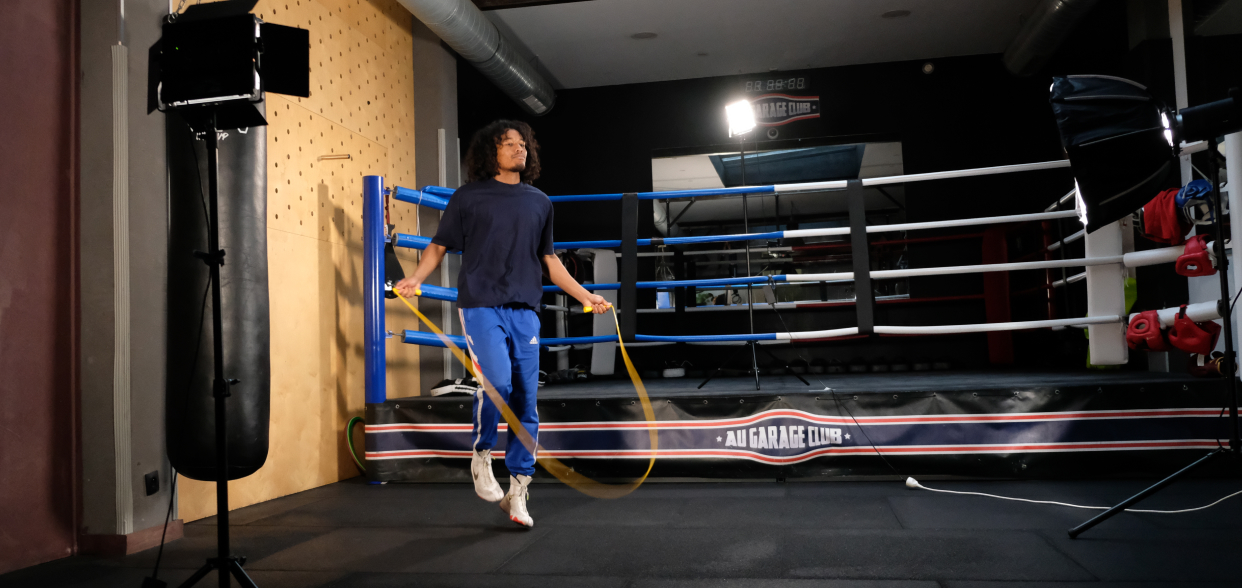
If you have a jump rope
A $10 rope buys you the cardio side of boxing, and it’s the piece of equipment most apps handle badly. Usually you get a timer, the word “skip”, and nothing else.
Rope work has its own level setting, separate from your boxing level, because being able to hold a stance says nothing about whether you can do a criss cross. Set it low and the rounds stay on a plain bounce for as long as you need. Set it high and the app starts asking for side swings and double unders while you’re already out of breath. The sessions themselves run the range you’d expect, from a few gentle minutes to HIIT rounds that will have you sitting on the floor afterwards.
The one worth knowing about if you own both a rope and a bag is Rope and bag, which alternates rope rounds with bag rounds. Skipping keeps your heart rate up between the hard efforts instead of letting it drop, and you go back to the bag with tired legs, which is roughly what round five of a fight feels like.
If you trip every four jumps, the Learn to jump rope program handles sizing the rope, the basic bounce, the boxer skip, then adding boxing on top. We went through what’s in it in the jump rope program write-up, and if you haven’t bought one yet, how to choose a jump rope will stop you from overspending.
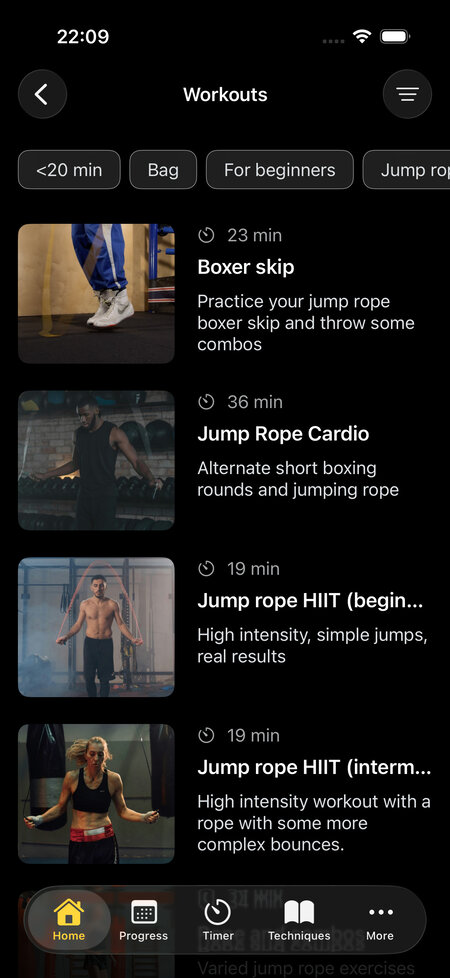
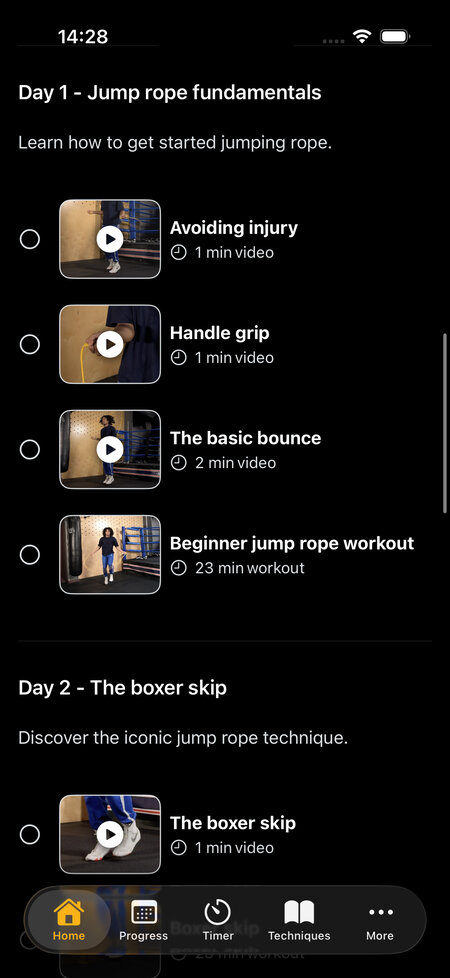
One thing people miss: you can also lay the rope on the floor and use it as a line or a circle for footwork. The app has exercises built around exactly that, so a rope covers two jobs for the price of one.
If you have a speed ladder
The ladder is the cheapest way to work on feet. Under $15, silent, rolls up into nothing. It’s also the newest section of the app.
Start with Speed Ladder 101 if you’ve never touched one. It runs five days and builds in the right order: the basic movements first, then drills, then punches on top of the drills, then full combos. That order matters more here than anywhere else in the app, because adding hands to footwork you haven’t nailed yet just gives you two things to be bad at.
Every movement comes with a tutorial video filmed with an amateur boxer rather than an animation, so you can look up something like the Ali Shuffle before a round or pause halfway through when a callout means nothing to you. There’s a ladder level setting too, kept separate from your boxing level for the same reason the rope has one.
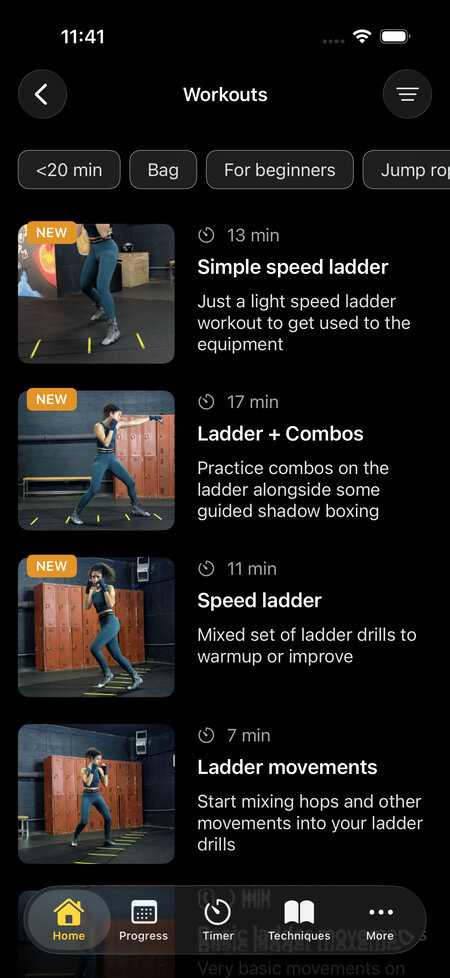
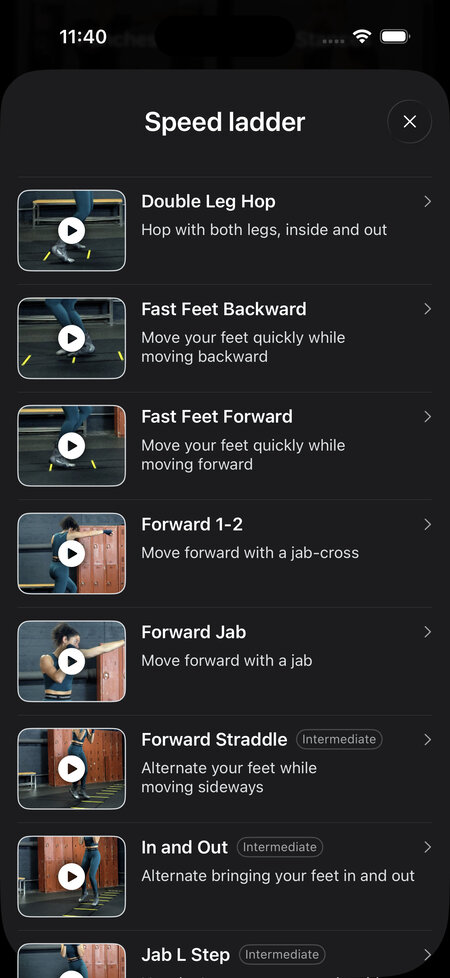
Ladder drills on their own are athletic training, not boxing. What makes them boxing is adding hands and keeping your guard up between rungs, which is the whole point of the app’s ladder drills. More on that in why the speed ladder belongs in your boxing training.
If you have nothing
This is the default case, and the one the app was built for in the first place. Every workout in it can be done in a living room with no gear, and the setup flow says so directly.
The exercises split roughly into two kinds. In freestyle rounds you decide what to do and the app just keeps time and occasionally throws a number at you. In guided rounds it tells you what comes next, combo by combo, which is what most people want when they’re staring at an empty living room with no idea what to do for three minutes. Between those two sit defensive rounds, footwork work, and bodyweight cardio dropped into the boxing rounds so a session leaves you as tired as one at a gym would.
Complete beginners should start with Boxing 101 instead of picking a workout. It goes stance, guard, one punch at a time, then the first combos, over a set of short days. Nobody learns a jab properly by being told to freestyle for twenty minutes on day one.
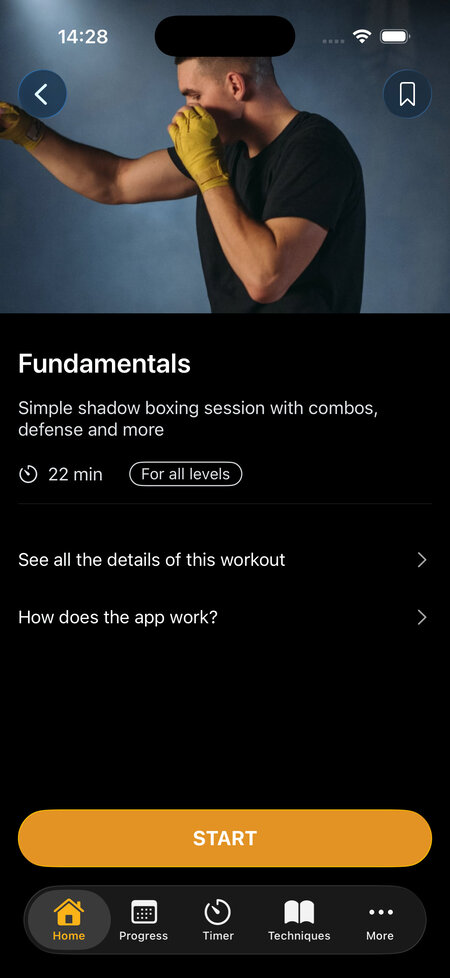
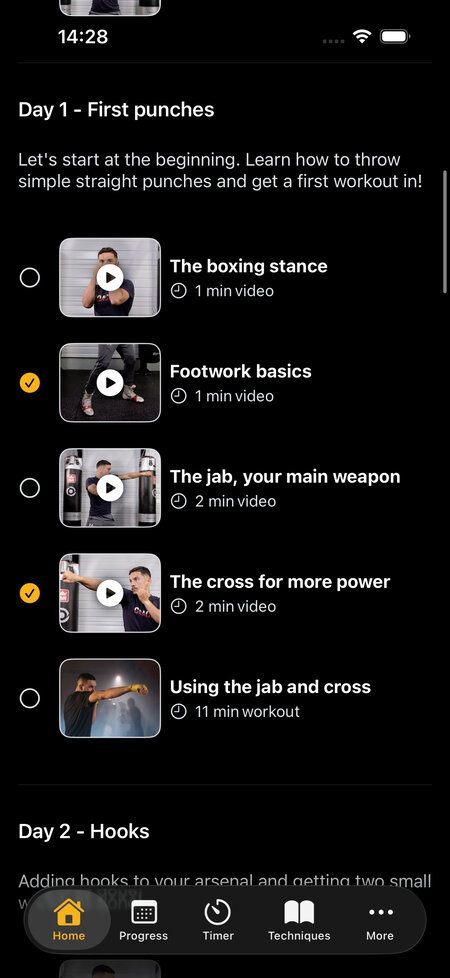
The limit is real: without contact you can drill technique and get very fit, but you won’t find out how hard you actually punch. That’s fine for months. It becomes the thing holding you back eventually, and shadow boxing versus heavy bag goes into where each one runs out.
If you have a gym
At a boxing gym you have bags, ropes, mirrors, floor space and usually a ring. The app’s job changes there: you’re not looking for a workout to follow, you’re looking for structure in the parts of the session nobody is coaching you through.
Three things do most of the work. The round timer is free, including from an Apple Watch, so you can use it for bag rounds or sparring without opening a workout at all. The front camera turns your phone into a mirror during shadow boxing rounds when the gym’s mirrors are taken. And the equipment filters pull up everything that fits whichever station you’re standing at.
The other thing it does at a gym is keep the record. Every session you do lands in the progress screen with rounds, time and calories, and you can log workouts you did outside the app too, so a lifting session or a class with a coach sits in the same history as your bag rounds. Streaks are built on a weekly target you set yourself, which is more useful than a raw total when you’re training around a gym schedule.
On iOS it’s plugged into Apple Health. Workouts get written there when you finish them, your heart rate shows on screen during rounds if you’re wearing a watch, and calories are calculated properly rather than guessed. If you already track your lifting or your running in Health, the boxing sits alongside it instead of in a separate silo.
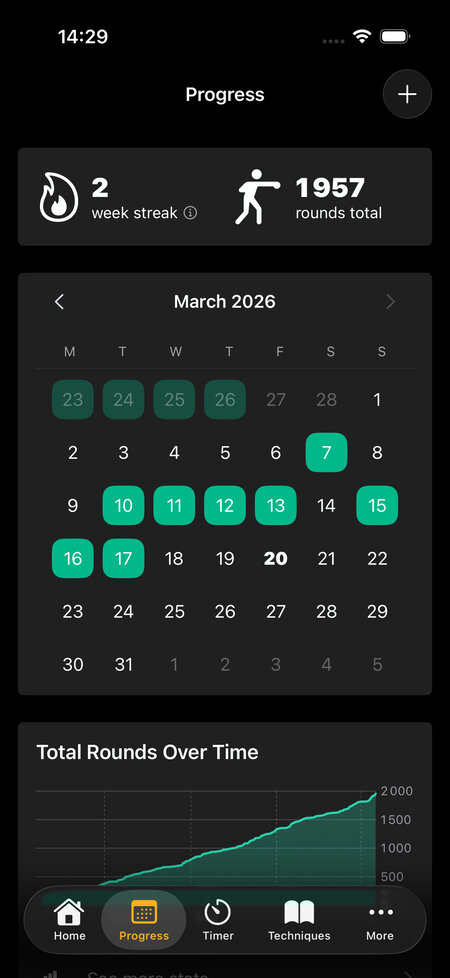
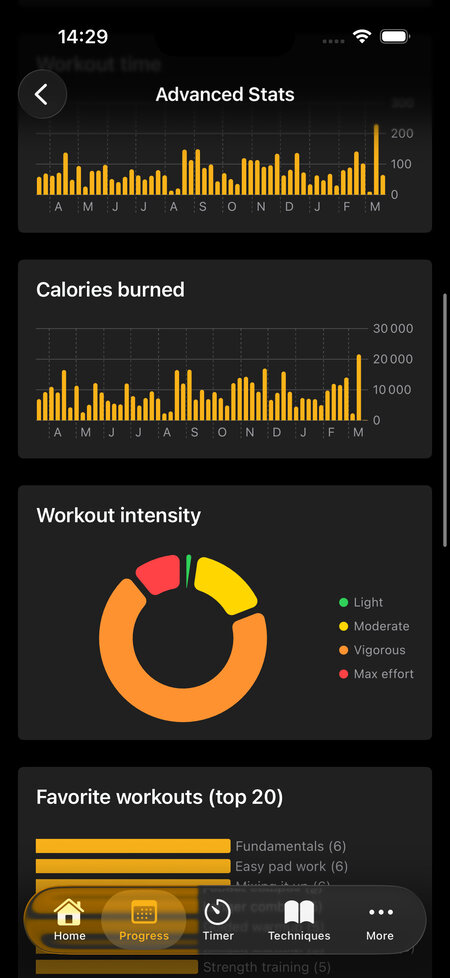
What the app won’t do at a commercial gym is program your lifting. The strength content in it is bodyweight only and designed to sit inside boxing rounds, not to replace a squat session. Use it for the boxing half, keep your own plan for the weights, and log both in the same place.
Telling the app what you own
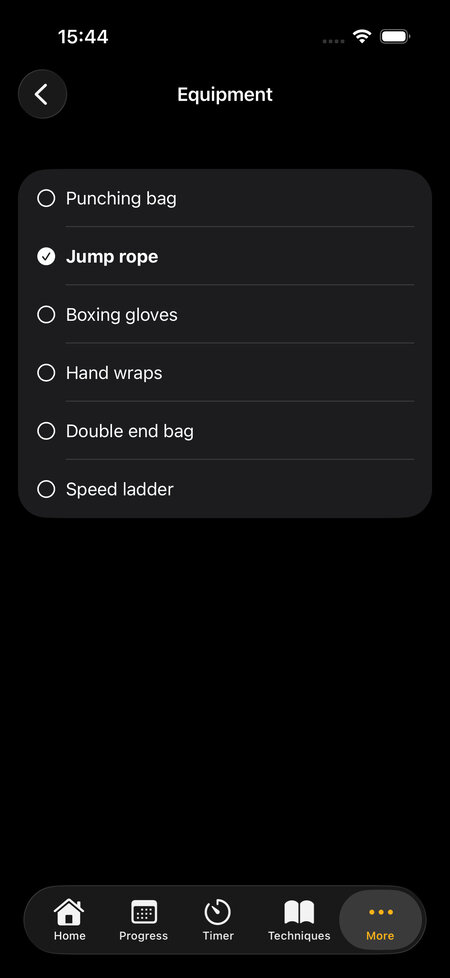
You tick off what you own once during setup, or later in settings, right down to whether you have hand wraps. After that the app stops suggesting sessions you can’t do and starts recommending the ones you can. Picking nothing at all is a valid answer and doesn’t lock anything away.
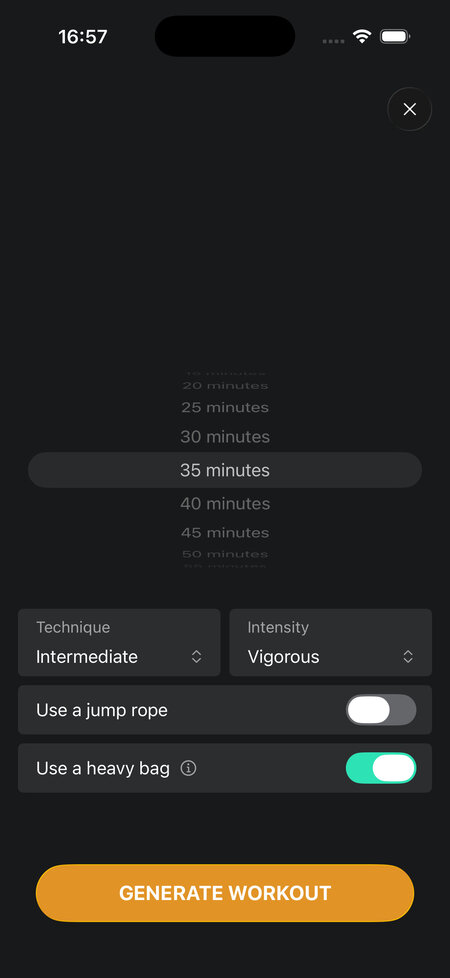
Day to day there are filters on the workout list for the bag, the rope and the ladder, and Quick Start has toggles for whether you want to use the bag or the rope right now. In a hotel room with nothing? Turn both off and get shadow boxing. Home with the ladder rolled out? Filter for it.
If you’re deciding what to buy rather than what to use with what you already have, we compared the three main options in boxing at home with a bag, a rope and a ladder. The rope costs the least and ends up getting used the most.
The app is free to download and a lot of it works without paying, whatever happens to be in the room with you.