
Why the Speed Ladder Belongs in Your Boxing Training
A speed ladder is a strip of flat rungs you roll out on the floor and step through. It costs less than a decent pair of hand wraps, it folds into a bag, and it will have you sweating in under two minutes. It also happens to train the exact thing most boxers neglect: what their feet do while their hands are busy. We just shipped a full set of ladder content in the Shadow Boxing App, so this feels like the right moment to explain why we bothered.
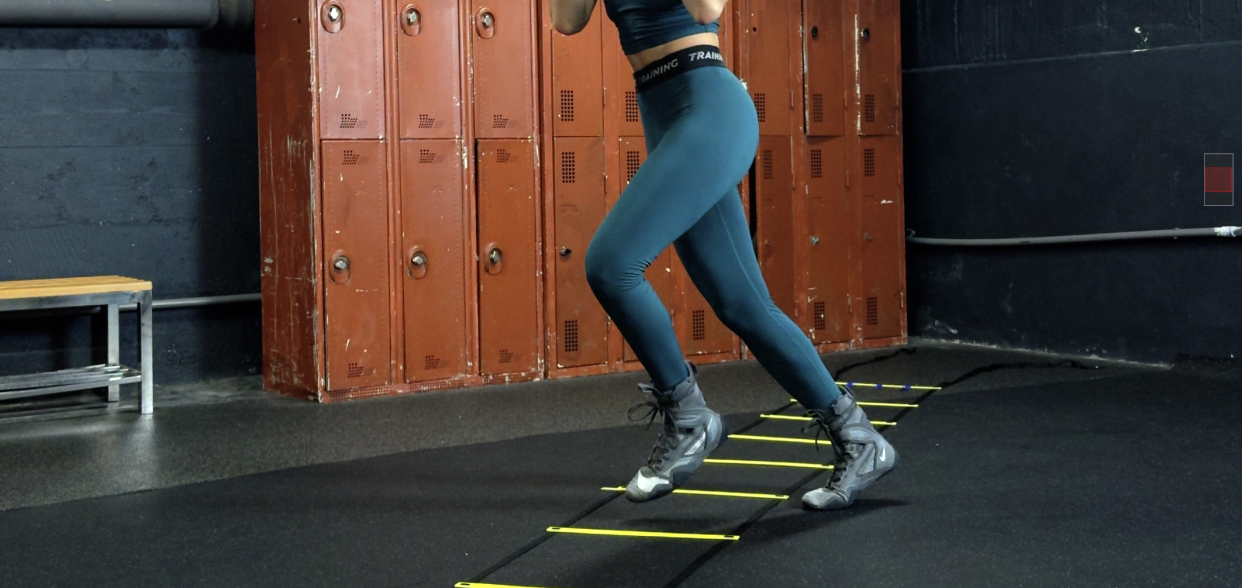
Speed ladder, agility ladder, same thing
If you’ve shopped for one, you’ve seen both names on nearly identical products. “Agility ladder” and “speed ladder” are the same piece of equipment: flat rungs, usually adjustable, laid on the ground. Some brands add “footwork ladder” or “training ladder” to the pile. There is no meaningful difference between them, so buy on price and build quality rather than on the label.
You don’t need an expensive one. Under $15 gets you something perfectly usable, though you may have to space the rungs by hand. Spending more mostly buys you sturdier rungs that stay flat. There is no reason to go past $30. You could even chalk one on the ground, which tells you how little the equipment itself matters compared to what you do on it.
It fixes footwork under fatigue
Boxing footwork breaks down when you’re tired. The steps get wide, the feet cross, the weight ends up on the heels. On a ladder you find out immediately, because a sloppy step catches a rung and you feel it.
The basic movements sound almost too simple: lead foot inside, rear foot outside, moving forward, backward, left, and right. Do them for a full round at speed and they stop being simple. From there it opens up into hops, straddles, the Cossack, the pendulum step, and the Ali Shuffle, which is the closest thing on the ladder to something you’d actually use in a fight.
The ladder also forces short, precise steps. That’s the opposite of what most people do when they get excited and start lunging around. If you’ve read our piece on the L Step, the ladder is a good place to drill that kind of angle change with a fixed reference on the floor telling you whether your feet went where you thought they did.
The cardio is brutal and it doesn’t feel like cardio
Fast feet on a ladder spikes your heart rate faster than almost anything else you can do standing in one spot. Thirty seconds of Fast Feet Forward and you’re breathing hard. It’s the same category of conditioning as skipping rope, which we’ve written about at length, but it hits differently because the effort is short, sharp, and repeated.
The part that keeps people coming back is that it’s fun. Ladder drills feel like a game. You’re trying to beat the rung, keep the rhythm, not trip. Compare that to jogging for 40 minutes and it’s not close. When training is fun you do more of it, and that matters more than any individual drill.
Where it becomes boxing and not just footwork
Stepping through rungs is athletic training. It turns into boxing training the moment you add hands. That’s the half most people skip.
The app pairs ladder movement with punches: Forward Jab, Forward 1-2, Backward Jab, Continuous Forward 1-2, Step In 1-2 where you step in, punch, and step back out. Then it layers in defense, so you get combos like 1 - Block Right, 1 - 2 - Block Left - Block Right, and 1-2-3 Roll Left, all while moving down the ladder. Jab L Step and Jab-Cross L Step put a real angle change at the end of the combination.
That’s the point where your feet and hands have to agree with each other, and it’s usually where people discover they can only punch properly while standing still.
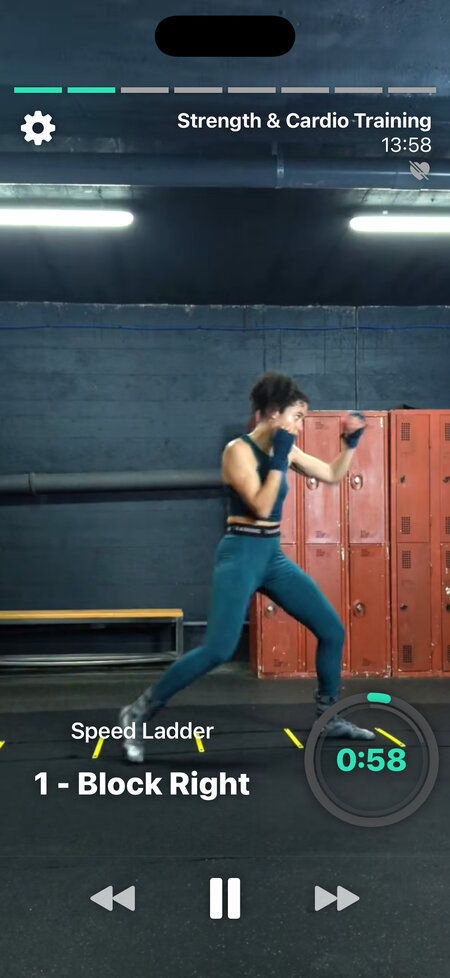
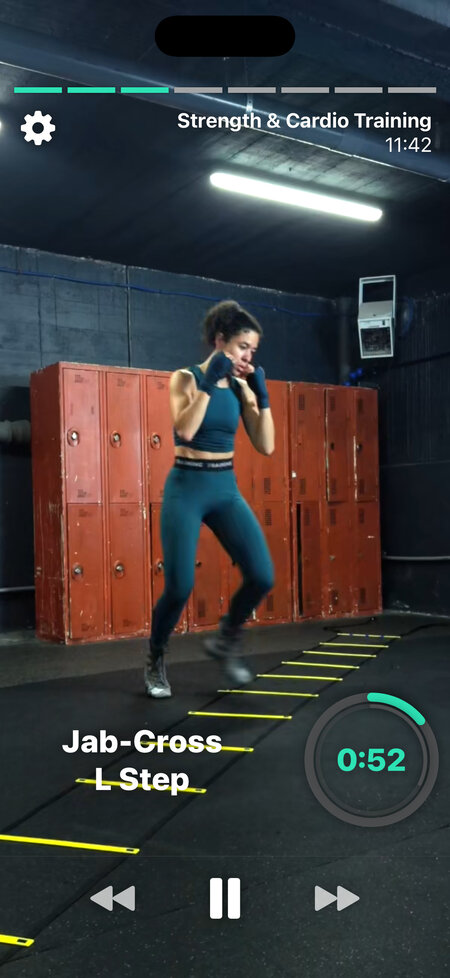
Speed Ladder 101, the new program
If you’ve never used a ladder, the new Speed Ladder 101 program is where to start. It runs over five days and each day introduces a few techniques with video, then puts them straight into a short workout:
- Day 1 - Movements: moving smoothly on the ladder before any drills
- Day 2 - First Drills: the first proper agility drills
- Day 3 - Adding Punches: synchronizing footwork with your hands
- Day 4 - More Advanced Drills: the ones that actually tax your cardio
- Day 5 - More Advanced Combos: full boxing combinations on the ladder
There’s also a short guide inside the program on picking a ladder, so you don’t have to guess in the store.
We built all of this with Bere, an amateur boxer and our resident ladder specialist, the same way we build everything else. If you’re curious about how that works, we wrote about working with real coaches and athletes rather than inventing drills at a desk.
New workouts and exercises
Alongside the program, there’s a set of standalone ladder workouts you can drop into any week:
- Basic ladder movements, very basic movements to get started
- Ladder movements, 7 minutes mixing hops and other movements into your drills
- Simple speed ladder, 13 minutes of light work to get used to the equipment
- Speed ladder, 11 minutes of mixed drills to warm up or improve
- Ladder + Combos, 17 minutes of combos on the ladder alongside guided shadow boxing
Every individual movement also lives in the technique catalogue with its own tutorial video, so you can look up the Forward Straddle or the Pendulum Step before a workout instead of guessing halfway through a round.
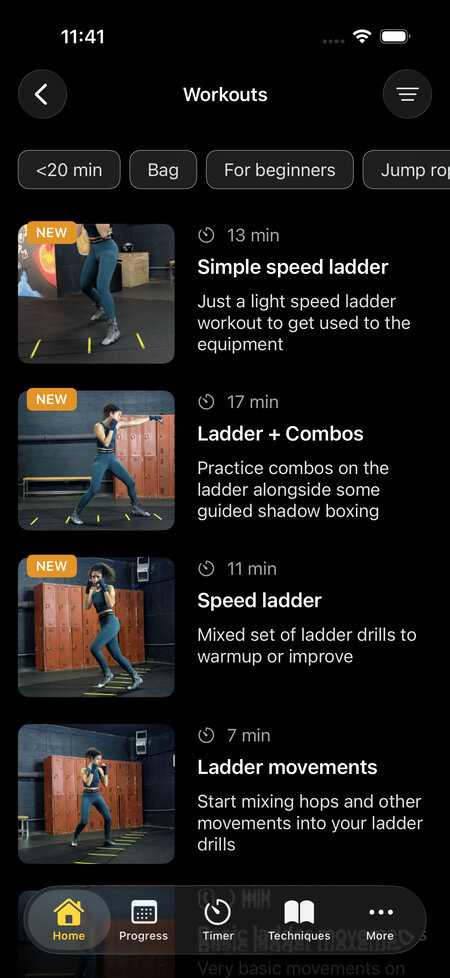
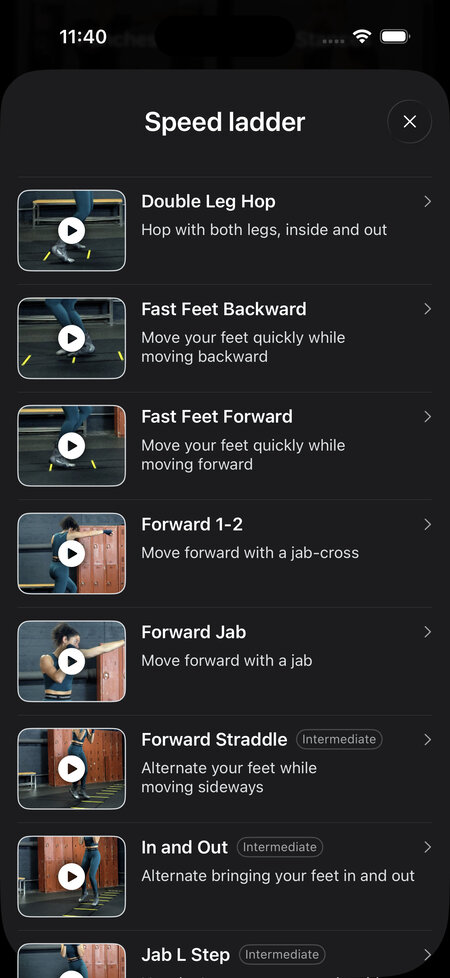
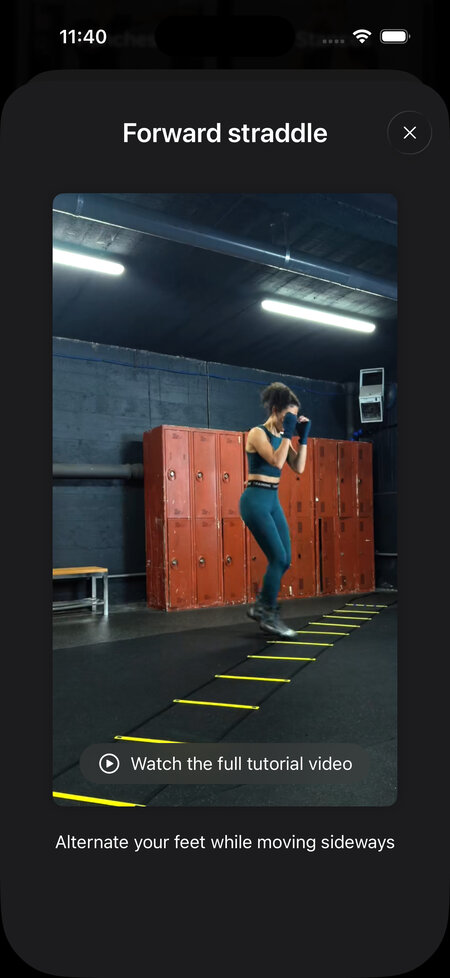
The app asks for your ladder level during setup, from “I don’t know how to use the ladder” up to advanced, and adjusts the drills it gives you. You can also filter the workout list by “With a speed ladder” when you have one rolled out and want to use it, or ignore ladder work entirely if you don’t own one. Nothing else in the app changes.
Worth the $15
For the money and the space it takes up, a speed ladder is one of the better purchases in boxing. It’s cheap, it packs down small, it works outside, and it trains footwork and cardio at the same time. If you already own one and it’s been sitting in a closet because you ran out of ideas after “fast feet”, the new program should fix that.