
The L Step: How to Use This Boxing Footwork Move
The L Step is one of those footwork moves that looks like nothing on video and feels like a magic trick when someone hits you with it. You throw, they are not where they were, and now they are punching at your ear. The shape your feet trace on the floor looks like the letter L, which is where the name comes from.
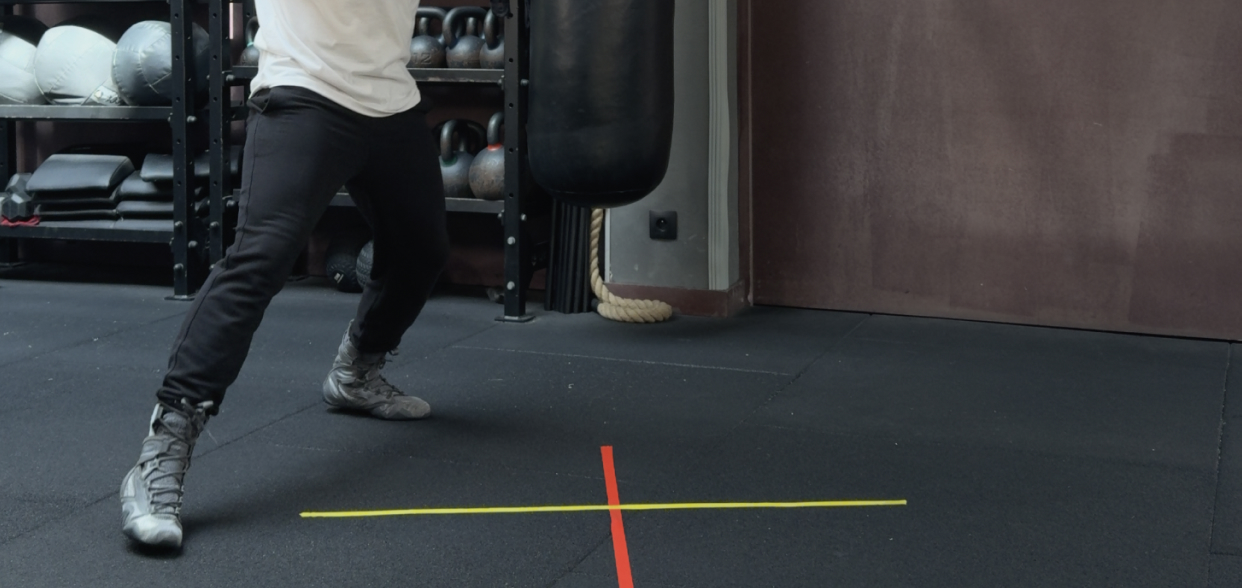
It is a defensive move first, but the whole point is that the angle you finish on opens up a counter. Step out of the way, throw back from somewhere your opponent did not expect. That is the trade you are practicing.
How to do the L Step
Start in your normal stance. If you are orthodox, your lead foot is forward and slightly off centre, your back foot is angled out behind you.
The move has two parts:
- Step your back foot to the side at about a 90 degree angle. This is the long stroke of the L. You are moving laterally, away from the punch coming down the middle.
- Bring your lead foot back in line so you are back in your stance, just facing a new direction. This is the short stroke at the bottom of the L.
When you put it together, your back foot draws the long side and your lead foot completes the corner. You end up balanced, in stance, and angled off your opponent’s centre line.
A few things to watch:
- Keep your hands up the whole time. The temptation is to drop the rear hand as you step, which is the exact moment a hook would land.
- Do not cross your feet. If your lead foot has to swing around the back foot, you are off balance for a beat. Step the back foot first, then reset.
- Stay low. Standing up tall as you step makes you slow and visible. Keep your knees bent so the move is short and sharp.
We filmed a short tutorial that walks through the footwork from a few angles: watch the L Step video on YouTube. Seeing the floor pattern from above makes the shape obvious in a way that text never quite does.
Where it shows up in the app
The L Step is in the technique catalogue inside the Shadow Boxing App. The catalogue page has the same tutorial video, plus a written breakdown if you want to read through the steps while you practice in front of a mirror. Footwork moves are easier to learn when you can see the move, read the cues, and try it slowly before adding punches.
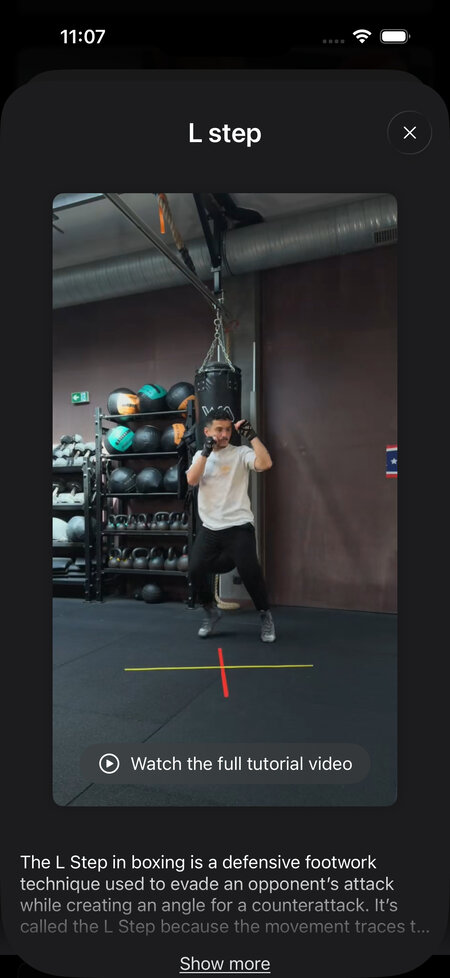
If you want a wider tour of what else lives in there, the technique catalogue overview covers punches, defenses, and footwork in one place.
Drilling the L Step in a combo
Knowing the move is the easy part. Building the reflex to use it in the middle of a combination is what takes work. The combo creator lets you write your own sequences and drop the L Step in wherever you want.
A good starting combo is 1 - 2 - L Step. Throw the jab and cross, then step off the line and reset. From there, you can layer on more punches once your footwork is clean, for example 1 - 2 - L Step - 2, which sends a cross from the new angle.
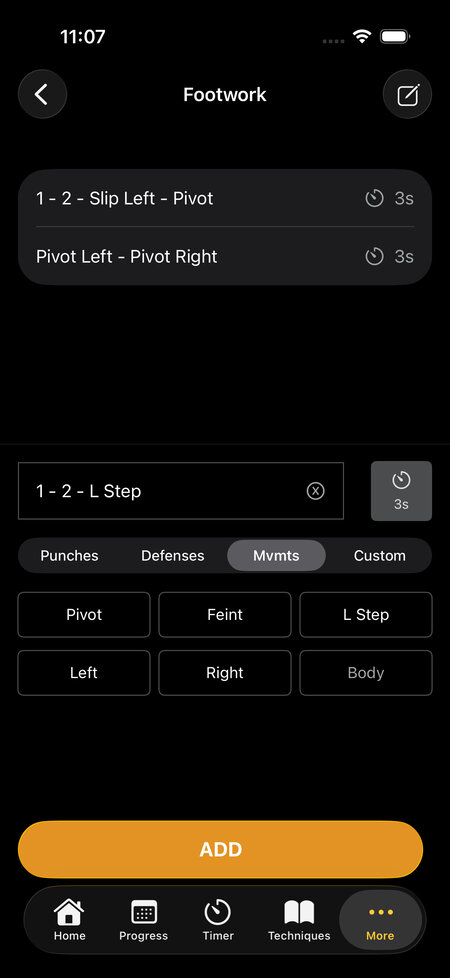
The combo creator sits in the same builder as the rest of the custom workout flow, so once you write a set of L Step combinations you can save them as an exercise and run them as part of any session.
When to use it
The L Step is most useful against a boxer who walks you down. If someone keeps marching forward in a straight line, stepping off to the side leaves them looking at empty space, and the angle you finish on is wide open for a counter. The counter punching idea applies directly here: the cleanest shots come right after the other person misses.
It also breaks up your own rhythm. If you have been throwing combos and resetting in place, an L Step in the middle of a sequence changes the picture for whoever is in front of you. Pair it with feints or head movement and you are much harder to read.
Practicing it on your own
For shadow boxing, set a round timer for two or three minutes and pick one focus. Round one: just the footwork, no punches, getting the L shape clean. Round two: add a 1 - 2 before the step. Round three: throw a counter from the new angle. Slow is fine. The shape and balance matter more than speed at this stage.
If you have a bag, the same drill works. Step off the line after a combo and immediately come back with a single punch from the angle. The bag does not move, which is a limitation, but you can still practice the footwork mechanics and the timing of the counter.