
Boxing at Home: Punching Bag, Jump Rope and Speed Ladder
You can train boxing at home with nothing at all, and plenty of people do. Shadow boxing in a living room is still the backbone of what we build. But if you want to add equipment, there are three things worth owning: a punching bag, a jump rope, and a speed ladder. Together they cost less than two months of gym membership, they fit in a corner, and each one covers something the other two can’t.

The punching bag: contact and power
Shadow boxing teaches you the shape of a punch. The bag tells you whether it lands with anything behind it. That feedback is hard to fake. You’ll find out very quickly if you’re arm-punching, if your wrist collapses on a hook, or if your feet aren’t under you when you throw the cross.
It’s also the only home equipment that lets you hit something at full power. Hooks and uppercuts in particular are difficult to judge in the air; on the bag you feel the difference between a shot that connects properly and one that slides off.
The downsides are real. A bag is the most expensive of the three, it needs a wall or ceiling that can take it, and it’s loud. If you rent an apartment with neighbours below, that alone may decide it for you. A freestanding bag solves the mounting problem but takes floor space and moves around when you hit it hard.
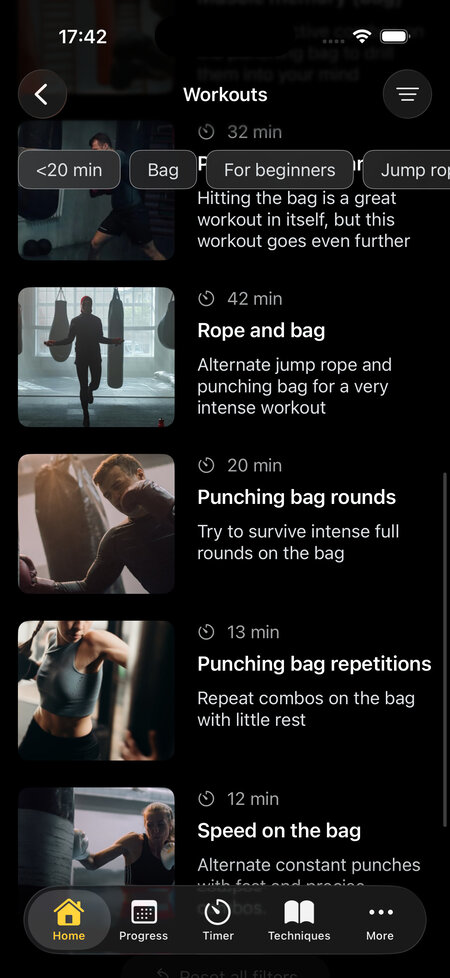
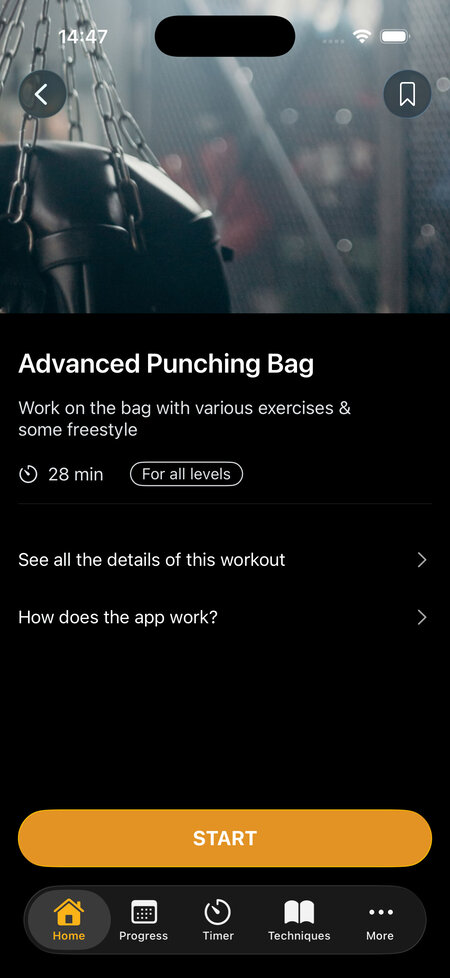
The Shadow Boxing App has a full set of bag exercises, and they’re built around different problems rather than being the same round with a different name. One will hold you on a single combination for three minutes until it stops needing thought. Another makes you slip or roll before you’re allowed to answer, so you’re not just standing in front of the bag hitting it. Others are pure output, alternating fast punches with power shots until your shoulders complain.
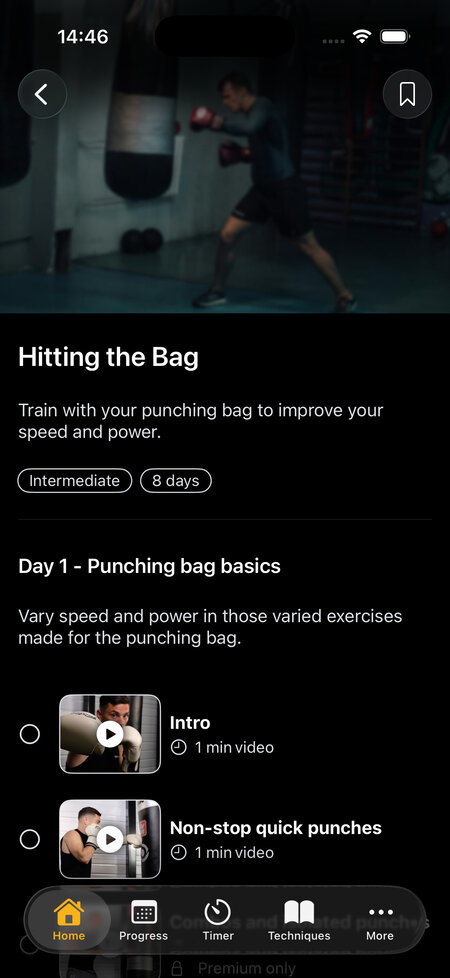
If you’d rather not choose, the Hitting the Bag program walks you through eight days of it. We wrote a longer piece on starting heavy bag training with the app if that’s the part you care about most.
The jump rope: cardio and rhythm
A rope costs about $10 and does more for your boxing fitness than any other purchase at that price. It builds the specific kind of conditioning boxing asks for: staying light, staying relaxed, keeping a rhythm while your heart rate is high. Rounds on the rope also teach your calves and feet to absorb repeated impact, which is exactly what three minutes of moving in a stance does to you.
It’s quieter than a bag, it packs into a jacket pocket, and it works outdoors. If you only ever buy one thing, buy this. We compared it against jogging in jump rope vs running for boxing cardio, and the short version is that the rope wins on skill transfer while running wins on pure volume.
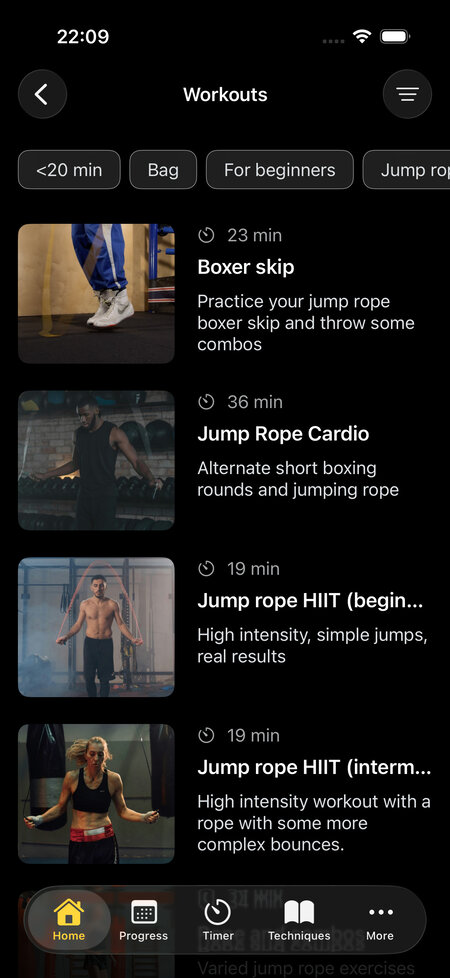
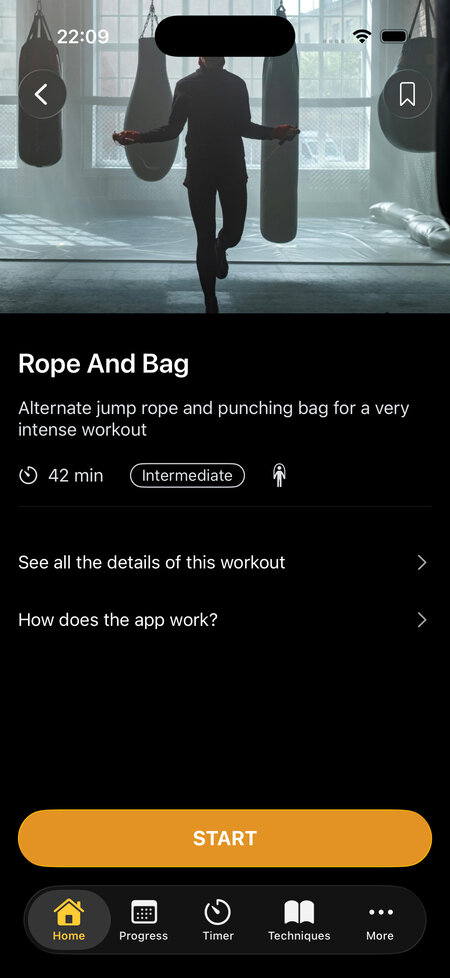
Beginners usually give up in the first week because they trip constantly, which is why the app has a Learn to Jump Rope program: rope sizing, the basic bounce, the boxer skip, then adding boxing to it over six days. After that the sessions run from a gentle few minutes up to HIIT rounds, with your rope level kept separate from your boxing level so the app doesn’t ask for a criss cross before you can hold a bounce. If you haven’t bought one yet, we went through the options in how to choose a jump rope.
There’s a second use for the rope that most people never think of: lay it on the floor. The app has exercises where you make a line or a circle with the rope and use it as a marker for stepping in, stepping out, and moving around. No jumping involved, and it’s the cheapest footwork tool in existence.
The speed ladder: footwork and agility
The ladder is the newest addition on our side and the one people underestimate. It’s a strip of flat rungs you roll out on the floor, usually under $15, and it trains short precise steps under fatigue. Sloppy footwork gets caught by a rung immediately, so you can’t lie to yourself about it the way you can when you’re moving freely in the air.
It’s silent, it rolls up into nothing, and it works on any flat surface including a driveway or a park. For anyone who can’t have a bag at home, the ladder plus a rope covers a surprising amount of ground.
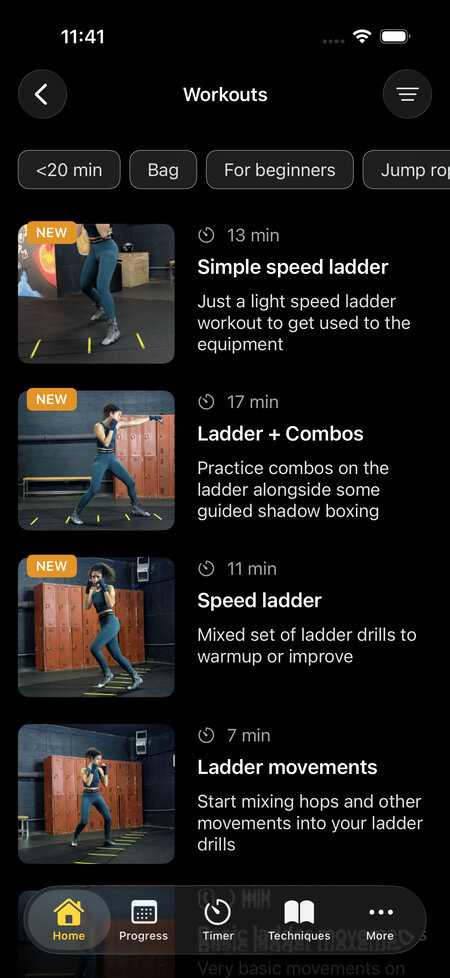
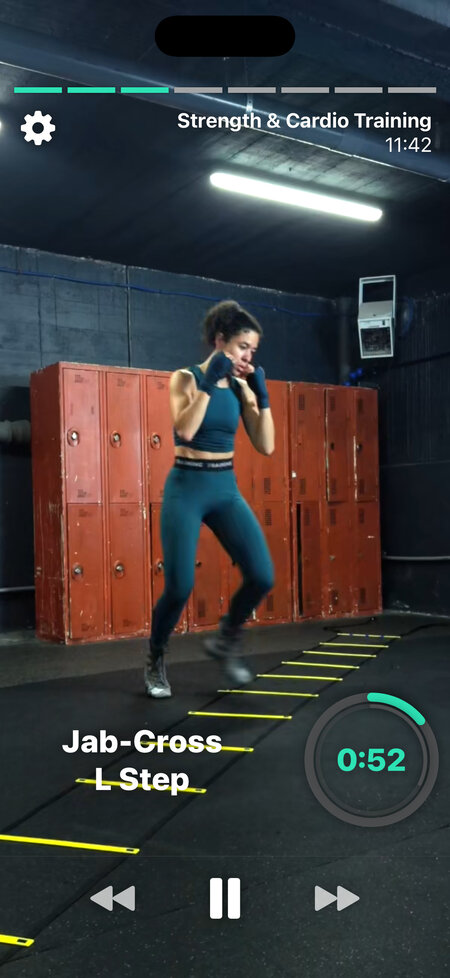
Where it becomes boxing rather than general athletic training is when you add hands. The app’s ladder drills have you stepping through the rungs and landing a jab at the end of it, or rolling under an imaginary counter before moving on, so the feet and the hands have to agree with each other. That’s harder than either half on its own, which is the point.
Start with the five-day Speed Ladder 101 program if the ladder is new to you, since it puts the movements in before the punches rather than the other way round. We explained the reasoning behind all of it in why the speed ladder belongs in your boxing training.
Why all three and not just one
They fail at different things, which is the point.
The bag gives you contact but keeps you planted in one spot. It’s easy to spend a whole bag round barely moving your feet. The ladder gives you feet but no contact, and no reason to keep your hands up unless you make one. The rope gives you conditioning and rhythm but neither contact nor real boxing footwork.
Stack them and the gaps close. A reasonable home week might look like rope for cardio, ladder for footwork, bag for power and combinations, and shadow boxing to tie it together. You don’t need to do all four every session; rotating them is enough, and it keeps training from getting stale, which matters more than most people admit.
Cost-wise, you can get all three for roughly the price of a decent pair of gloves if you shop carefully. The bag is the one that scales: a $60 hanging bag and a $200 one both work, and neither will be the limiting factor in your first year.
How the app handles equipment
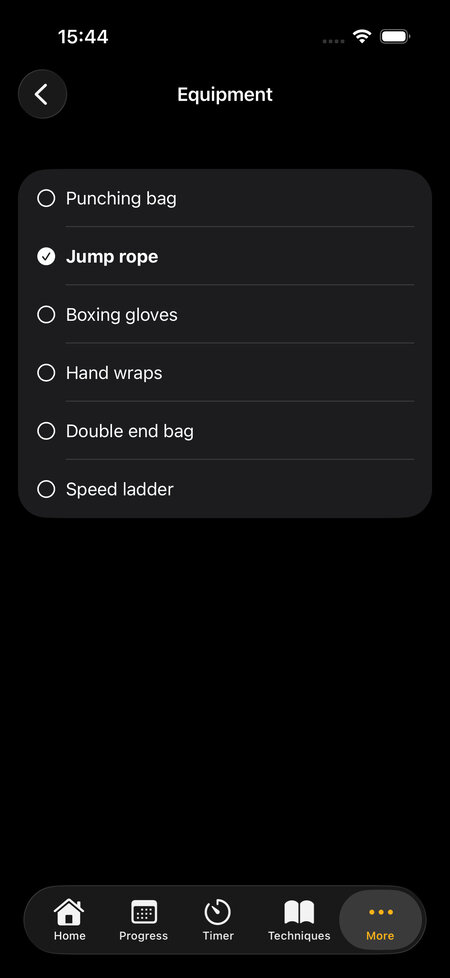
You tell the app what you own once, in the equipment settings, and it stops suggesting things you can’t do. There are also filters on the workout list: Optimised for the punching bag, With a jump rope, With a speed ladder. Rolled out the ladder tonight? Filter for it. Training in a hotel room with nothing? Filter it all out and get pure shadow boxing.
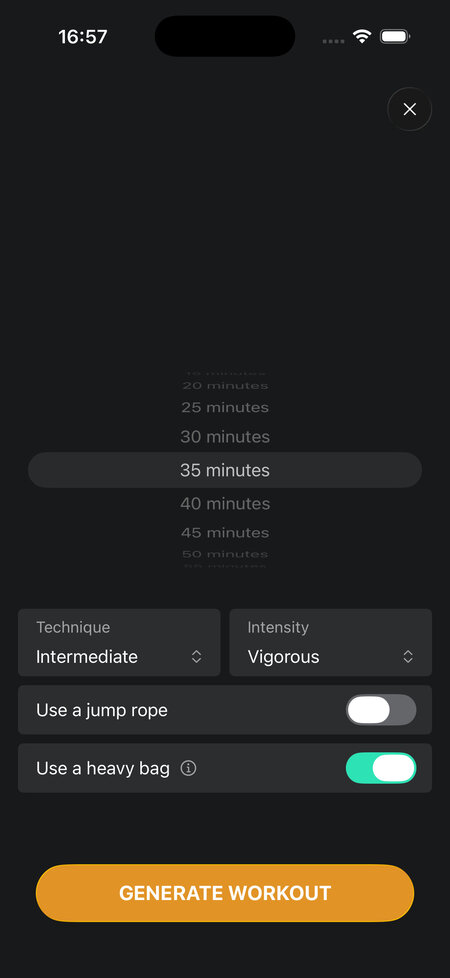
Quick Start has toggles for the bag and the rope too, so a generated workout can be built around whatever is within reach at that moment. The app also asks for your jump rope level and your ladder level separately from your boxing level, because being a decent boxer says nothing about whether you can do a criss cross with a rope.
If you’re starting from zero, buy the rope first, then the ladder, then the bag when you have the space and a wall that can take it. All three work with the app, and none of them require a gym.