
How to Choose the Right Jump Rope for Boxing
We have covered jump rope from a lot of angles on this blog: why it belongs in boxing, how to learn it, what to drill once you can. The one thing we never wrote about is the rope itself. That is a real gap, because the wrong rope makes everything harder, and a beginner fighting a rope that is too long and tangly usually blames themselves when the gear is the actual problem. Here is how to pick one for boxing.
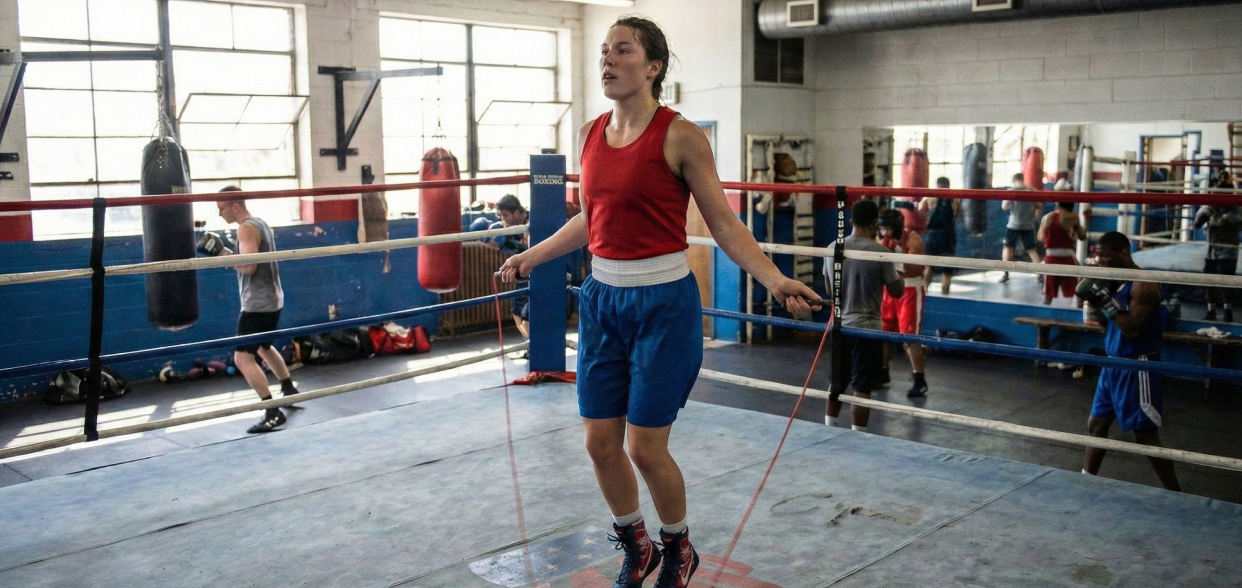
Sizing matters more than anything else
The most common mistake is using a rope that is the wrong length. Too long and it hits the floor early and slaps your shins; too short and you clip your head and shoulders. Either way you trip constantly and assume you are just bad at skipping.
To size a rope, stand on the middle of it with one foot and pull the handles straight up. Where the tops of the handles land tells you the fit:
- Around your armpits is a good starting length while you are learning.
- Between your chest and shoulders suits most boxing footwork.
- Lower, near the bottom of your chest, is for fast, tight skipping once you are comfortable.
Most decent ropes are adjustable, so buy one slightly long and shorten it to taste. If you want a number to start from, a 9 ft rope fits most adults between about 5’4” and 5’10”, going up roughly a foot for every few inches of height above that.
The main types, and who they are for
PVC speed rope
A thin plastic cord on light handles. Cheap, fast, and the best all-round choice for boxing. It moves quickly enough for footwork and double unders without being fussy. If you are only going to buy one rope, buy this.
Beaded rope
Plastic segments threaded onto a cord. Heavier and slower, which actually helps beginners feel the rhythm, and the click on each pass gives you audible timing feedback. It also survives rough outdoor ground that would chew through a thin PVC cord.
Leather rope
The classic boxing-gym rope. Moderate weight, a satisfying feel through the swing, and quiet. It needs handles with decent bearings to spin well and does not love wet ground. At this point it is mostly a preference thing rather than a performance one.
Weighted or cable rope
Thicker cable, or a rope with weighted handles, built for conditioning rather than speed. It is a good second rope once you can already skip, since the extra load builds your shoulders and grip. It is a frustrating rope to learn on, so it should not be your first.
Handles and a couple of small details
The cord gets all the attention, but the handles decide how the rope feels in your hands. Look for a smooth swivel or ball bearings so the rope spins freely instead of binding up, and a grip that does not turn slippery once you start sweating. Foam can get slick; textured plastic or rubber holds up better. Adjustable length is worth insisting on so you can dial in the fit from the section above.
What you can skip
You do not need a “smart” rope with a built-in counter and its own app. Counting rounds and structuring sessions is something the Shadow Boxing App already does, and the sensors mostly add cost and another thing to break. You also do not need anything heavy or expensive to begin with. A basic adjustable PVC rope for a few dollars will take you a long way.
Match it to how you train
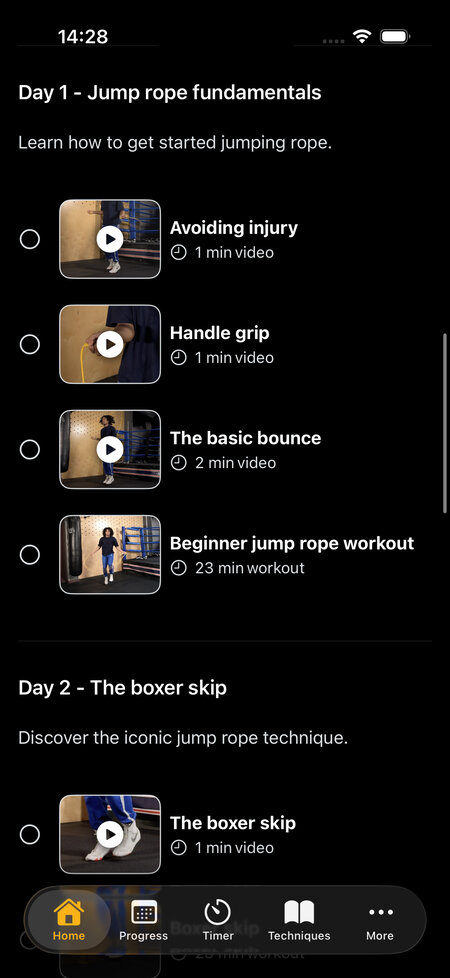
If you are brand new, start a touch long with a PVC or beaded rope and give yourself room while you find the timing. Our beginner jump rope guide covers the actual learning part, and the Learn to Jump Rope program in the app opens with a Gear Up video that walks you through sizing your rope before day one.
Once skipping feels natural, the rope gets out of the way and you can focus on the reasons it earns its place in boxing: footwork, timing, and conditioning you can do almost anywhere with a few feet of floor.