
Starting Heavy Bag Training With the App
You bought a heavy bag, or you joined a gym that has one, and now you want to actually use it. Starting on the bag is one of the more satisfying jumps you can make as a beginner, but it is also the one where bad habits stick fastest. Here is how to start properly with the Shadow Boxing App guiding the session.
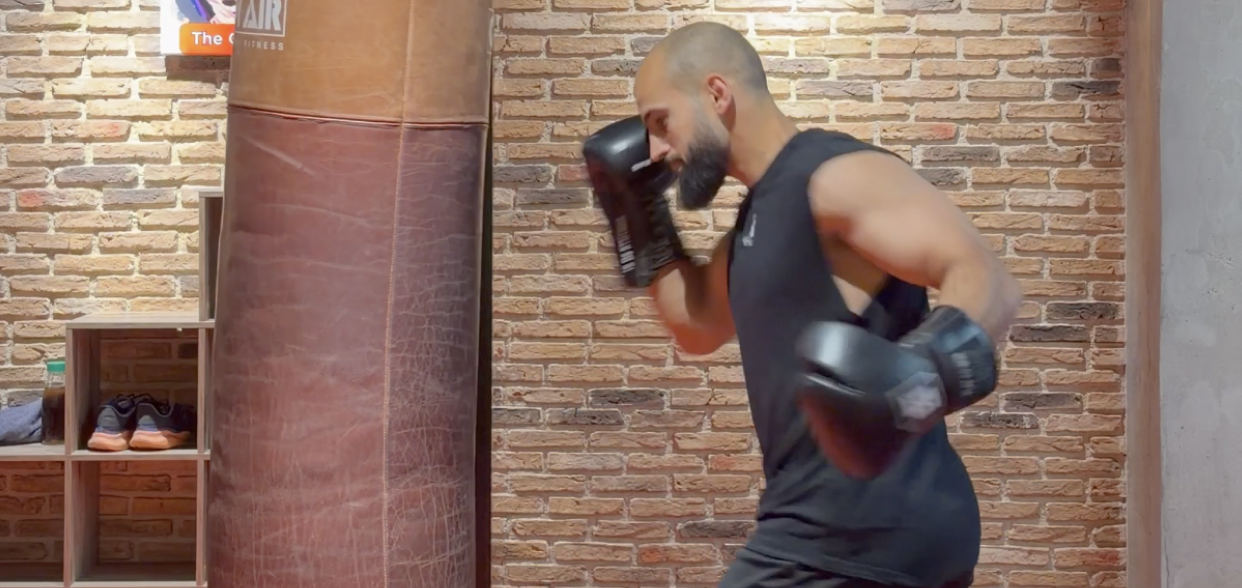
Warm up before you touch the bag
Cold shoulders and tight wrists are the main reason new bag trainers get hurt. Two minutes of shaking your arms out is not a warmup. You need your shoulders mobile, your wrists loose, your hips ready to rotate, and your heart rate already raised before the first punch lands on the bag.
The app has a guided warmup built in, and most bag workouts open with one automatically. Arm rotations, hip circles, head mobility, some light shadow boxing, jumping jacks, all in five to ten minutes. If you want the detail on what changed and why this part of the app got a rebuild, the piece on the revamped guided warmup walks through it.
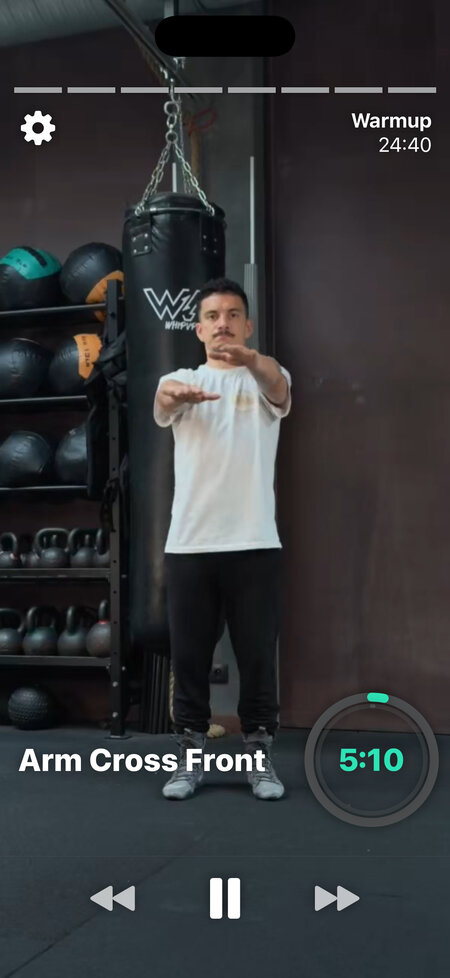
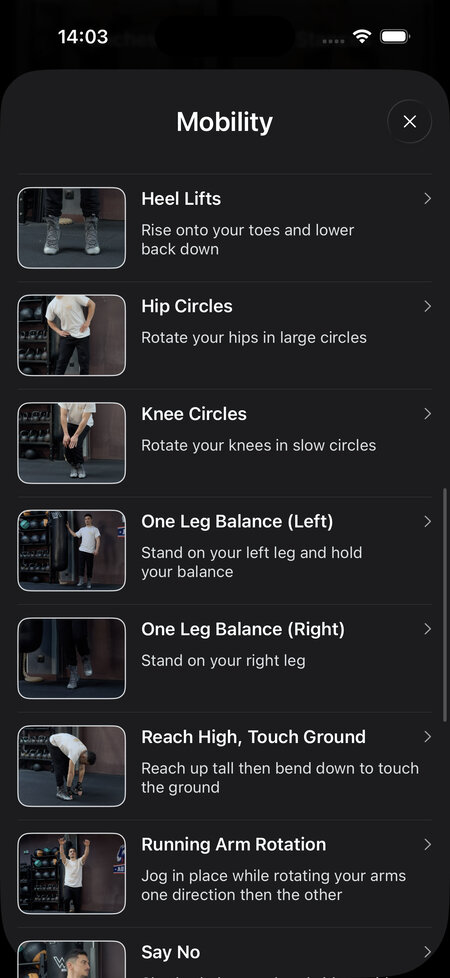
Skipping the warmup is the kind of thing you get away with at twenty and pay for at thirty-five. The mobility work that prevents the usual boxing injuries is worth reading once if you are training at home without a coach watching you.
Do not hit as hard as you can on day one
This is the first mistake almost every beginner makes. You stand in front of the bag, you make a fist, and you wind up. Twenty minutes later your wrist hurts, your shoulder is tight, and the back of your hand is bruised.
Hitting a heavy bag with full power before your tendons, wrists, and joints have adapted is the fastest way to injure yourself. The bag does not move much. The force has to go somewhere, and if your form is not solid yet, it goes straight into joints that are not ready for it.
Start at maybe sixty percent. Focus on landing the punch with a straight wrist and a tight fist at the moment of contact, not before. After a few weeks of consistent training, your wrists and forearms adapt, your form locks in, and you can start putting more weight behind your shots.
If you have not wrapped your hands before, do it. Hand wraps protect your knuckles and stabilise your wrist. Gloves on top of wraps protect everything else. Skipping either of these on a heavy bag is asking for trouble.
Mix power shots with speed work
Punching as hard as you can for a full round is not training, it is gassing yourself out in ninety seconds. Real bag work alternates between heavier shots that you commit to and quicker, lighter combinations that build rhythm and timing.
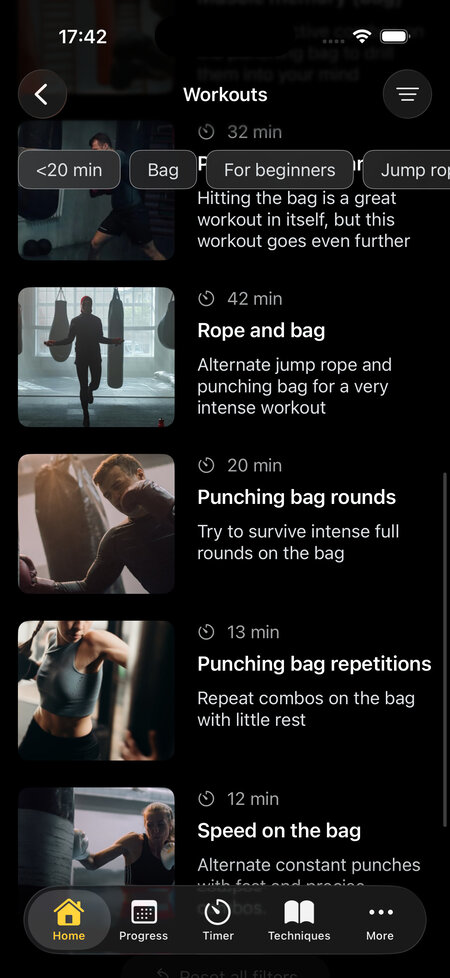
The app makes this easy because the bag workouts are already structured this way. The Speed On The Bag session, for example, alternates constant punches with fast, precise combos. The Advanced Punching Bag workout mixes various bag exercises with freestyle rounds. You are not standing there guessing what to do next; the round changes and so does the intent.
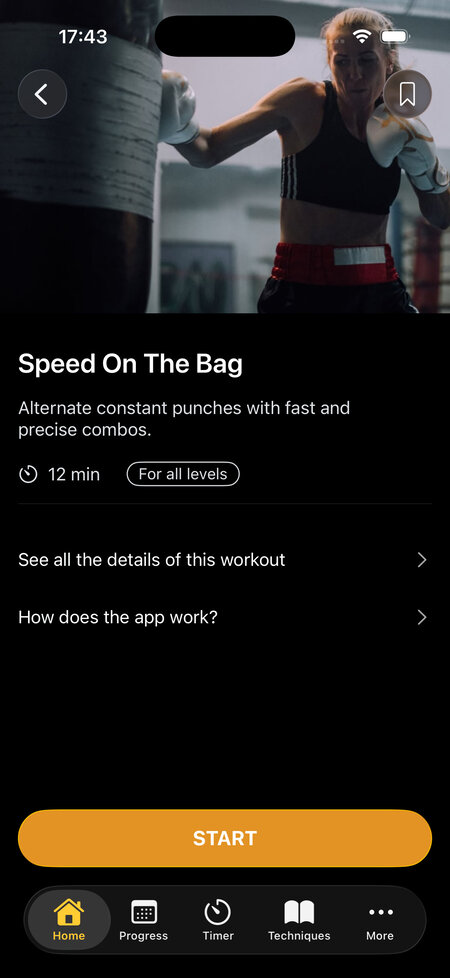
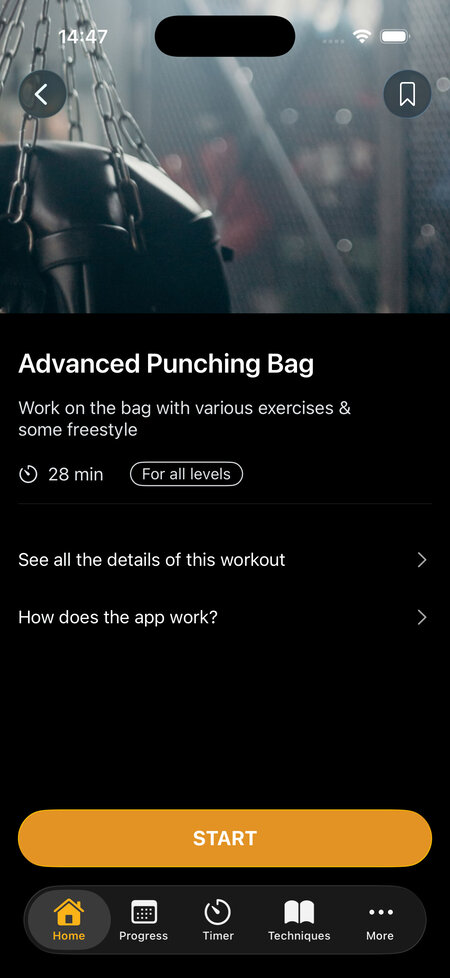
For beginners, the rule is simple: one round of power-focused work, one round of speed, repeat. Your hands learn to switch gears, your conditioning builds, and you avoid the trap of grinding the same heavy combo over and over until your shoulders give up.
Do not stand still
The biggest tell of a beginner on a bag is feet glued to the floor. Step in to throw, step out after. Pivot. Move around the bag rather than treating it as a wall to punch at. The bag is supposed to be a stand-in for an opponent, and opponents move.
This is where the app earns its keep. The bag workouts call out footwork along with the punches. You will hear cues for the pivot, the L step, stepping back, slipping, and rolling, woven into the combinations. A round might call out a 1-2-pivot-2 sequence, then a slip-right-cross, then a few rounds of freestyle where you are expected to keep moving.
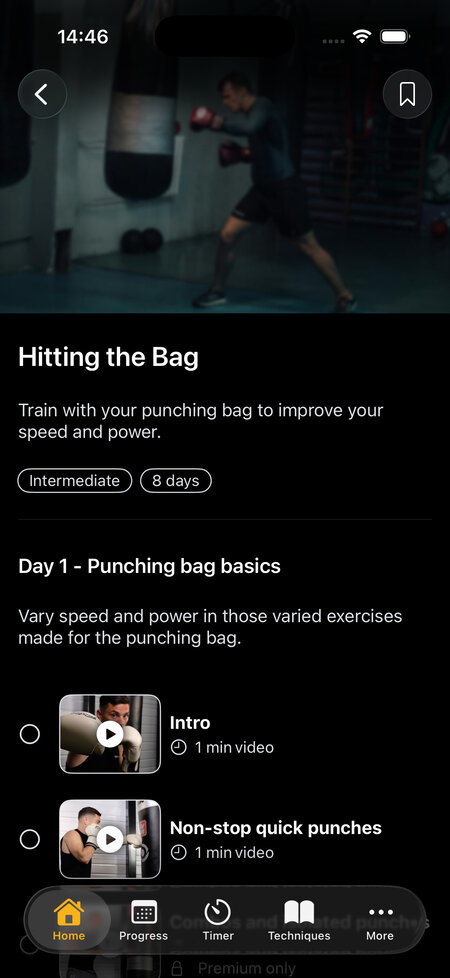
If you want a structured way in, the Hitting the Bag program walks you through eight days of bag training with progressively harder sessions. It assumes you are a beginner on the bag specifically, even if you have done shadow boxing before.
The app calls out more than just combos
A lot of bag apps are basically combo generators. They shout 1-2-3 at you, you hit the bag, repeat. The Shadow Boxing App does this, but the bag sessions also include defensive movements, footwork drills, and conditioning between rounds. A typical bag workout might call out punch combinations, then a slip and a counter, then a round of footwork practice around the bag, then a round of burpees or jumping jacks to keep the heart rate up.
This matters because the bag is not just for power. Used well, it is a tool for technique, defensive habits, footwork, and conditioning all at once. Sessions that only call out combos waste most of what the bag can do for you.
If you want a deeper take on this, the shadow boxing vs heavy bag piece covers what each tool is actually good for, and the older importance of heavy bag training article walks through the general benefits.
On iOS and Android
The bag workouts, the Hitting the Bag program, and the technique catalogue with all the footwork and defensive moves are on both iOS and Android. If you have been waiting for the bag workouts to make it to your phone, they are there. Quick start on Android also supports the heavy bag toggle, so you can generate a bag session in thirty seconds, the same way it has worked on iOS.
If you are setting up at home and not sure what bag to buy or where to hang it, that is a separate problem worth solving before you start training. Once the bag is up and your wraps are on, open the app, pick a beginner bag workout, and start light. Build from there.