The Importance of Heavy Bag Training
The heavy bag is the closest thing to hitting an opponent without one being there. Shadow boxing teaches you the shapes of punches and combinations, mitts teach you accuracy and timing with a coach, sparring teaches you everything else, but the bag is where you learn what happens when force leaves your fist and meets resistance. Every boxer who trains seriously spends time on one.
What the heavy bag actually trains
Punching power is the obvious one. You cannot build genuine force generation by punching air. The bag pushes back when you hit it, and your muscles, tendons, and joints adapt to that load over months and years. The shoulders, the hips, the legs, the core all learn to fire in sequence because the bag punishes any link that does not contribute.
Timing and distance come right after. A heavy bag swings. You learn to read its movement, step in when it is right, pull out when it is not. A static target teaches you nothing about distance. A moving target, even a predictable one, builds the spatial sense that translates to a real opponent.
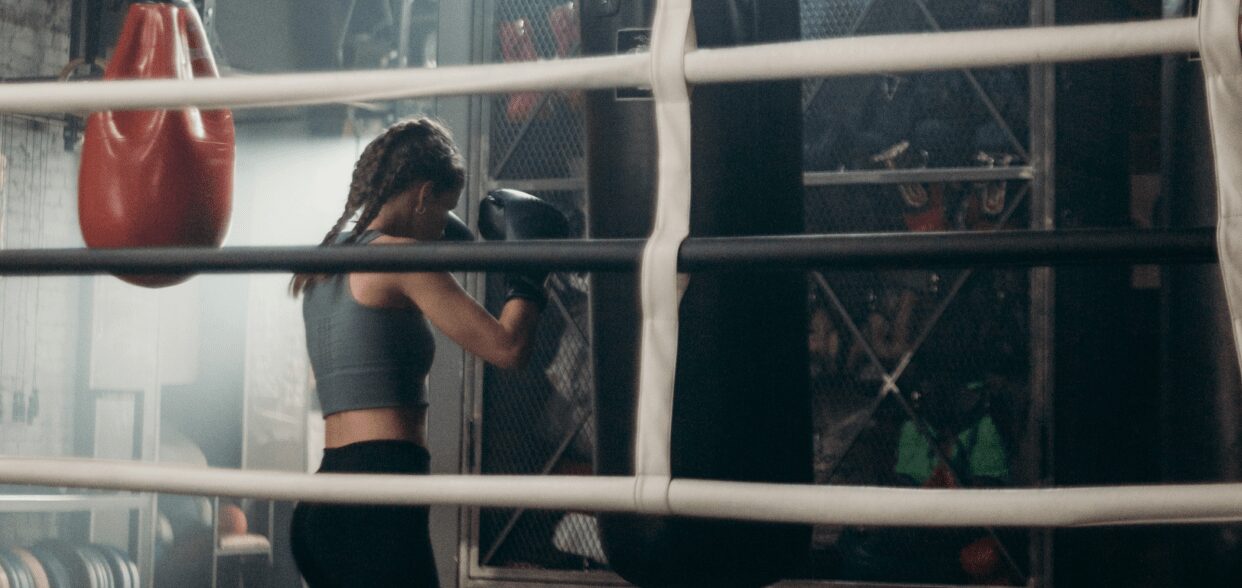
Footwork under load is the underrated one. Throwing combinations while moving around a bag is harder than it looks because the bag is in the way. You learn to pivot off line, step around, cut angles, and reset. Standing in front of the bag and flailing at it is not training. Moving around it while you punch is.
Conditioning is the last piece. Three-minute rounds on a heavy bag with proper intent will gas you faster than most cardio. Your forearms burn, your shoulders give up before your legs do, your breathing falls apart if you do not control it. Every round you survive is conditioning specific to the sport.
If you want the comparison broken down further, the piece on shadow boxing versus the heavy bag lays out which tool covers which gap.
Some specifics before you start
A few things worth knowing before you spend money or hang anything.
Bag weight. A reasonable rule of thumb for a general-purpose hanging bag is about half your body weight. A 150 pound person is well served by a 70 to 80 pound bag. Lighter bags swing too much and reward sloppy form. Heavier bags barely move and punish your wrists if your technique is not solid. If you are buying one, the best heavy bags guide goes deeper into picking the right one.
Wraps and gloves are not optional. Bare knuckles on a heavy bag is how you split skin and bruise the back of your hand. Hand wraps stabilise the wrist and compress the small bones of the hand. Bag gloves or training gloves go over the wraps. The best hand wraps for the punching bag covers what to look for if you have not bought any yet.
Round structure. Boxing rounds are three minutes with one minute of rest in amateur and professional bouts. For training, two-minute rounds with thirty to sixty seconds of rest are common for beginners. Most bag workouts in the Shadow Boxing App default to a structure like this, and you can adjust round and rest length in the custom workout builder if you want longer or shorter rounds.
How to structure heavy bag work
The mistake almost every beginner makes is treating every round the same: stand in front of the bag, throw combinations as hard as possible, stop when tired. That is not training, it is just getting tired.
Useful bag sessions alternate intent across rounds. Some rounds focus on power, where every punch lands with full weight and full commitment. Some focus on speed, where you snap quick combinations without trying to break the bag. Some focus on a specific exercise, a single combo repeated until the movement is automatic. Some are freestyle, where you flow between offence, defence, and footwork without a script. Mixing these in a single workout builds the kind of conditioning that holds up in real sparring.
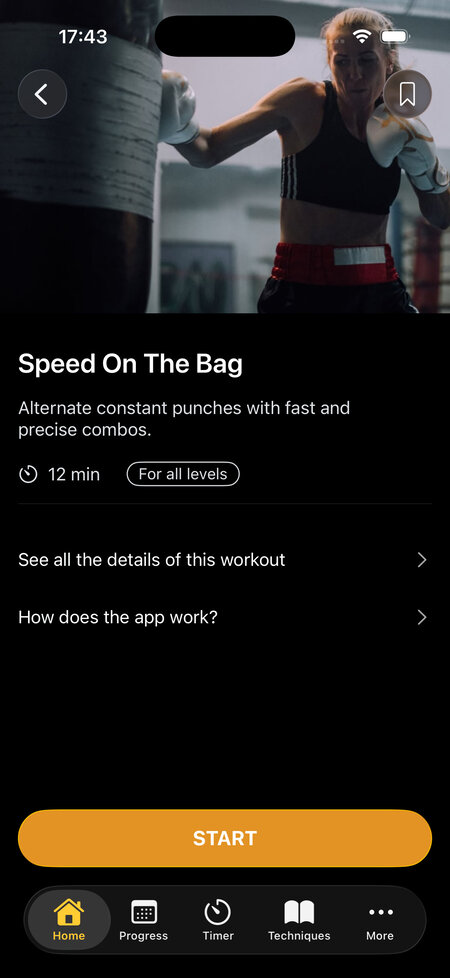
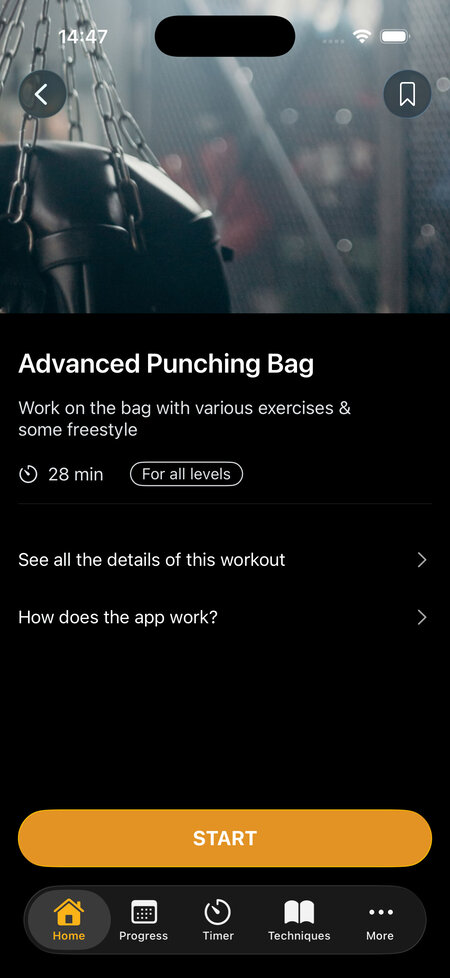
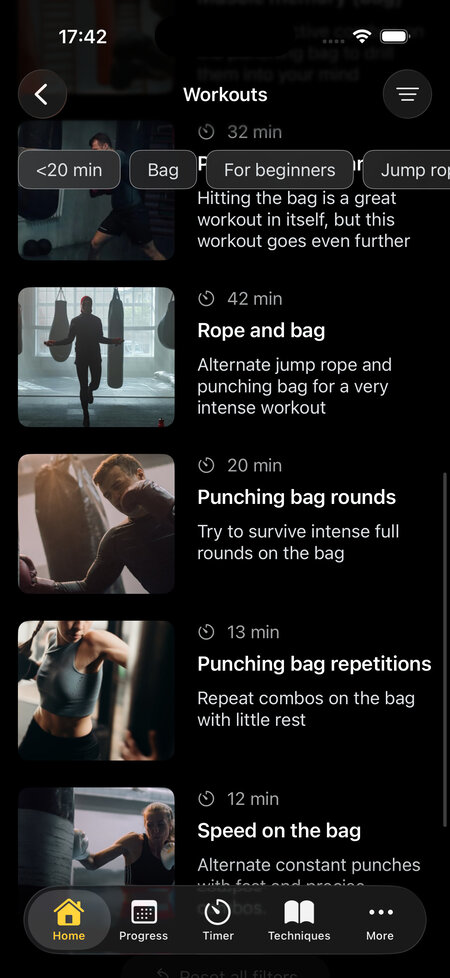
The Shadow Boxing App ships bag workouts built around these patterns. Speed On The Bag alternates constant punching with fast, precise combos. Advanced Punching Bag mixes various bag exercises with freestyle rounds. Punching Bag Rounds and Punching Bag Repetitions take different angles on focused work. All of them are in the full heavy bag workout app listing.
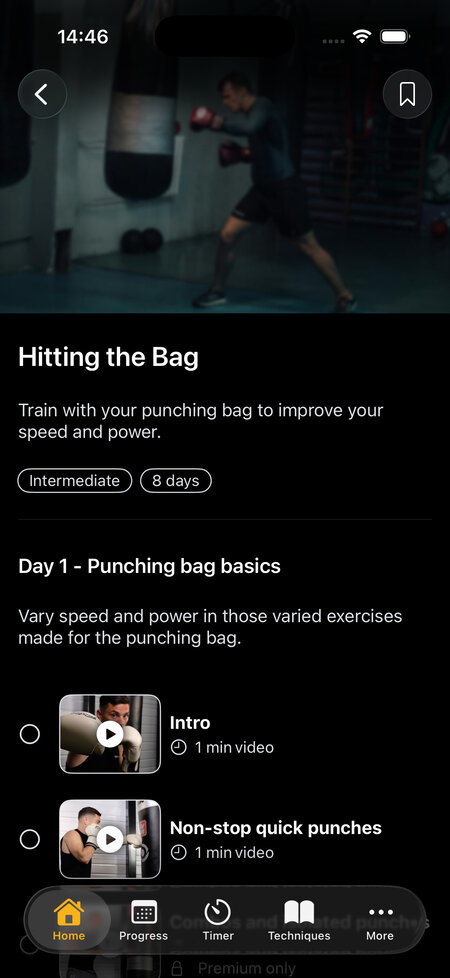
If you are coming to the bag for the first time and want a starting point, the Hitting the Bag program is eight days of progressively harder sessions built for beginners on the bag specifically. It assumes you have done some shadow boxing but is not yet comfortable hitting a real target.
For days when you do not want to pick anything, the quick start feature generates a full session from a few parameters. Toggle the heavy bag option on and the exercise pool shifts to bag-specific work. The fastest way to start a punching bag workout walks through how that flow works.
Using the app while you train
Open the app, pick a workout or generate one, set your phone somewhere you can hear it, and start the round. The app calls out punch combinations, defensive moves, and footwork through the rounds. You hear “1-2, slip right, 3” and you throw it. You hear “pivot left, 2-3-2” and you move. Between rounds, you breathe.
The bag workouts also include rounds of conditioning between bag work: jumping jacks, burpees, squats with punches, depending on the session. This is not filler. The conditioning rounds give your hands a break while keeping your heart rate up, which is closer to how a real fight or sparring round demands your body to behave.
If you are just starting out and want a more detailed beginner walkthrough, the piece on starting heavy bag training with the app covers the common mistakes and how to avoid them.
Practice boxing at home with this app that will call out punches and guide you through boxing workouts.

On iOS and Android
The bag workouts, the Hitting the Bag program, and the quick start bag generator all work on both iOS and Android. If you have a heavy bag at home or access to one at a gym, the app gives you a structured way to use it without having to design sessions yourself.
The bag rewards consistency more than any other piece of boxing equipment. Two or three sessions a week, every week, builds something that no amount of shadow boxing alone can match. Set the timer, wrap your hands, and start.