
Boxing Injuries That Mobility Work Helps Prevent
The most common boxing injuries in home and gym training are not dramatic. They are not broken noses or cuts from a bad spar. They are shoulder pain that builds over weeks, a wrist that flares up mid-session, a knee that started complaining after too many rounds of footwork. These are the injuries that stop you training, and most of them are avoidable.
The root cause is almost always the same: joints that were not prepared before being put under load.

The shoulder
The shoulder is the most frequently injured joint in boxing. It absorbs the full force of every punch, in extension and retraction, dozens of times a round. The rotator cuff, a group of four small muscles that stabilise the shoulder, takes most of that stress.
When the shoulder joint has not been warmed up, those muscles activate late and unevenly. Repeated punching in that state puts the load on the tendons and the joint capsule instead, which leads to impingement, tendonitis, or chronic tightness that slowly limits your range of motion.
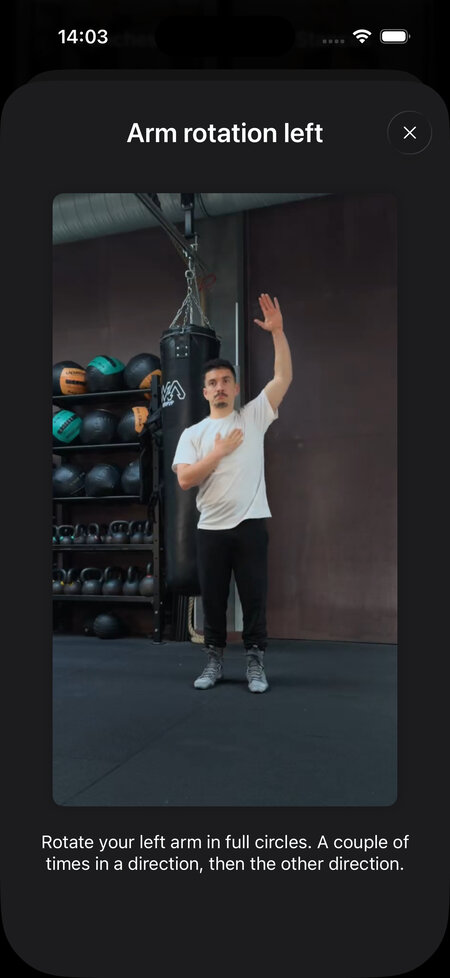
Arm circles, arm swings, and shoulder rolls before a session do not feel like much. But they move the shoulder through its full range before you add load, which is exactly what the rotator cuff needs to fire correctly when the session starts.
The wrist
The wrist is a common complaint for people training without wraps or with poor punching mechanics. But mechanics aside, stiff wrists absorb impact badly. When the joint is not mobile and aligned, the force from a punch travels up the forearm in ways it should not.
Wrist flexion and extension work takes under two minutes. It is the most skipped prep exercise in boxing, and wrist problems are correspondingly common among people training at home who skip it.
The hip and lower back
Punching power comes from hip rotation. If your hips are stiff, your body compensates by rotating from the lower back instead. That puts repeated torque through the lumbar spine across dozens of rounds, which eventually shows up as lower back tightness or pain.
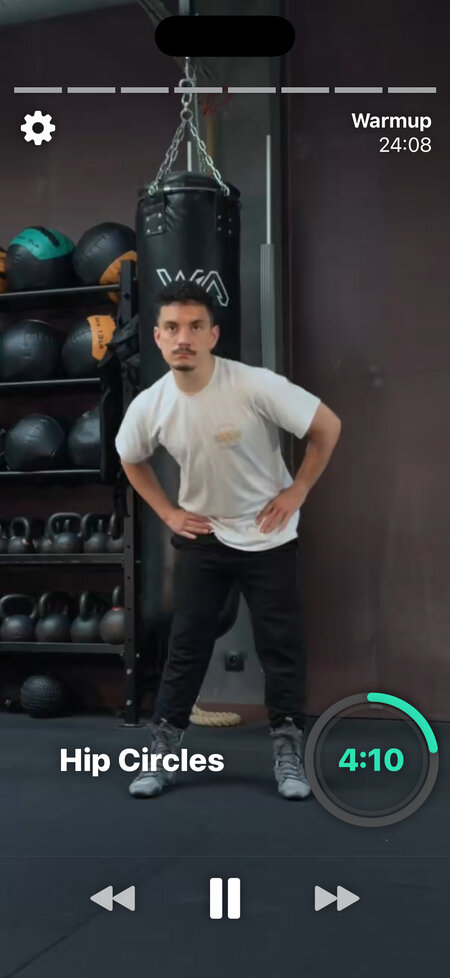
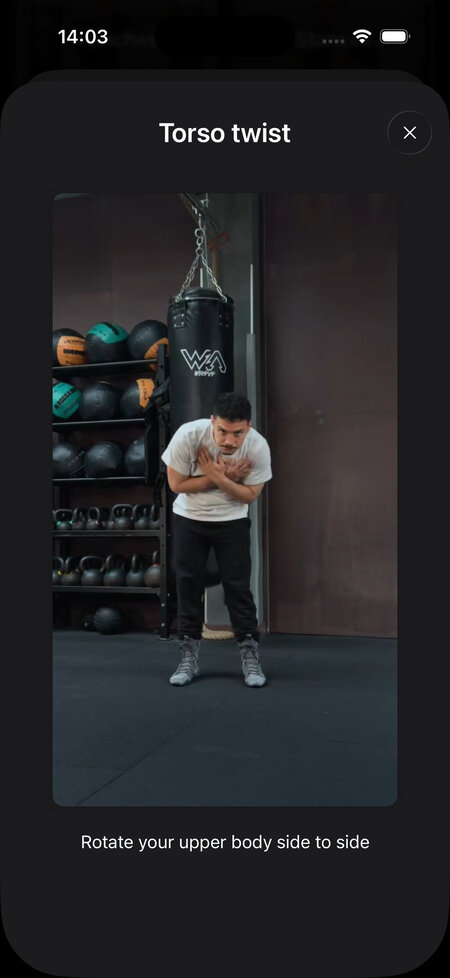
Hip circles and torso twists before a session open the hip joint and signal the thoracic spine to rotate freely. This keeps the load where it belongs, in the hips, and protects the structures that cannot handle it as well.
The knee and ankle
Boxing footwork involves constant pivoting, lateral movement, and quick direction changes. None of that is friendly to stiff ankles or unprepared knees. Tight ankles force compensation up the kinetic chain, putting extra rotational stress on the knee with each step.
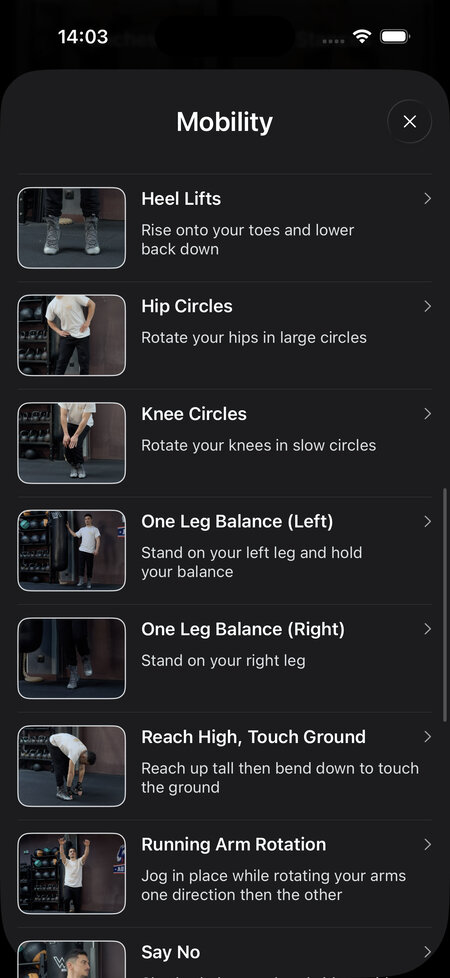
Heel lifts warm up the ankle joint and the calf muscles that support it. One-leg balance holds activate the stabilisers around the ankle and knee before they need to respond quickly. These are simple, but they close the gap between a cold joint and one that is ready for the demands of a round.
The mobility section in the app
The Shadow Boxing App has a dedicated Mobility section that covers all of these areas: arm rotations, hip circles, knee circles, heel lifts, torso twists, and more. Each exercise is guided, so you know what to do and for how long, without designing a routine from scratch.
The exercises are designed to sit before a session as part of the broader boxing warmup. The full breakdown of what to do and when is covered separately if you want the detail. But the short version is: open the Mobility section, follow the exercises, then start training. It adds a few minutes to the front of every session and removes a lot of the injury risk that otherwise accumulates quietly over weeks.
If you want more on why this matters beyond injury prevention, the case for making mobility a consistent part of your boxing routine is worth reading.