
Mobility Exercises to Do Before Every Boxing Session
A lot of boxing warmups jump straight to cardio: jump rope, high knees, jogging in place. That raises your heart rate, but it does not prepare your joints. Mobility work is different. It moves each joint through its full range of motion before you load it, which is what reduces injury risk and keeps your movement clean from the first round.
Here is what to work through before a session, body part by body part.
Wrists and forearms
Boxing puts repeated impact through your wrists. Stiff wrists absorb that load badly.
Wrist flexion and extension: Spread your fingers, then pull your hand back toward your forearm. Hold for two seconds, then push it the other way so your fingers point down. Repeat five times per hand.
These take ninety seconds total. Most people skip them entirely, which is why wrist problems are so common in home training.
Shoulders
The shoulder is the joint that does the most work in boxing and the one that gets injured most often when people skip preparation.
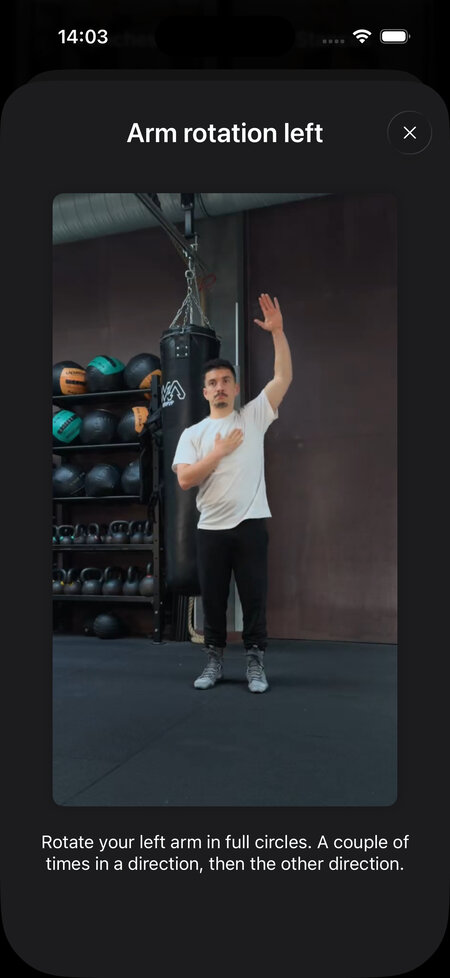
Arm circles: Extend both arms out to the sides and draw large, slow circles. Forward for ten rotations, backward for ten. Start small and let the circle get bigger as the joint warms up.
Arm swings: Let your arms hang loose, then swing them forward and back like a pendulum. Gradually increase the range until they are crossing in front of your chest and sweeping behind you. Twenty swings.
Shoulder rolls: Roll both shoulders backward in a slow, deliberate circle. Five times backward, five times forward. You are looking for full rotation through the joint, not just shrugging.
Neck
Neck mobility matters more than people expect. Your guard compresses your neck into a fixed position, and head movement (slipping, weaving) requires the neck to move quickly under tension. Going in stiff makes both worse.
Neck tilts: Drop your right ear toward your right shoulder, hold for three seconds, then switch. Do not force it. Five times each side.
Slow rotations: Turn your head to look over your right shoulder, then slowly rotate all the way to the left. Four or five slow rotations. Stop if anything feels sharp.
Chin drops: Tuck your chin to your chest, hold for a couple of seconds, then lift and look slightly up. Repeat five times.
Hips and torso
Punching power runs from the floor through your hips and rotates through your torso. Tight hips break that chain at the source.
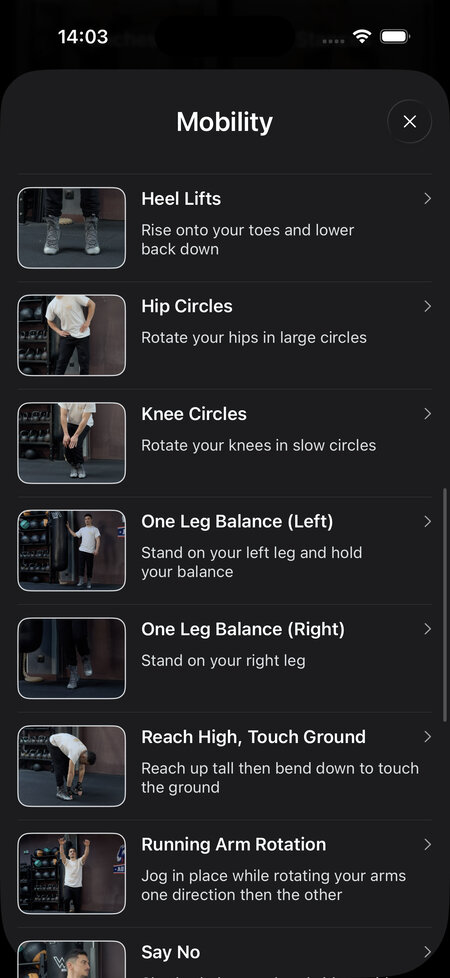
Hip circles: Stand with feet shoulder-width apart, hands on hips, and draw large circles with your hips. Ten rotations in each direction. Keep your feet planted and let the movement come from the hip joint.
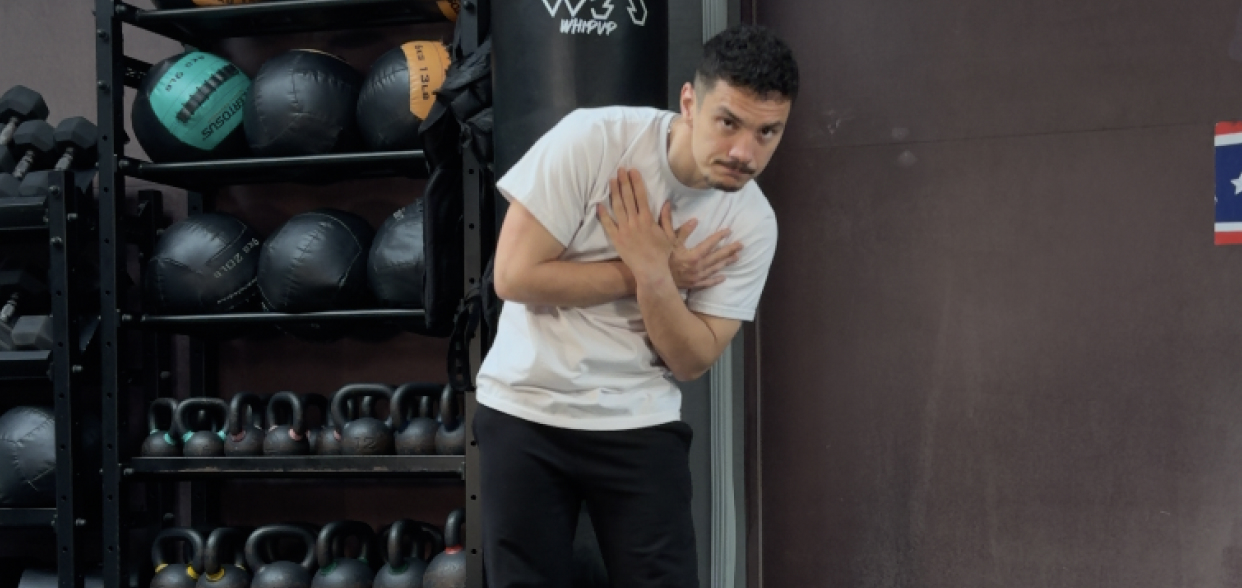
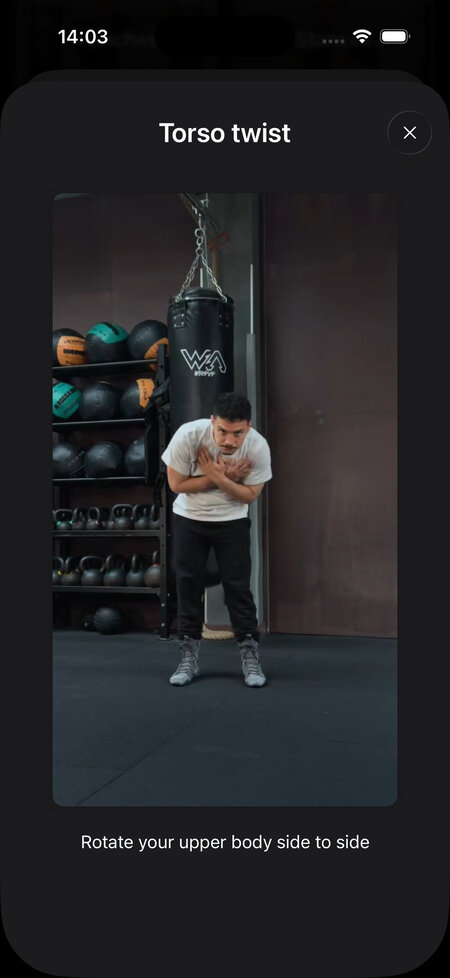
Torso twists: Arms out at shoulder height, rotate your upper body left and right. Let your arms follow the rotation passively. The goal is to feel the thoracic spine moving, not just the shoulders. Ten rotations each way.
Reach high, touch ground: Reach both arms straight up and extend fully, then hinge at the hips and try to touch the floor. Rise back up slowly. Five to eight reps. This opens the posterior chain, which boxing footwork compresses.
Knees and ankles
Footwork depends on quick, stable movement from the ankle up. Stiff ankles make you flat-footed; tight knees slow your pivots and your reaction to punches.
Heel lifts: Stand with feet hip-width apart, rise onto your toes slowly, hold for one second at the top, then lower. Ten reps. This warms up the ankle joint and the calves that support it.
Knee circles: Feet together, hands on knees, draw slow circles with your knees. Five rotations in each direction. It looks simple but the knee joint rarely gets this kind of deliberate preparation.
One-leg balance: Stand on your left leg for twenty seconds, then switch. This activates the stabilising muscles around the ankle and knee that footwork relies on. If you wobble, that is information: those muscles were not engaged yet.
How long this takes
Done at a reasonable pace, the full sequence above is around eight to ten minutes. You do not need to do every exercise every session. If you are pressed for time, prioritise shoulders and hips because those take the most load in boxing. Wrists and ankles can be cut when needed.
The key is that this comes before your cardio warmup, not after. You want the joints prepared before you start raising your heart rate, not the other way around.
Using an app for the mobility phase
The Shadow Boxing App has a built-in Mobility section that covers most of the exercises above with guided video so you are not guessing at the movement. It fits naturally into the broader boxing warmup structure: mobility first, then cardio, then boxing-specific prep.