
Why Every Boxing Session Needs a Good Warmup
Most people skip the warmup or treat it as optional. That works fine until it doesn’t: a pulled shoulder mid-combo, a knee that starts aching after ten minutes, movement that feels stiff and slow for the first two rounds. The warmup is where you prevent those problems, and it takes less time than recovering from them.

Why warming up matters in boxing
Boxing puts a lot through your body in a short time. The explosiveness of punching, the constant footwork, the rotational load through your hips and shoulders: all of it demands that your joints and muscles are already awake when the session starts.
A good warmup raises your heart rate gradually, gets blood moving to the muscles you are about to use, and signals to your nervous system that real work is coming. The result is faster reactions, cleaner technique from the first round, and less soreness the next day.
It also takes you out of whatever you were doing before and gets your focus on boxing. That mental shift matters.
A simple three-phase warmup
1. General movement (5 minutes)
Start with something that raises your heart rate without taxing your joints. Jump rope, jogging in place, high knees, and jumping jacks all work. The goal is body temperature, not intensity. Keep it easy.
2. Mobility (5 minutes)
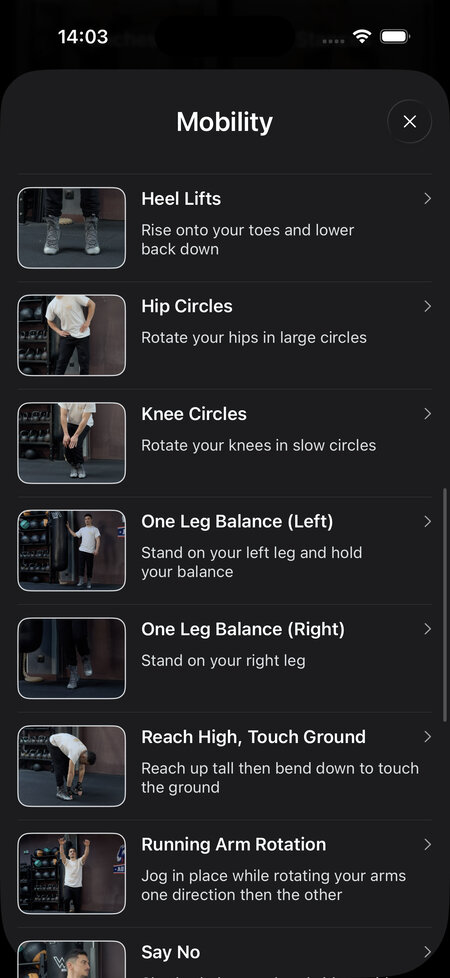
Once you are warm, move your joints through their full range. Arm circles, torso twists, hip circles, leg swings. Pay attention to your shoulders and hips in particular: they take the most load in boxing and are the first to complain when they have not been prepared.
The Shadow Boxing App has a dedicated Mobility section with guided exercises for exactly this phase. If you are not sure what to do or want something structured to follow, that is a good place to start.
3. Boxing-specific movement (5 to 10 minutes)
Now you bring in the actual sport. Relaxed shadow boxing with light punches, footwork drills, a few defensive movements like slips and weaves. You are not training yet; you are rehearsing the patterns at low intensity so your body knows what is coming.
By the end of this phase you should feel loose, focused, and ready to work at full intensity.
A few things that make a difference
Build intensity across the three phases rather than jumping straight to fast shadow boxing. The progression is the point.
Do not treat the mobility phase as optional just because it feels slow. Tight hips and stiff shoulders are the most common reasons people plateau or get hurt in home training. A few minutes of joint prep changes that.
If you are short on time, cut the third phase short before the first two. Skipping mobility to get more boxing rounds in is usually a bad trade.
Using the app
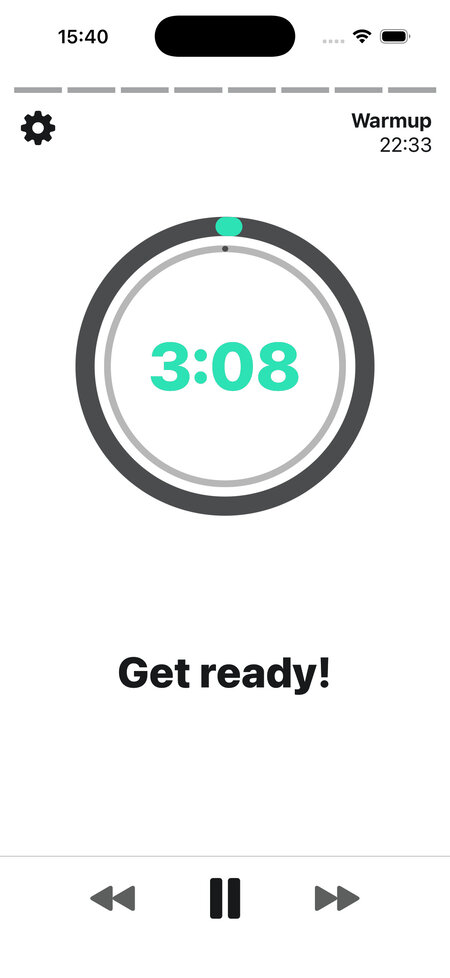
The Shadow Boxing App includes a guided warmup feature that walks you through cardio and boxing-specific preparation before your session. Combined with the mobility exercises, it covers the full warmup without you having to plan anything.