
Sparring Tips for Beginners: When in Doubt, Hands Up and Jab
Sparring as a beginner mostly consists of not knowing what to do. Your partner steps in, several ideas show up at once, none of them wins, and you stand there with your hands at chest height while a jab lands on your nose. The fix for that moment is one default you can fall back on without thinking, and the best one we know is this: when in doubt, raise your hands and throw jabs. You can’t go wrong with it.

Why you need a default
On the bag you have all the time you want. In front of a person you have maybe half a second, and a beginner’s list of options is too long to go through in half a second: slip or block, step back or stay, jab or 1-2, head or body. Freezing in sparring usually comes from having too many options and no time to pick one.
A default takes the choice away. If nothing obvious comes to mind, you already know what you’re doing next, and it happens to be the safest thing available. Experienced boxers have dozens of these reflexes. You need one to start with.
Hands up
Gloves at cheekbone height, touching your face or close to it. Elbows in against your ribs. Chin down, eyes looking over the top of your gloves. Don’t bury your face so deep that you can’t see, because the punches you don’t see are the ones that rattle you.
The high guard is the least clever defense in boxing, and that’s why it suits a beginner. A slip needs you to read which punch is coming and time your movement. A guard only needs to be there. In light sparring, a punch that lands on your gloves or forearms costs you nothing, and each one you catch that way makes the next one less scary. We went through the rest of the options in our article on boxing defense techniques, but you don’t need any of them for your first rounds.
Your hands will drop anyway. It happens when you get tired, usually somewhere in the second minute, and it happens right after you punch, when the hand comes back to your chest instead of your chin. Sparring corrects both quickly: a light tap on the nose works better than a coach shouting “hands!” from the corner.
Then jab
A guard on its own has a problem. If all you do is cover up, nothing gives your partner a reason to stop punching. A beginner who shells up for a whole round spends three minutes absorbing shots on the gloves, learns very little, and walks out thinking sparring is miserable.
So once your hands are up, stick the jab out.
The jab is the right punch for this because it asks the least of you. Your lead hand is already the closest thing to your partner, so it gets there first. You barely rotate, so your balance stays where it was. Your rear hand never leaves your chin. And when you miss, which will happen a lot, you’re back in the position you started from. Compare that with a big rear hand thrown in a panic: your weight goes forward, your guard opens, and a miss leaves you leaning into whatever comes back.
It also changes what your partner does. A glove arriving in their face every second or two makes them reset their feet and think twice before stepping in. That buys you time to breathe and look at what’s going on. Even a jab that falls a few inches short does some of this.
A few details matter when you’re jabbing under pressure:
- Bring the hand back to your face. Same line out, same line back. A jab that returns low is an invitation.
- Double it. One jab is easy to deal with. Two in a row, the second with a small step forward, is what makes people back up.
- Move after it. Jab, then take a small step to the side. Staying planted in front of your partner after punching is how you get countered.
- Keep it light. You’re touching, and your partner should be able to tell.
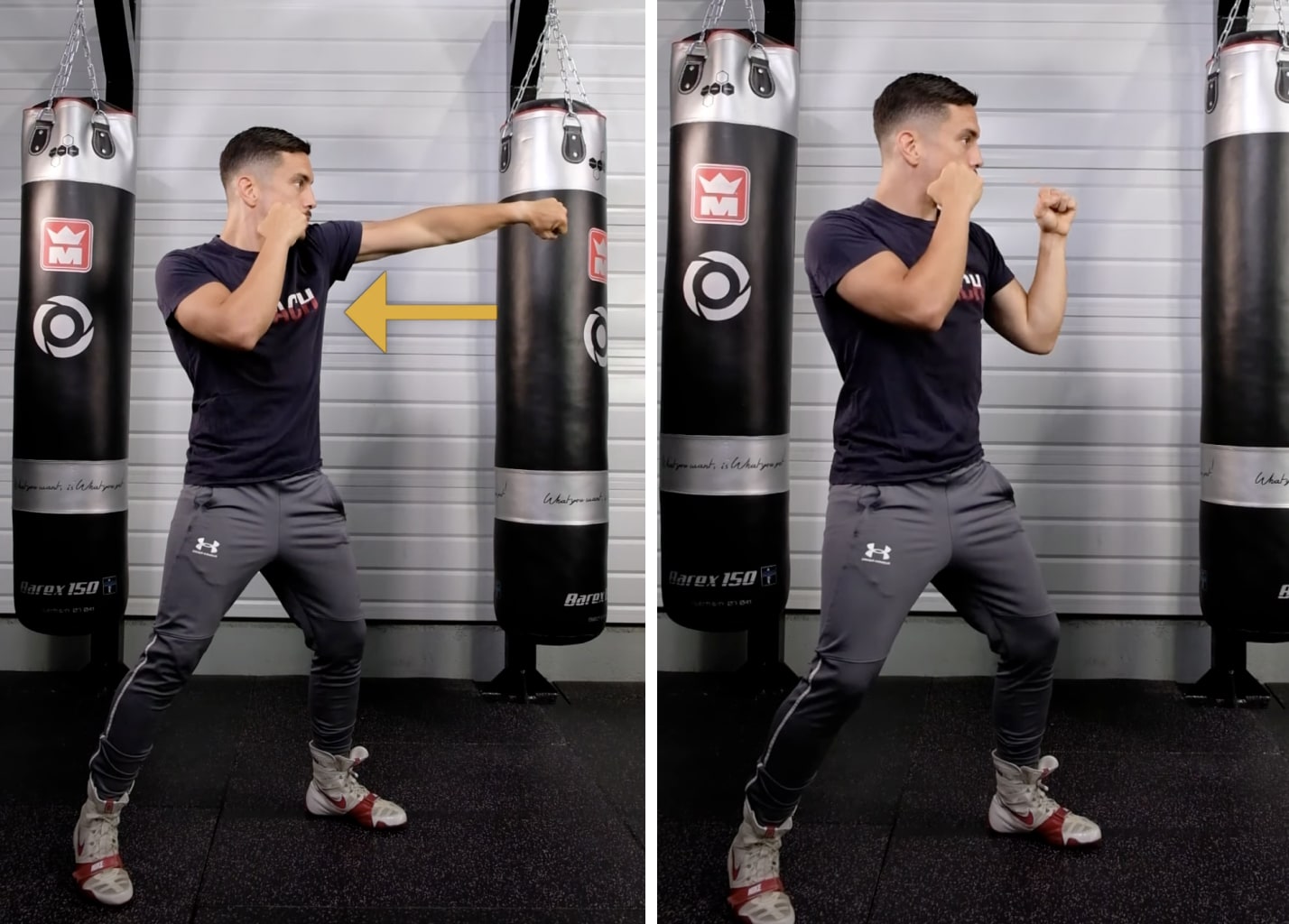
If your jab still feels slow or awkward, fix that before worrying about anything else in sparring. Our step-by-step guide on how to throw a jab covers the mechanics, from the stance to the turn of the fist to the snap back to guard.
What it looks like in a round
Your partner throws a 1-2 at you. You don’t read it in time, so you take both on the gloves. As soon as the second punch lands, you jab back. That’s a complete exchange, and a respectable one.
You’ve been backed up toward the ropes and don’t know how to get out. Hands up, jab, step sideways, jab again.
You’re a minute and a half in, your shoulders are burning and your brain has stopped offering suggestions. Hands up, jab.
You land something clean and have no idea what should follow. Jab again.
It won’t look like much from the outside. But you stayed in your stance and kept working for the whole round, which is more than most people manage their first few times. The goal of those early rounds is getting used to punches coming at you, as we explained in your first sparring session, and this rule is how you stay in the round long enough for that to happen.
Where the rule stops working
It won’t win you rounds against someone with experience. They’ll slip your jab, or time it and come back over the top. With your hands high they’ll go to the body, which is why your elbows have to stay in. A taller partner can out-jab you from a distance where yours doesn’t reach, and then you have to step in behind your guard before the jab is any use.
All of that is fine. The rule is a floor: the thing you do when you have nothing better. As the rounds add up, you’ll have something better more and more often, like a cross behind the jab or a slip against a punch you saw coming. The default stays underneath, and good boxers go back to it too when a round gets away from them.
Drilling it on your own
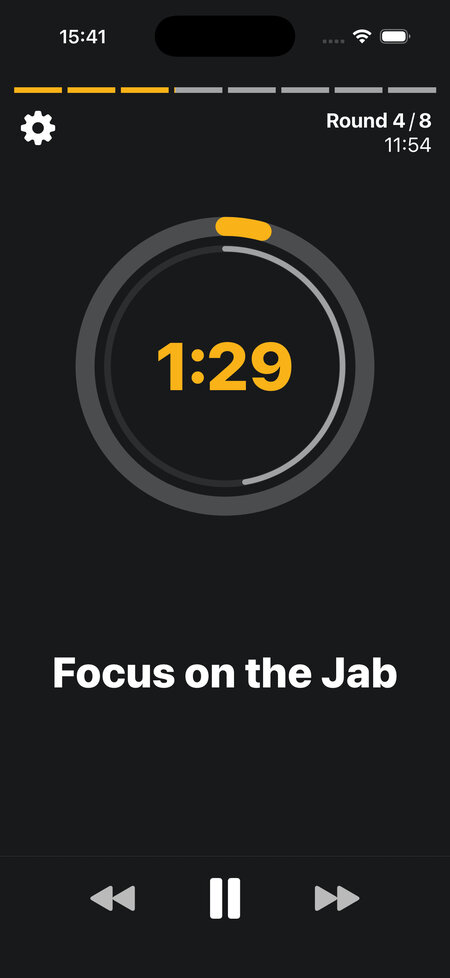
A default only works if it happens without thought, and that takes repetitions. Shadow boxing is the cheapest place to get them. In the Shadow Boxing App, the exercise to use is Focus on the Jab: simple combos called out one after another, all built around the lead hand, at a pace that leaves you room to notice where your hands are between punches. Add one rule of your own while you run it: after every combo, both gloves touch your cheeks before the next callout. If that’s still too busy, Foundation Jab is a gentler version of the same idea.
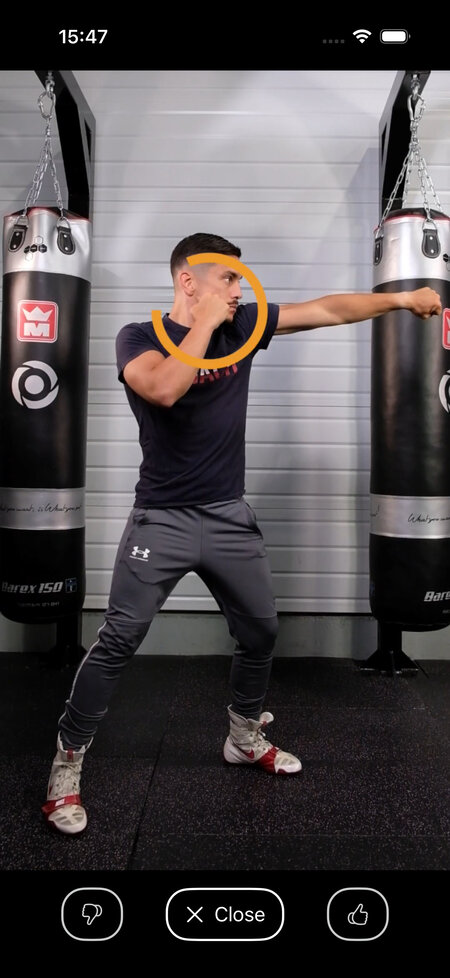
The guard and the jab each have a tutorial video in the app’s technique catalogue. They take a couple of minutes to watch and they’re worth going back to after a sparring session, when you know which part of your jab let you down.
Drilling it with a partner
The app now has guided sparring workouts too: light, technical rounds for two people where the app reads out a rule before the bell and both of you have to stick to it. Several of those rules are this article’s advice turned into a full round.
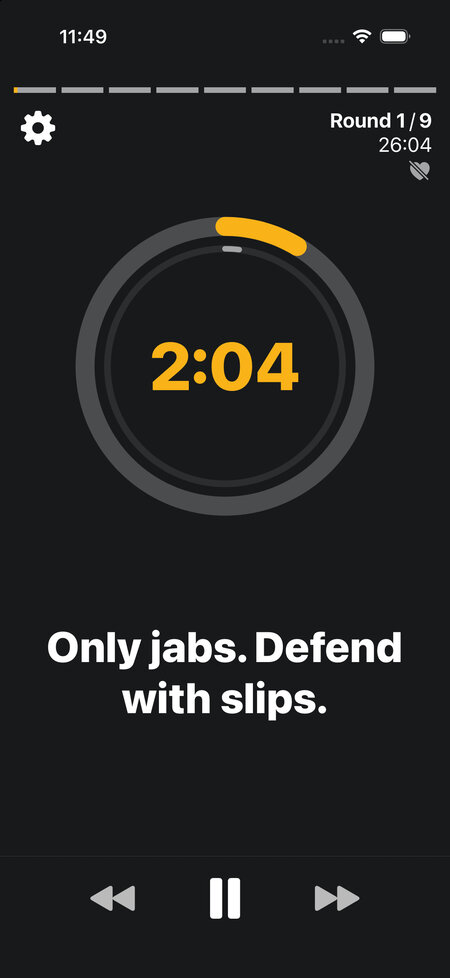
The Working the jab theme opens with a round where both boxers can only use the jab to the head. No cross, no hooks, for either of you. Every decision is gone except the one you’re trying to train, because all you have is a guard and a jab, and so does the person in front of you. The next round adds jabs to the body, and the last one is freestyle with every combo starting on a jab. Another theme, Defense after punching, also begins with jabs only and makes you defend after every single one, which goes straight at the habit of leaving your hand out to admire your work.
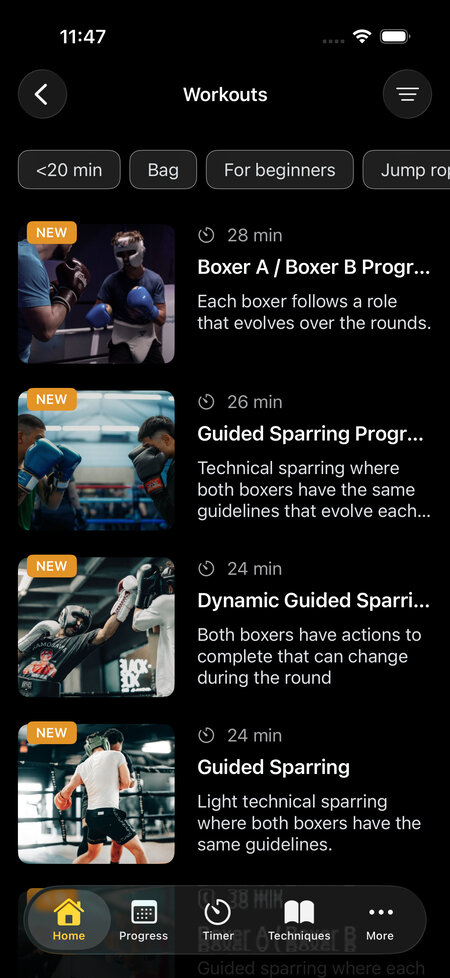
There’s also a Boxer A / Boxer B format where each person gets a different job. In the Countering the jab theme, Boxer A throws only single jabs to the head while Boxer B is limited to defenses and head movement, and the roles swap during the round. You get to practice each half of the rule separately before putting them together.
These workouts are for light contact between two people who already know the basics, with gloves, mouthguards and headgear. If you’ve never boxed, your first contact rounds belong in a gym with a coach watching, and we wrote about the timing in when to start sparring. For a full tour of the partner workouts, see guided sparring workouts.
Next time a round gets away from you, you know what to do: hands up, jab, and watch what your partner does about it.