When Should You Start Sparring? Earlier Than You Think
Ask ten coaches when a beginner should start sparring and you’ll get answers from “second week” to “not before a year”. The wide range is because they’re answering different questions. If sparring means two people going at it with intent, then yes, wait, and probably wait longer than a year. If it means light, controlled rounds with a clear rule and a partner who knows you’re new, then you can start very early, and you probably should. The thing that makes early sparring dangerous isn’t the timing. It’s the intensity and the lack of structure.
Why early is better, if it’s light
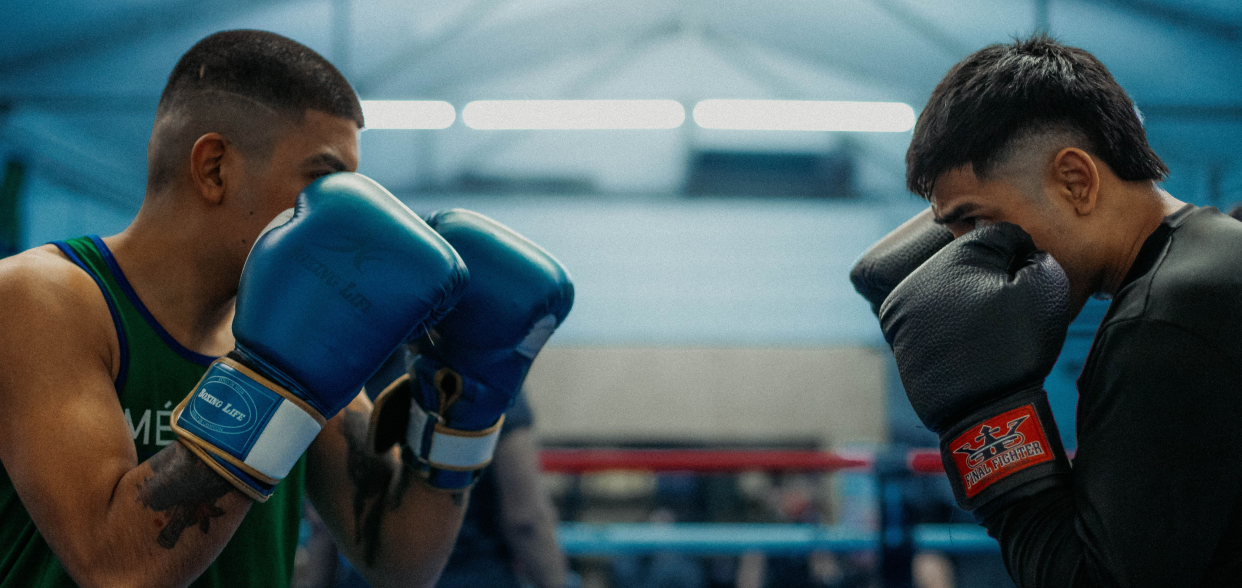
There is one lesson in boxing that no amount of bag work, mitt work or shadow boxing will teach you: keep your hands up. Every beginner has heard it a thousand times and every beginner drops them anyway, because on the bag there is no consequence. The bag doesn’t punch back, so your guard drifts down after the cross, your chin comes up when you get tired, and nothing corrects you.
Getting tapped on the nose with a light jab corrects you instantly. Not hurt, just touched, enough to register that there was a gap and something came through it. Do that a few dozen times over a couple of weeks and your hands stay up without you thinking about it, in a way that months of a coach shouting “hands!” never achieves. A light hit is the best teacher there is, and the earlier you meet it, the fewer bad habits you build in the meantime.
The same goes for distance, for breathing, for not closing your eyes when a punch comes at you. These are things you can only learn with someone in front of you. Light sparring gives you all of them at a cost you can afford: a few taps and the occasional bruised ego.
What happened to me, Marc, who made the app
My first boxing gym didn’t spar. Not “not much”, not at all, for the whole first year I was there. We hit mitts, we hit the bag, we did conditioning, we shadow boxed. I got fit and I thought I was getting good.
Then I moved, changed gyms, and did my first real rounds. It was a mess. I’d built a year of habits with nobody punching back: hands dropping after every combination, standing square, stepping straight in and straight out, leaning at the waist instead of moving my feet. Every one of them got exposed in the first round, and unlearning them was slower and more frustrating than learning boxing from scratch would have been, because I had to fight my own muscle memory the whole time.
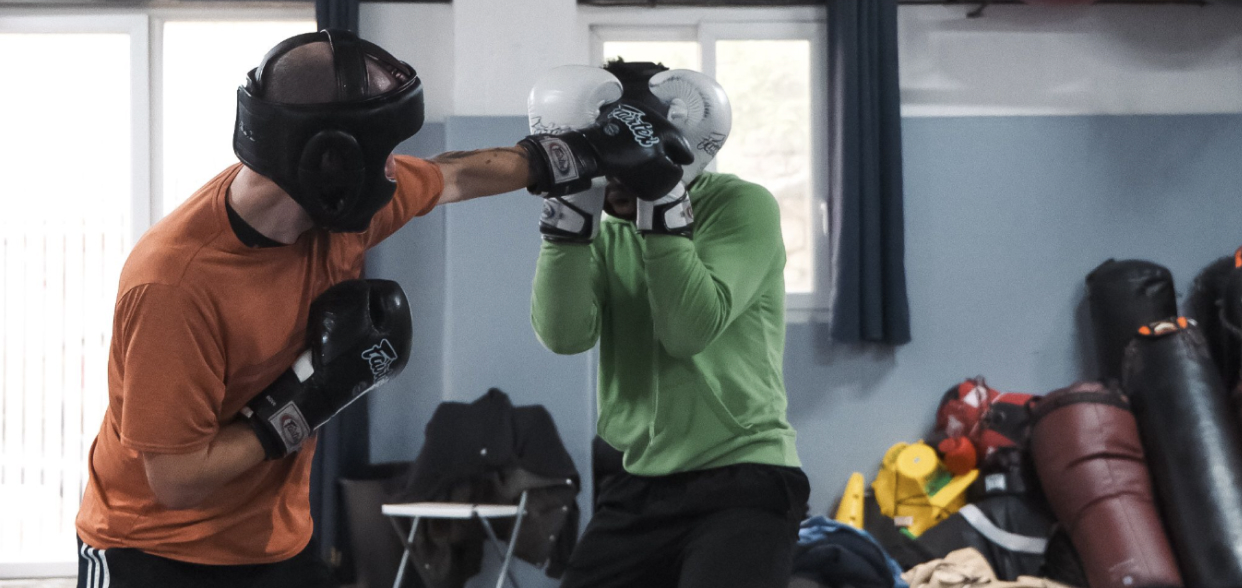
Everything is theory until you spar. I’d have been far better off doing five minutes of light, controlled rounds a week from month two, with a rule like “jabs only”, than doing another eleven months of hitting things that never hit me back. That experience is a large part of why the Shadow Boxing App now has guided sparring in it at all.
The rules for starting early
Early sparring only works if a few conditions hold. Break any of them and “start early” becomes bad advice.
Say out loud that you’re new. Before the round, tell your partner it’s one of your first times and you want it light. A decent partner adjusts immediately. If you don’t say it, they’ll assume you’re at their level and box accordingly, and that’s how beginners get discouraged or hurt in week three.
Keep the power near zero. Touch, don’t hit. The goal is to see punches coming and feel where your gaps are, not to find out how tough you are. There’s a longer argument for technical sparring over hard sparring for boxers at every level, and for beginners it isn’t even an argument.
Stop the moment you feel like a punching bag. If your partner isn’t adjusting, if you’re eating shot after shot with no chance to do anything back, end the round. Say “lighter” first. If nothing changes, take the gloves off. No ego, in either direction: nothing about this is a test, and walking away from a round that has stopped being useful is the correct move, not the weak one. If you want a guide to how people should behave in those rounds, Jeff Chan’s sparring etiquette video is the one to watch.
Wear the gear. Mouthguard, proper sparring gloves, headgear if there’s any head contact. Beginners in bag gloves is how cuts happen.
Start with themes, not freestyle
The other reason early sparring goes wrong is that people jump straight to “just box”. Full freestyle against another person, even lightly, asks you to attack, defend, move and think at the same time, and a beginner can’t. You freeze, or you flail, and you learn very little from either.
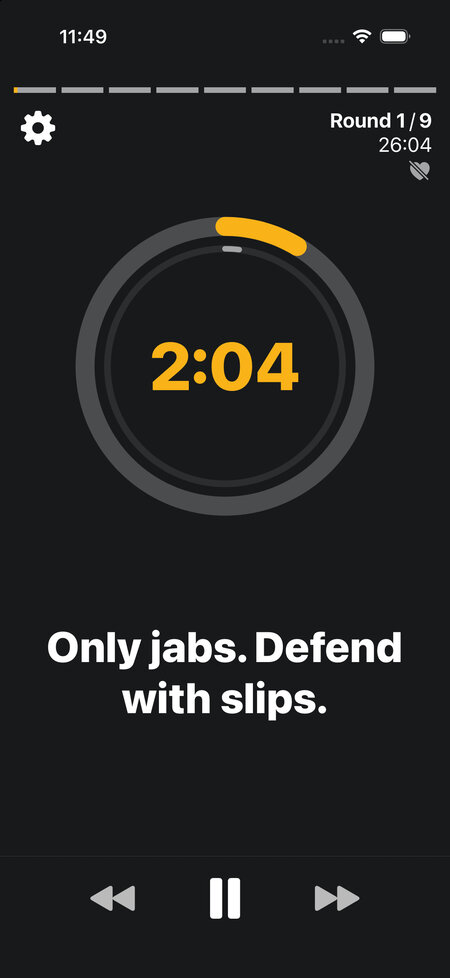
Themed rounds solve this. The first few times, the rule should be tiny: only jabs. Both of you, nothing else. That single constraint makes the round manageable, because there’s only one punch to watch for and one punch to throw. After a couple of sessions, add a defense: jabs, and you can only defend with slips. Then jabs and crosses. Then body shots only, which teaches you to stay close without panicking. Then one person attacks and the other only defends. Each step adds one thing, and you grow into real sparring over weeks instead of being dropped into it.
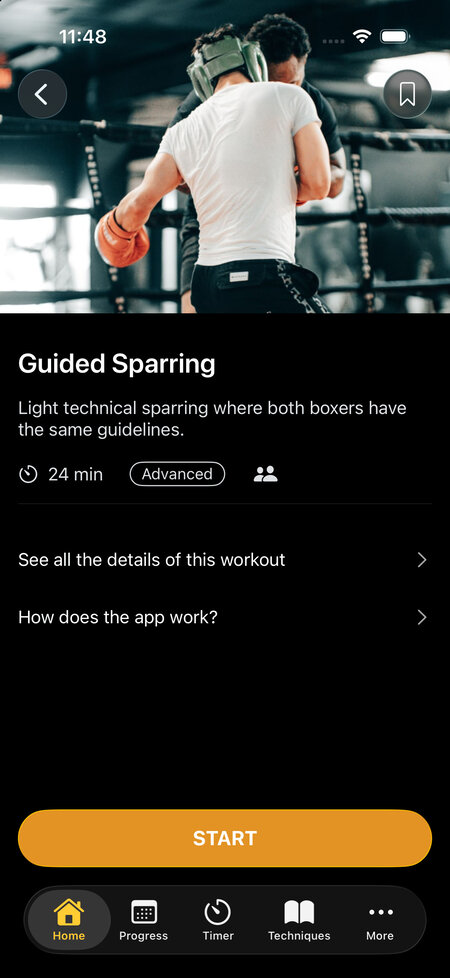
This is how the guided sparring workouts in the app are built. Every round gets a guideline read out before the bell, starting with rules as simple as “only jabs, defend with slips”, and the progression versions loosen the rule round by round. Boxer A / Boxer B rounds give each person a different job and swap halfway, so a beginner can spend half a round only defending against jabs before having to throw any. It’s the structure a coach would give you, for the days when there isn’t one.
A reasonable timeline
None of this is exact, but for someone training two or three times a week with a willing partner:
- Weeks 1 to 4: no sparring. Learn the stance, the jab and the cross, the basic defenses. Hit things that don’t hit back.
- Weeks 4 to 8: light themed rounds, one or two per session. Jabs only. Then jabs and slips. Power at a touch.
- Months 2 to 4: keep adding one element at a time. Crosses, body shots, then asymmetric rounds where one person attacks and the other only defends and counters.
- After that: light freestyle rounds, still controlled, still with the option to go back to a theme whenever something needs work.
Hard sparring doesn’t appear on this timeline at all, and for most people it never needs to.
If you’re a couple of months in and your gym hasn’t put you in front of anyone, ask. If they won’t, find a partner and run light themed rounds yourself. The guided sparring workouts in the app exist for exactly that, and the rest of the app covers the solo work in between.