
Your First Sparring Session: What Actually Matters
At some point your coach says you’re ready to spar, or a training partner offers to do a few light rounds, and everything you thought you knew about boxing evaporates. That reaction is normal. Almost everyone’s first sparring session is bad, and the ones who go on to enjoy sparring are usually the ones who understood beforehand what the session was actually for. It isn’t a fight, you aren’t being tested, and nobody is keeping score.

Light and controlled, and that’s not a suggestion
The single most important thing about a first session is that both people agree to go light before the gloves go on. Say it out loud. “First time sparring, let’s keep it light and technical.” Any decent partner will say yes without hesitation.
Light means you’re touching, not landing. Your punches should land with enough contact that your partner registers them and reacts, and no more. The point isn’t to be dangerous, it’s to work at a speed where you can both still think. When people go hard early, both boxers stop learning: one is surviving, the other is winging punches with no control.
Control also means picking your shots. A first session isn’t the place for wild hooks and overhands you’ve thrown twice in your life. Jabs, the occasional cross, keep it simple. You’ll get far more out of ten clean jabs than one hook you’ll be embarrassed about afterwards.
The real goal: getting used to punches coming at you
Here’s the part nobody tells beginners. The purpose of your first sparring session is not to land anything. It’s to get comfortable with someone throwing punches at your face.
Every drill you’ve done up to now has one thing missing: an opponent who punches back. Shadow boxing, bag work, pad work, none of it prepares you for the moment a glove comes at your head. The first reaction is universal: you shut your eyes, turn your head away, and freeze. That flinch is the thing sparring exists to fix, and it only fades through repetition.
So set your bar low. If you spend three rounds keeping your eyes open, hands up, and taking small steps back and to the side, that’s a successful first session. Landing punches comes later, and it comes much faster once the flinch is gone.
A few things that make it easier:
- Keep your eyes on their chest. From there you see both hands in your peripheral vision. Staring at their gloves means you’ll miss whichever one isn’t moving yet.
- Breathe out on your punches, and keep breathing between them. Beginners hold their breath the whole round and gas out in ninety seconds.
- Stay in your stance. Panic makes people stand square with their chin up. If you notice it, reset.
- Move sideways, not straight back. Backing up in a line puts you on the ropes, and you’ll get walked down. This applies just as much when the size difference is against you, which we covered in more detail in sparring taller and shorter opponents.
If it’s too heavy, say so
New boxers put up with far more than they should because they don’t want to look soft. That’s the wrong instinct. If your partner is going harder than you agreed, stop and say something. “Hey, can we bring it down a bit?” is a complete sentence and nobody worth training with will react badly to it.
If it happens again, stop the round. Not the session necessarily, but the round. Step out, talk to your coach, get a different partner. In a gym that runs sparring properly there’s always a coach watching, and telling them is not tattling, it’s the system working as intended. Gyms where beginners get lit up in their first session are gyms with a problem, and it’s a fair thing to judge them on when you’re picking where to train.
Also apply this to yourself. If you catch a partner clean and see them wobble or cover up, back off. Ego gets people hurt and gets you a reputation nobody wants.
What to drill before you get there
Nothing replaces sparring, but you can arrive with fewer bad habits. The two things worth having automatic are your guard and your defensive movements, because both of those are what fall apart first under pressure.
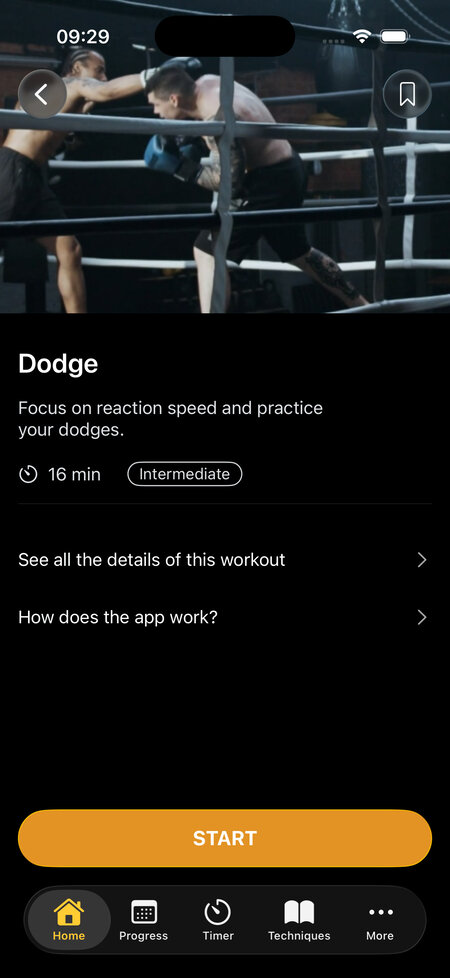
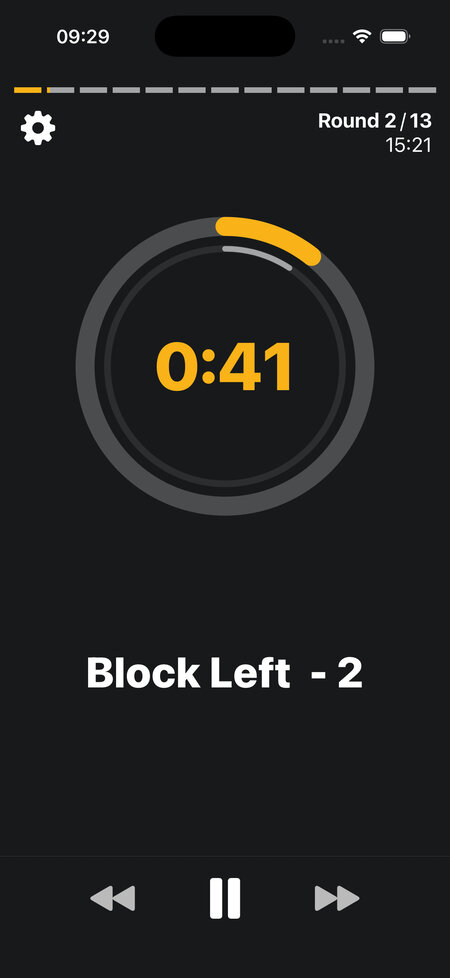
The Shadow Boxing App has exercises built exactly for this, and the one to run before your first session is Dodge. It calls a punch at you, you get out of the way, you answer with something simple. That’s the whole loop, over and over, until moving your head stops being a decision you have to make. It’s the closest thing you can do alone to the thing that goes wrong when someone actually punches at you. Around it sit gentler exercises that drill the movements on their own and harder ones that bury them inside combinations, and we wrote about the whole defensive side of the app in training boxing defense at home if you want the detail.
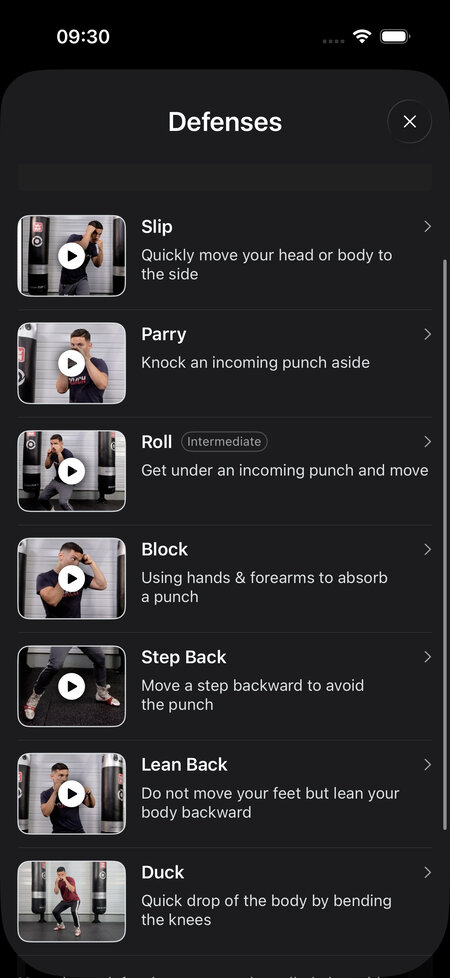
Every defense is in the technique catalogue with a tutorial video, but before a first session you only need two of them: the block and the step back. They’re unglamorous, they work, and they don’t require you to read a punch correctly to be useful. Slipping and rolling are better tools once you can time them, and a badly timed slip walks you straight into the punch, which is not the lesson you want on day one.
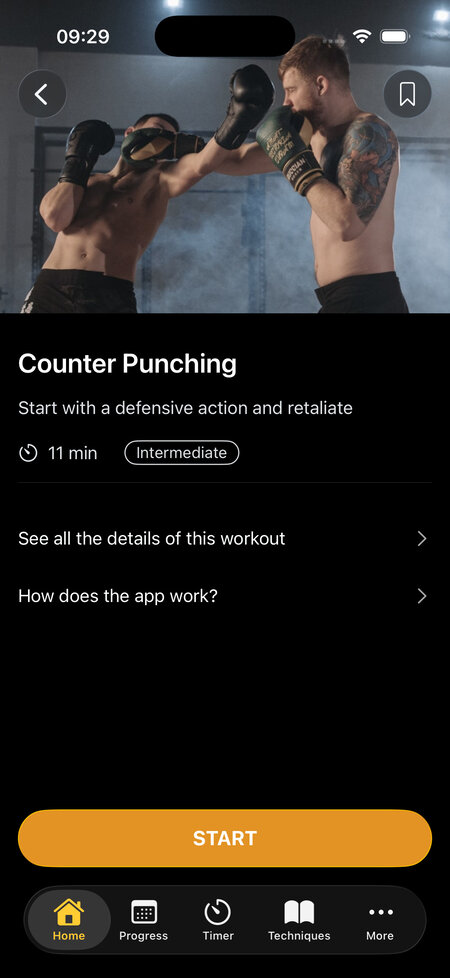
Counter Punching is another good one to run beforehand: it’s built around starting with a defensive action and answering it, which is closer to the rhythm of sparring than throwing combinations into the air.
After the round
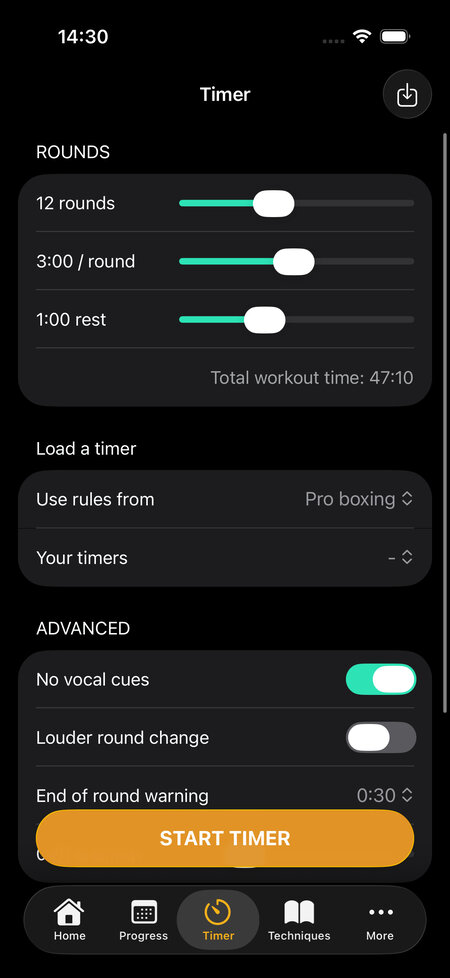
Sparring is easier to make sense of when you can keep track of it. The app has a free round timer with sound cues, so if you’re doing informal sparring with a friend outside a class, you’re not squinting at a phone clock between rounds. We built an online version of the same timer too, if you’d rather leave it running on a laptop.
Talk to your partner afterwards. Ask what they saw. Most people will tell you something useful straight away, like that you drop your rear hand when you jab or that you only move in one direction. That’s a free coaching session, and it’s the fastest way to work out what to drill next.
Your first sparring session will probably feel like a mess, and you’ll walk out with a much clearer idea of what you need to work on. That clarity is the whole point of doing it.