
How to Spar Someone Taller (and How to Spar Someone Shorter)
Sparring someone roughly your own size is the easy case. Sparring someone three inches taller or three inches shorter is two completely different problems, and the boxer who figures out the matchup early wins the round. Here is how to think about each side of it, and how to use the Shadow Boxing App to drill the tactics that actually matter.
When they are taller
A taller opponent has reach on you. Their jab lands before yours does. Their cross comes from further away than you expect. Stand at their preferred distance and you will spend the round getting picked apart.
The whole game against a taller boxer is closing the distance and then doing damage before they reset. Three things make that work.
Get under the jab. A slip or a roll under their lead hand lets you cover ground without eating a clean punch on the way in. Drilling slips and rolls in your shadow boxing sessions is what makes this automatic. The defensive techniques section of the app catalogue covers each of these with a tutorial video, and the defensive training pieces walk through how to fold them into your work.
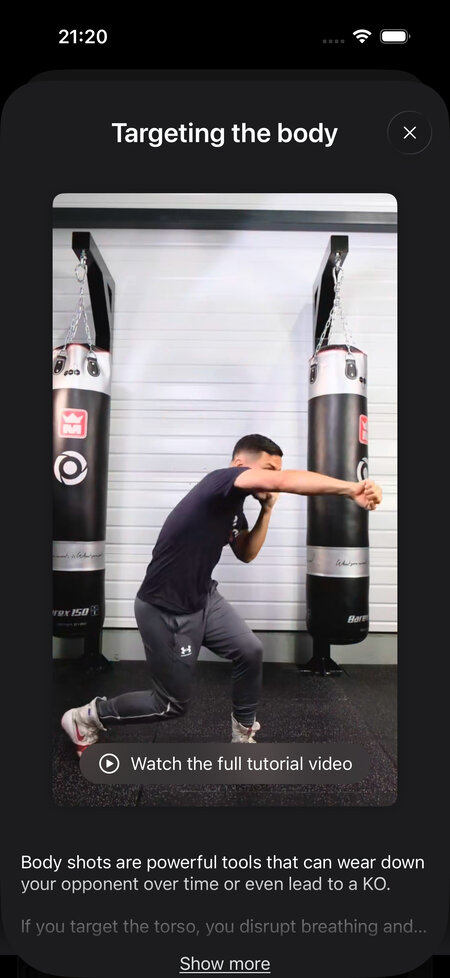
Work the body once you are inside. This is the part most beginners skip. A taller fighter’s body is more exposed when you are close because their guard is set for head shots from further out. A short hook or a cross to the ribs from inside their range disrupts their breathing, lowers their hands, and opens the head for the next round. The body shots piece covers the mechanics, and the app has a Body Shots exercise plus a First Body Shots workout that drills exactly this.
Get out before they reset. Closing in, landing, and lingering is how you eat a return. Pivot off the line after your last punch lands, or step out at an angle. The L step and the pivot are both in the technique catalogue with tutorials.
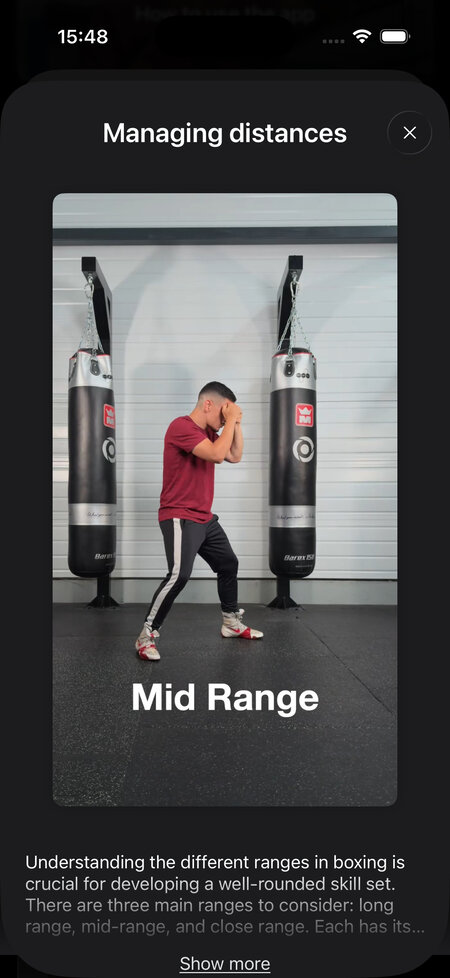
The app also has a dedicated tutorial on managing distance and range that is worth watching once if you are about to spar someone taller. It explains the three ranges (out of range, in jab range, in hook and uppercut range) and how to move between them deliberately instead of accidentally.
When they are shorter
Flip everything. Now you are the one with reach, and your job is to use it.
The mistake taller boxers make against shorter ones is closing the distance for them. You back up in a straight line, they walk you down, they get inside, and now they are throwing short hooks to your body while you have nowhere to punch from. The whole game is keeping them outside.
The jab does the heavy lifting. Your jab lands before theirs does. Use it. Constantly. Not as a setup punch but as the primary weapon. A boxer who jabs every two seconds against a shorter opponent forces them to fight through a stiff arm to get anywhere. The app’s jab tutorials and the longer pieces on how to throw the perfect jab and drills to master your jab are worth running through before a session where you know reach is the deciding factor.
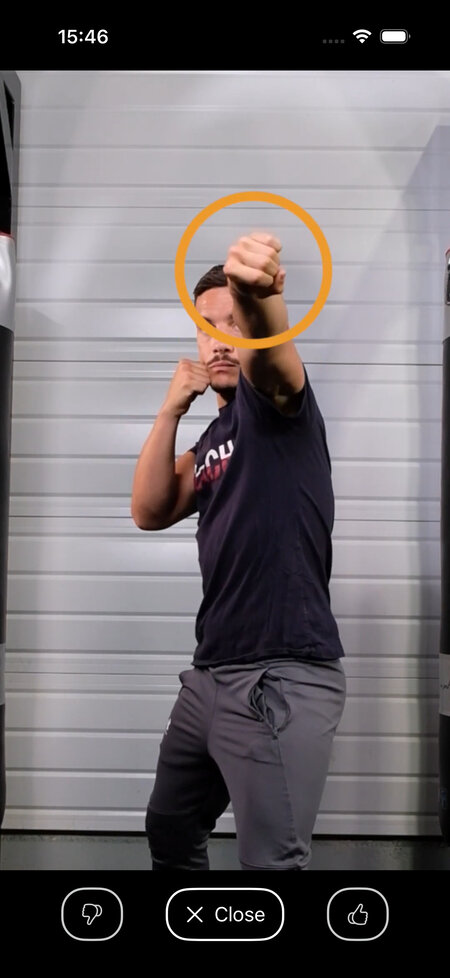
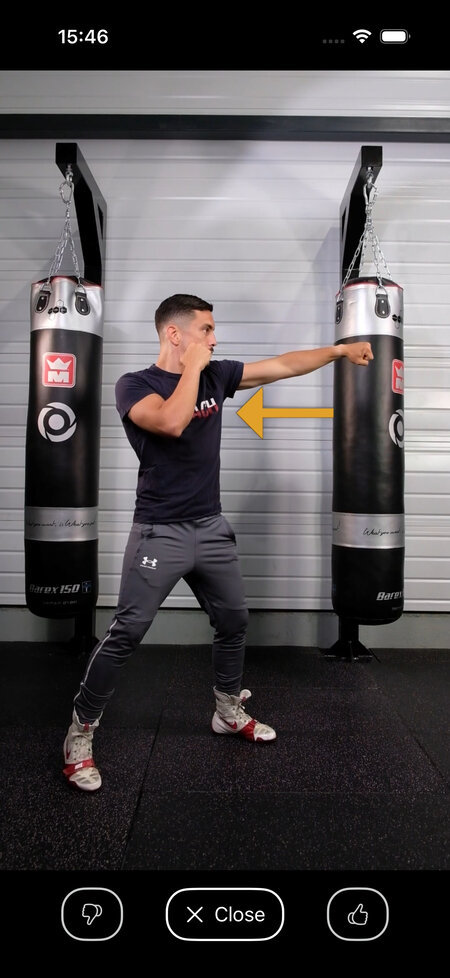
There are also jab-focused exercises in the app. Workouts and individual exercises that prompt you to throw nothing but jabs for a round, or jabs with one follow-up, build the habit of leading with that punch. If you spar someone shorter without that habit drilled in, you will default to bigger combinations, which is exactly what they want.
Move laterally, not backward. Backing up in a straight line lets a shorter, faster opponent walk you down. Stepping to the side keeps them turning, which slows their forward pressure and lets your jab keep landing on a fresh angle. The footwork drills in the app (the pivot, the L step, the Ali shuffle) are what build this without you having to think about it under pressure.
Don’t get bullied to the body. A shorter opponent’s natural target is your ribs. Keep your lead elbow tight on the inside, and don’t let them get close enough to start digging. If they do close, clinch, reset, and get back to range.
The technique catalogue is the cheat sheet
The Shadow Boxing App has a full technique catalogue covering every punch, defensive move, and footwork variant with a tutorial video. Slips and rolls for closing distance, the L step and the pivot for getting out, the jab in its standard and stepped versions for keeping someone off you, the check hook for the moment a shorter opponent tries to charge in. Each one has a short clip and a written explanation.
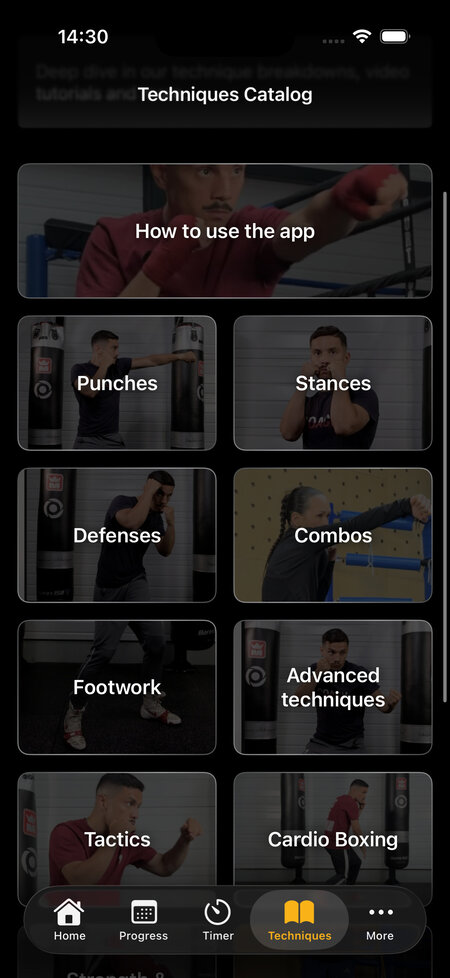
The point of the catalogue is not to read your way to better sparring. It is to look up the specific tool you need before a session, drill it in your next solo workout, and have it ready when the matchup calls for it.
Drill it before you need it
Reading a piece like this and walking into sparring expecting to use any of it is how you forget every word the moment you get touched. The drills are the bridge. Shadow boxing with the app calling out the right exercises (body work, jab focus, defensive sequences, footwork patterns) is how the tactics move from “I know that” to “I do that without thinking.”
Both iOS and Android have the full technique catalogue, the jab and body workouts, the defensive exercises, and the footwork drills. If you are about to step into sparring against someone with a different size profile than you, an hour of focused solo work earlier in the week beats showing up cold and trying to remember anything you read.