How to Throw Powerful Punches on the Heavy Bag
When people try to hit a heavy bag hard for the first time, they usually put everything into their arm. The bag swings away, there’s a dull thump, and they end up a little off balance with their chin out.
It felt strong.It probably wasn’t.
A powerful punch on the bag looks almost calm by comparison. The feet stay under you, the hips turn, the punch lands with a sharp sound and the hand is back at your chin before the bag has moved much.
Where punching power actually comes from
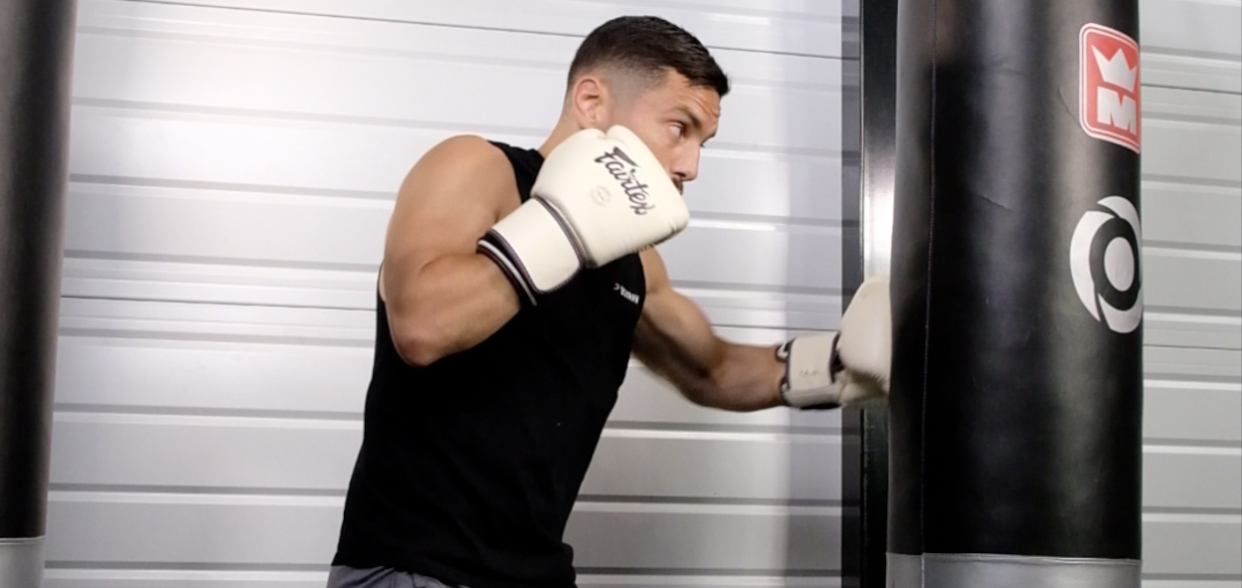
Your arm is the last link in the chain, and the weakest one. The power starts when you push off the floor, travels up through a pivoting foot and turning hips, and the arm delivers it. If your punches feel light, look at your feet and hips before you look at anything else. Most of the time the rear heel isn’t turning, or the hips stay square while the shoulders do all the work.
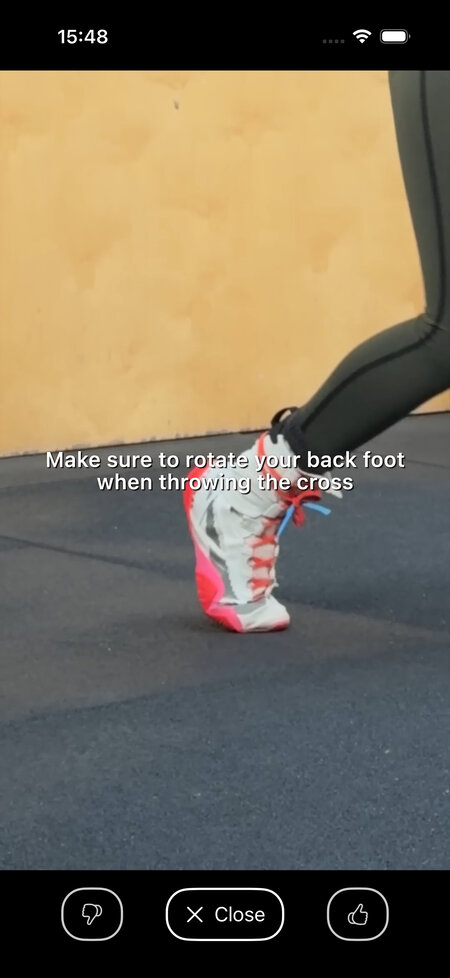
This is true for every punch, though it shows up differently on each. On a cross, the rear foot pivots like you’re crushing something under the ball of your foot. On a hook, the lead foot and hips turn together and the arm stays locked at roughly 90 degrees. If you want a refresher on the mechanics of each one, we put them all in one place in our guide on how to throw every basic punch.
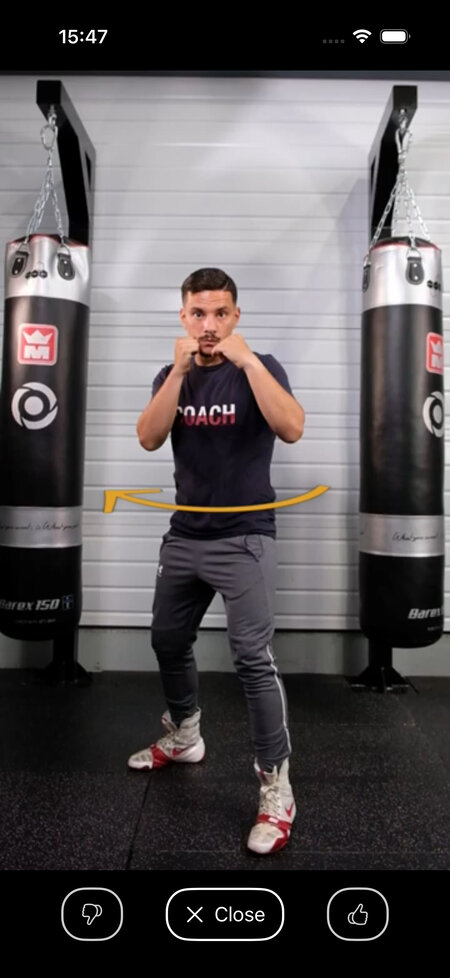
How to throw a power punch on the heavy bag
When you only have one punch to think about, take your time with it. You’re not racing the clock. Reset your feet, then put everything you have into it:
- Set your distance. Your arm should be almost fully extended when the punch lands.
- Stay in your stance. Feet planted, knees slightly bent, weight balanced between both legs.
- Turn your feet and hips. Pivot on the ball of your foot and let the hips pull the shoulder and arm through.
- Hit the surface, then come back. Aim a couple of inches into the bag rather than trying to drive your fist out the other side.
- Return to your guard. The hand goes straight back to your chin, and you should still be standing in your stance.
Keep the technique clean even when you’re hitting as hard as you can. Hard punching with a wild swing, a lifted rear foot and your head over your front knee is the kind of power that works once in a bar and gets you countered in a ring.
The crack test: are you hitting the bag or pushing it?
We call it the crack test: after a hard punch, listen to the bag. A sharp crack means you landed clean and snapped the punch back. A dull thud means you pushed.
Pushing is the most common power mistake on the bag, and it’s easy to miss because it feels strong. The fist stays in contact for too long, the bag swings a lot, and you get the satisfaction of moving something heavy. But a pushed punch is slow, and in a real exchange it leaves your hand out there for someone to counter.
The sound depends on your bag, so don’t judge it against the gym’s bags or someone else’s video. A water bag or a soft, older bag never gives you the same crack as a firm leather one. Compare your punches with each other. Throw five pushes on purpose, then five snapping punches, and you’ll hear the difference on your own bag within a minute.
The swing of the bag is a second clue. A clean power punch makes the bag jolt and shudder. A push sends it swinging away from you in a slow arc.
Get your distance right
Distance takes away more power than people expect. If you stand too close, your arm is still bent when the punch lands and you can’t turn your hips all the way through. You end up shoving with your shoulder. If you stand too far, you reach, your weight goes over your front foot and the punch lands at the end of its range with nothing behind it.
Your arm should be extended when your fist hits the bag, with a slight bend left at the elbow. A quick way to find that spot: get in your stance, reach out with a jab until your knuckles touch the bag, and stay there. That’s roughly where your straight punches want you to be. Hooks and uppercuts need you a little closer, so step in for those.
The bag will also swing back toward you after hard punches. Instead of standing still and getting crowded, step back or to the side and reset your distance before the next one.
If you lose your balance, something is off
After a power punch, you should be able to punch again right away or move without having to recover first. If you stumble forward, fall onto your front foot, or need a small step to catch yourself, something in the technique is off.
The usual causes:
- You’re reaching because you’re too far from the bag
- Your head is moving past your front knee
- Your feet are too close together or lined up, so you have no base
- You’re swinging with your arm and your body follows it instead of the other way around
Fix the stance and the distance first. Those two take care of most balance problems on the bag.
Power in combos: not every punch is 100%
When you hit a combination hard, the same principles apply: give everything you have while paying attention to your technique. But “everything” doesn’t mean every punch at full power. In most good power combos, the straight punches are fast and snappy, and the hooks or the last punch carry the weight.
A 1-2-3 is a good example. The jab sets up distance and gets a reaction. The cross is quick and turns your hips, which loads the lead hook. The hook is where you sit down and put your weight. Throwing all three at maximum makes each one slower and the whole combo easier to read.
You’ll also notice you naturally take more pauses between hard combos than between light ones. That’s normal. You need a beat to reset your feet and your breathing before you can turn into the next one properly.
This short video goes over the points in this article, then shows a boxer on the bag switching from light work to power punches. Watch how his hips turn more once he starts hitting hard, and how the hooks carry the weight while the straight punches stay quick.
The first thing to go when you punch hard is usually your guard. The hand that isn’t punching drifts down, or the punching hand comes back to your chest instead of your chin. The bag doesn’t hit back, so it never punishes this, which is why it’s worth watching closely. We wrote a full article on why the bag doesn’t hit back, but you still need your guard.
Don’t try to go a full round at full power
It’s very hard to hit at full power for a full round, and you shouldn’t try to. By the second minute your punches are slower, your technique is gone and you’re training bad habits with tired arms. Power work goes best in short efforts with lighter work in between.
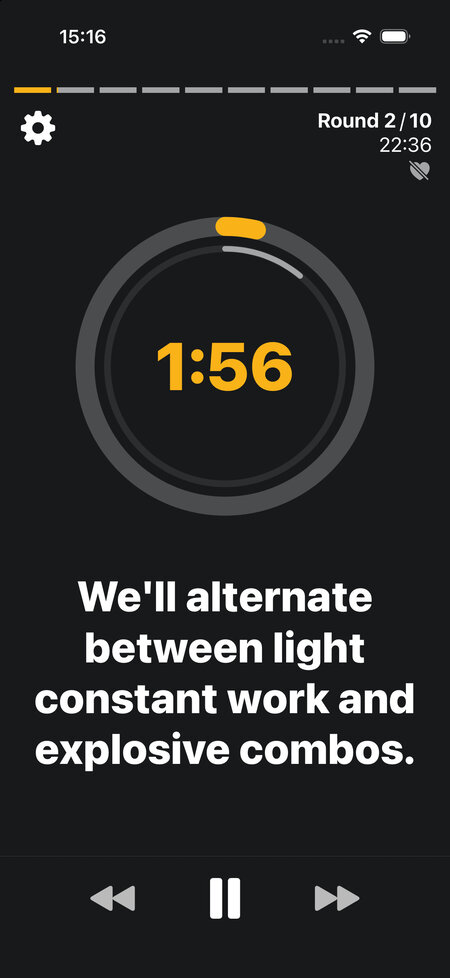
That’s how the Shadow Boxing App handles it on the bag. The Punching Bag (explosiveness) exercise alternates between light, constant punches and short bursts where the app tells you to hit with power. You keep your hands moving and your feet active in the light phase, then commit fully when the call comes. Full-power rounds from start to finish only show up on rare occasions.
If you want to go further with this, our article on training explosiveness on the heavy bag covers how to structure those bursts and how much rest to take between them.
When hitting hard starts to hurt
Listen to your body when you hit hard. If your shoulder or your hand starts to hurt, ease off for the rest of the session. One sore hand can keep you off the bag for weeks, which costs you a lot more than a lighter round today.
Most hand and wrist pain on the bag comes from a few fixable things: no wraps or loose wraps, a wrist that bends at impact, or simply hitting hard for longer than your hands are used to. Wrap every time you hit the bag, and make sure the wraps are the right length for your hands. If the pain is already there, our guide to wrist pain after the punching bag goes through the causes and when to see a doctor.
Build up slowly. Start with a few hard punches per round and add more over a few weeks, not a few days.
Practice power with the app
Power is a skill you practice, the same as speed or defense. It works best when something else decides when to go hard, so you’re reacting instead of choosing the punches you’re comfortable with. The Shadow Boxing App has bag workouts that mix light work, combos and power bursts, and you can pick one and run it on your next session.
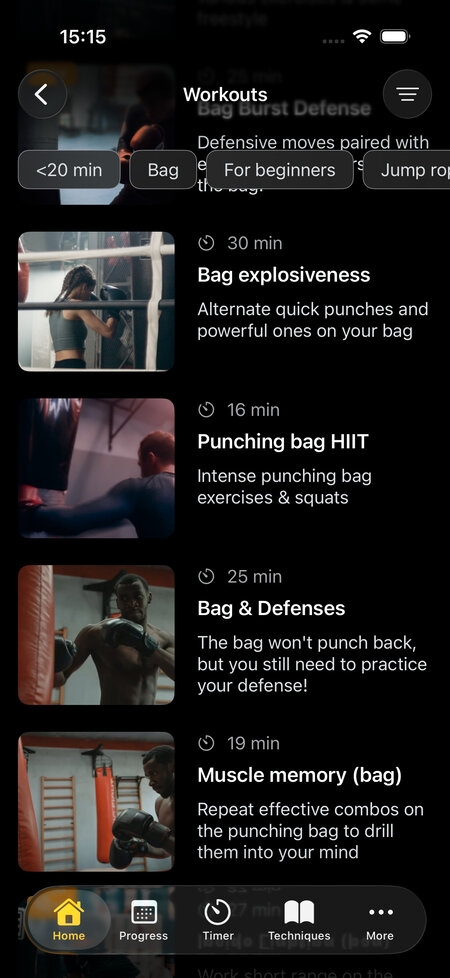
If you’re not sure where to start, filter the workout list by Bag and you’ll find plenty of heavy bag workouts, from short HIIT sessions to longer rounds built around explosiveness or defense. If you’d rather follow a plan, the Hitting the Bag program takes you through power, speed, cardio and defense on the bag over several days. The app is free to download.