
How to Train Explosiveness on the Heavy Bag Like a Pro
Walk into any gym and you will see someone leaning on the heavy bag, throwing hard punches at a steady grind for a full round, breathing through their mouth by the end of it. It looks like power training. It is not. That person is training endurance at a medium output, and the punches that land in minute three are nothing like the ones from minute one. Explosiveness is a different quality, and it needs a different kind of round.

What explosiveness actually is
Explosiveness is how fast you can produce force, not how much force you can produce in total. A punch that takes half a second to reach full power is a push. A punch that reaches the same power in a tenth of a second is a knockout shot. The difference is rate of force development, and it is what separates a hard hitter from someone who is merely strong.
Two things follow from this. First, you cannot train it while tired. Your nervous system needs to be fresh to fire everything at once, so the moment your form gets sloppy and your punches slow down, you have stopped training explosiveness and started training something else. Second, the work has to be done at maximum intent. Ninety percent effort builds ninety percent punches. Every rep in an explosive phase should be thrown as if it is the only punch that matters.
This is why the classic “go hard for a whole round” approach fails. Nobody can throw at maximum intent for three minutes. After 20 or 30 seconds of that, your output drops and you are grinding, which is fine for conditioning but does nothing for speed.
How pros structure it
Watch a professional working the bag with a coach and the pattern is obvious once you know to look for it. They move, they touch the bag lightly, they stay loose. Then the coach calls for it and they explode: a short combo, every punch at full speed, hips and feet completely committed. Then they drop straight back to light work and let their body recover. A minute later, again.
The proportion is what matters. A round of explosive bag work might contain 20 seconds of true maximum-effort punching, spread across four or five bursts. The rest is active recovery: footwork, light jabs, feints, keeping the heart rate from climbing too high. It feels almost easy compared to a grind round, right up until the burst, which feels like a sprint.
Keep the bursts short. Three to five punches is plenty. A long combo thrown with power inevitably loses power by the fourth or fifth shot, so long combos belong in speed and endurance rounds, not here. The last punch of the burst should be as fast as the first.
Snap, don’t shove
The most common mistake on the bag is trying to move it. A heavy bag weighing 80 or 100 pounds swings when you push through it, and a big swing looks satisfying. It is also the wrong feedback. Pushing the bag means your punch stayed in contact too long, which is what a shove does, not a snap.
A punch thrown for explosiveness should land and come straight back. The bag should fold or crack rather than swing wide, and the sound changes: a sharp thud instead of a dull one. Think about hitting through a spot two inches inside the bag and then retracting as fast as you extended. Your retraction speed matters as much as your delivery, both because it protects you and because it is what lets you fire the next punch quickly.
The power itself comes from the ground. Rear foot drives, hips rotate, shoulder follows, and the arm is just the delivery system. If your shoulders are doing the work you will feel it in your arms after a few bursts, and that is a sign to reset. We covered the mechanics of each punch in detail in our article on how to throw punches properly, and all of it applies with more urgency when you are trying to be fast.
Rest is part of the exercise
Recovery between bursts is where most people cheat, usually because standing still with the bag in front of you feels like wasted time. It is not. If you launch the next burst while still breathing hard from the last one, your output drops, your form goes, and you are back to grind training.
Active recovery solves both problems. Instead of standing, stay on your feet and work lightly: circle the bag, throw single jabs at 30 percent, practice a slip or a pull, feint. Your heart rate comes down while your feet and eyes keep working, and when the next burst comes you are ready for it. A ratio of roughly one part burst to three parts recovery is a reasonable starting point. If you find you can go harder on every burst, shorten the recovery. If your fourth burst is visibly slower than your first, lengthen it.
Warming up for explosive work
Explosive bag work is the last thing you should do cold. A grind round forgives a stiff body because nothing ever fires at full speed. A burst does not. So the warmup has a specific job here: get the hips, shoulders, and wrists moving through their full range, and get the nervous system used to going fast before the first real burst.
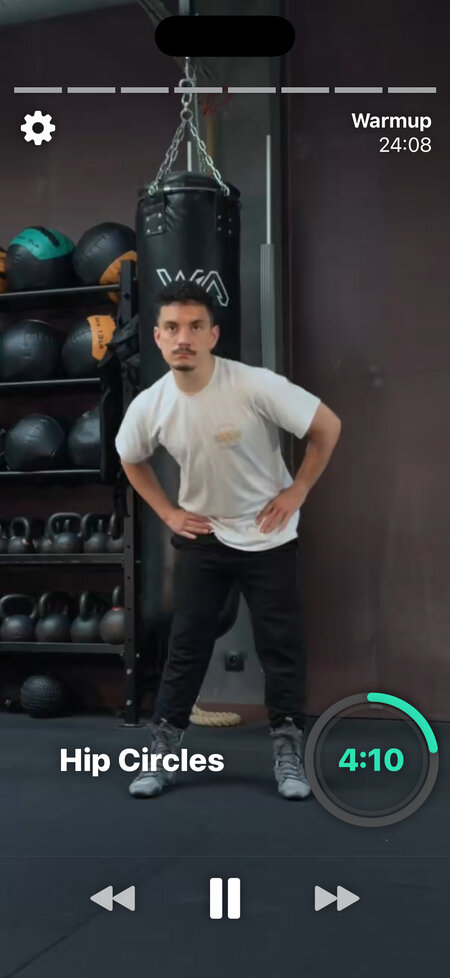
Start with five minutes of general movement to raise your temperature. Jump rope is ideal if you have one, since it wakes up the calves and the rhythm in your feet. Light jogging in place or a few rounds of easy shadow boxing work too. Then spend a few minutes on mobility for the joints that will take the load: arm circles both directions, hip circles, torso rotations with your hands on your shoulders, and wrist circles with your fists loosely closed. The mobility exercises we recommend before boxing cover this in more detail.
The part most people skip is the ramp. Before the first maximum-effort burst, throw a few combos on the bag at half speed, then a few at three quarters, feeling your rear foot drive and your hips turn each time. Add a couple of fast single punches with no power behind them, just to remind your arms what quick feels like. Only then go to the first real burst. A useful rule: your first explosive combo of the session should feel a little held back, and the second should feel like the real thing. If the first one feels like a full sprint from a standing start, you were not warm enough.
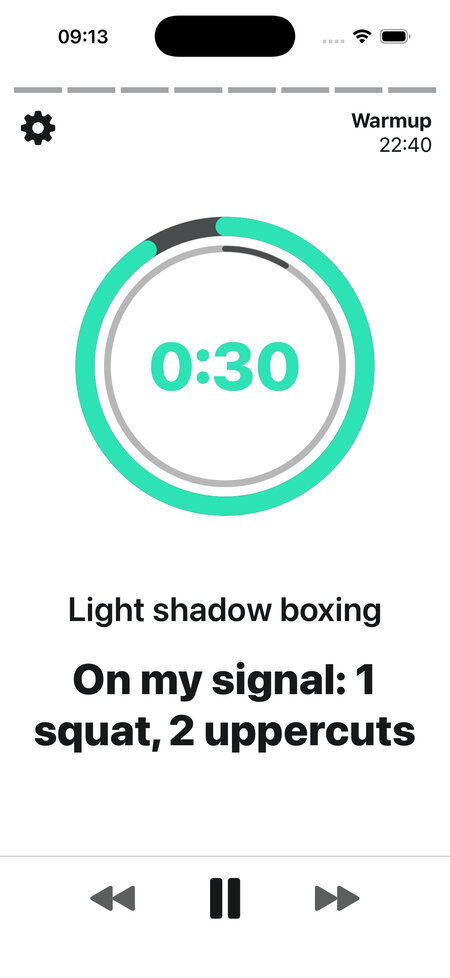
If you use the Shadow Boxing App, the guided warmup at the start of the bag workouts handles the movement and mobility portion, so you can go straight into the ramp when the first round begins. Plan on 8 to 10 minutes of total warmup before the explosive rounds. It feels long, and it is the difference between a sharp session and a sore wrist.
Two rounds you can run this week
The simplest version is a plain interval. Set a three-minute round. Every 45 seconds, throw one combo of three to four punches at absolute maximum effort. In between, light jabs and footwork. That is four bursts a round, and after three of those rounds your legs and hips will tell you something happened.
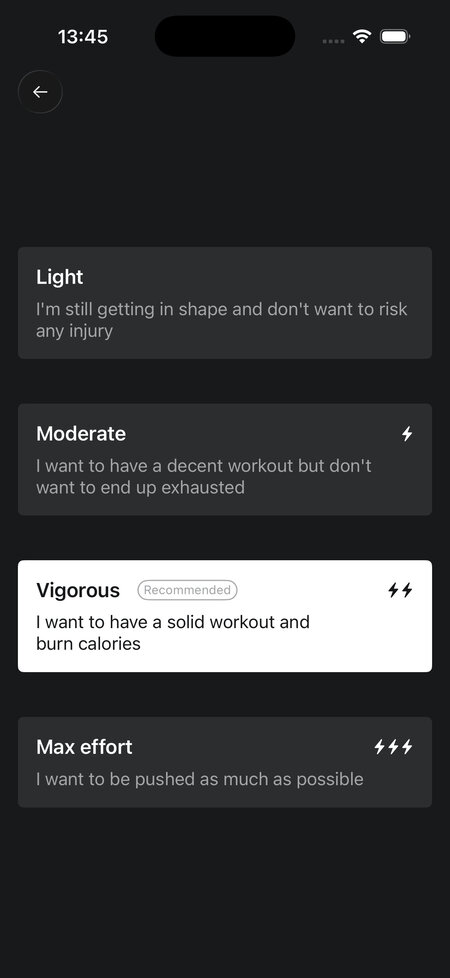
The second version is what the Shadow Boxing App does in its Punching Bag (explosiveness) exercise, and it is the one we run most ourselves. The round alternates between light constant work, an explosive phase, and an explicit recovery phase. During the light phase the coach gives you a specific job, like light 1-2s at a steady rhythm or footwork with jabs and feints. Then it calls “explosive punches” and starts feeding you combos to throw with power, one after another, for a short window. Then it tells you to slow down and gives you a recovery task, and the cycle repeats. The length of the explosive window and the recovery both scale with the intensity you pick, so a beginner and an experienced boxer get different rounds from the same exercise.
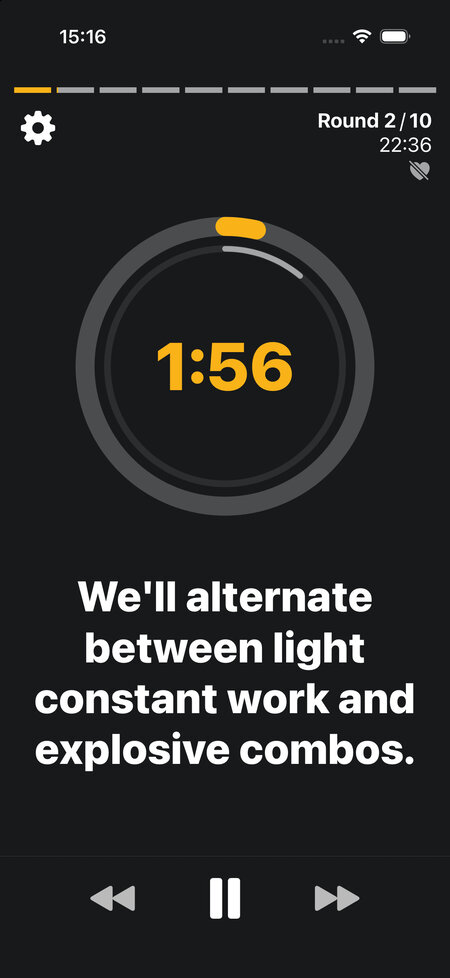
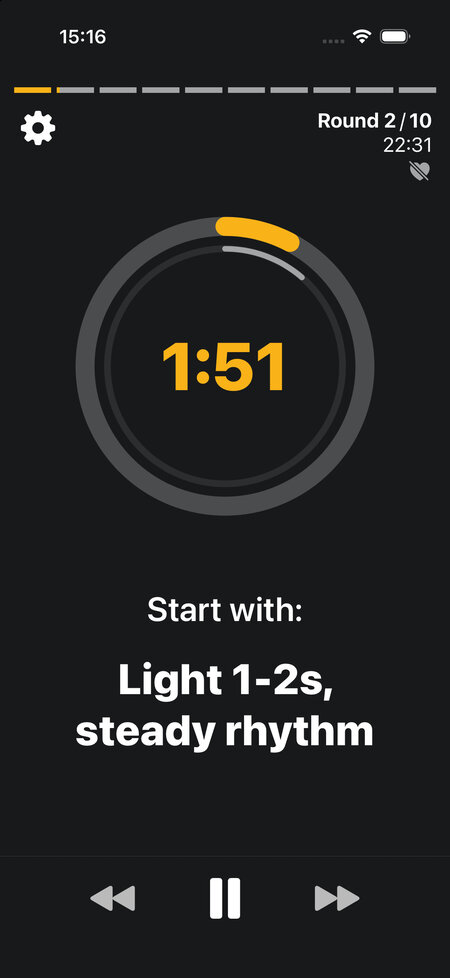
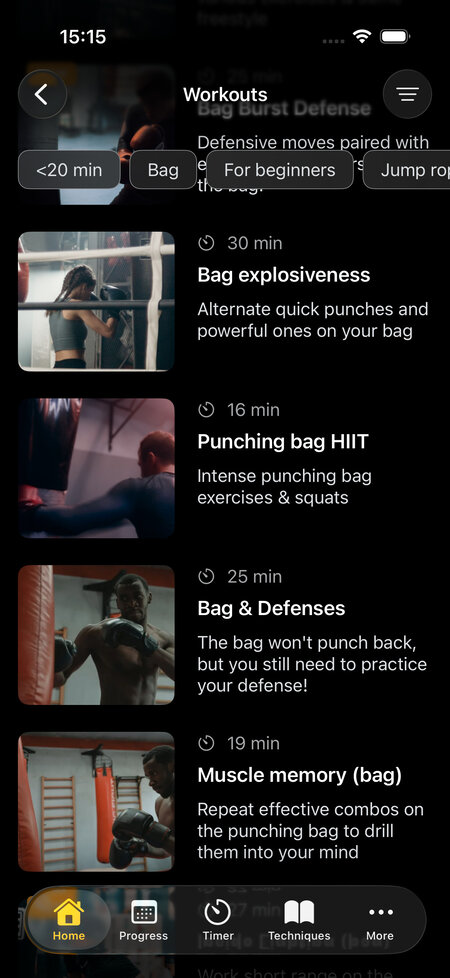
The reason we like the coached version is the same reason a pro has someone calling the bursts: you cannot be trusted to call your own. Left alone, everyone drifts toward the comfortable middle, going a bit hard all the time. An external signal that says “now” makes you commit fully, and a signal that says “slow down” makes you actually recover. The Bag explosiveness workout in the app is built entirely around this, and if you want the exercise mixed into a longer session, the quick start punching bag workout includes it when you flag that you have a bag. We reworked all of these rounds recently, and the details are in our post on the punching bag workouts update.
Things to watch for
Wrap your hands and wear proper bag gloves. Maximum-effort punching is where wrists get hurt, especially hooks that land a little off. If you feel a sting in the wrist, that punch was thrown with a bent wrist, not with too much power.
Do not do explosive work every day. Because it relies on a fresh nervous system, two or three sessions a week with easier bag work or shadow boxing in between will get you further than daily hammering.
Finally, film yourself once in a while. Most people believe their bursts are much faster than they are. Seeing the punch that felt like a bullet come out at the speed of a normal 1-2 is humbling, and it is the fastest way to fix it.