
The Bag Doesn't Hit Back, But You Still Need Your Guard
Three rounds into a bag session, take a look at your rear hand. For most people it’s somewhere around the chest by then, and it has been for a while.
Nobody told you to drop it. The bag just never gave you a reason to keep it up. It doesn’t counter, it doesn’t feint, and it doesn’t care how long you stand in front of it after a combo. Every round you do like that is practice at being easy to hit.
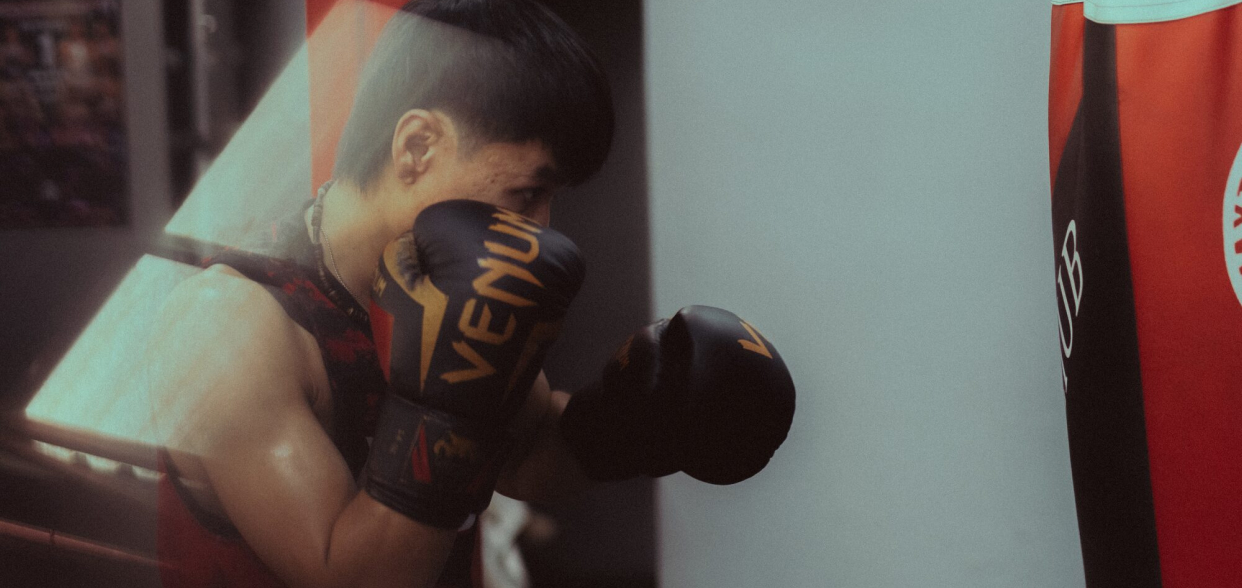
Why the heavy bag builds bad defensive habits
The bag rewards offense and nothing else. Each clean shot gives you a big, satisfying thud, and no amount of sloppy defense ever costs you anything. We wrote about the same problem with mitt work that never hits back, but the bag is worse in one way: on the pads there’s usually a coach watching. On the bag, especially at home, there’s nobody.
Fatigue makes it worse. Bag rounds are some of the most tiring work in boxing, and tired hands drop. If your guard only holds up for the first minute of a round, the last two minutes are teaching you something else.
The bag habits to watch for
Some of these show up in shadow boxing too, but the bag makes each one more likely:
- Leaning on the bag. Resting your head or shoulder on it between combos, or pushing on it with your gloves. On a real opponent, that head position is right where an uppercut lands.
- Hands that stay low after power shots. The harder you hit, the longer the hand takes to come back. After a big hook, the rear hand is often nowhere near the chin.
- Standing square and flat-footed. The bag doesn’t move around you, so you stop moving around it. Your feet end up side by side and you punch from the same spot all round.
- Chasing the bag. When it swings away, you reach after it with another punch and fall forward over your lead foot.
- Catching the bag with both hands. When it swings back at you, you stop it with your gloves. That reflex is worth replacing, and the next section shows how.
- Chin up when you get tired. Late in the round, the head comes up and back, and the chin is the first thing out front.
Swing-back defense: treat the swing as the counter
Swing-back defense is a simple rule: every time the bag swings back toward you, treat it as a punch coming at you and defend instead of catching it.
A hanging bag gives you the closest thing to a counter you’ll get without a partner. You hit it, it moves away, and it comes back at you. If you stand there and catch it, you’ve trained yourself to absorb pressure with your hands open. If you slip, pivot or step off as it comes, you’re practicing the moment right after your combo, which is when a real opponent fires back.
Here’s how a round of it goes:
- Throw a 1-2-3 with real power.
- As the bag swings back, pivot or step to the side so it passes where your head was. A slip or a step back works too.
- Once you’re set, answer with a punch of your own, like a cross or a hook.
- Bring both hands back to your face before you start the next combo.
If the bag swings too far to handle, hit a bit lighter or take your step off at an angle. You don’t need a wild swing to make this work, only enough movement to give you something to react to.
Small checks that keep your guard honest
After every combo, touch your gloves to your cheekbones on purpose. It feels silly for the first few rounds. After a week you’ll catch yourself doing it without thinking, which is the whole point.
End your combos with a defensive move even when nobody is calling one: a slip, a roll, a step back. You don’t need to do it every single time, but if a whole round goes by without one, that’s the habit forming. If slips and rolls are new to you, start with our overview of boxing defense techniques before working them on the bag.
When your hands start to drop late in the round, take power off before you let the form go. A slightly lighter punch with your hand back at your chin teaches you more than a heavy one that leaves your face open. And if you can, film a round now and then. Dropped hands are hard to feel and very easy to see.
How the app puts defense into bag rounds
The Shadow Boxing App can’t see your hands, but it can stop you from treating the bag as offense-only. The workout built for this is called Bag & Defenses, and its description says it plainly: the bag won’t punch back, but you still need to practice your defense. It mixes bag exercises built around defense with lighter rounds to get your breath back.
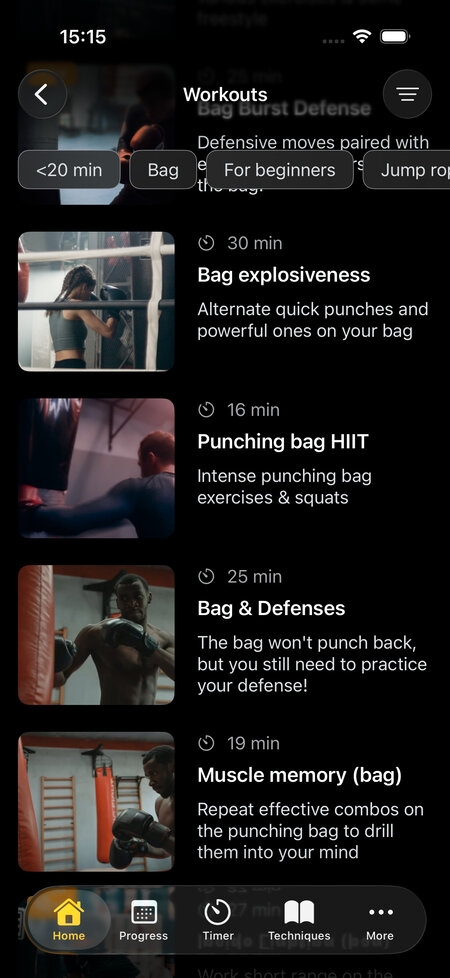
The core of it is the Punching Bag (defense) exercise. Each round picks one focus, either slipping or rolling, and the coach tells you which before you start. Then you work the bag, and on the coach’s signal you slip or roll first and follow up with a combo of your choice. Because you don’t know when the signal is coming, you can’t plan ahead. You have to keep your hands where they can defend the whole time, which is exactly the habit the bag normally erodes.
Punching Bag (evade) goes after the moment people are most likely to stand still and admire their work. You stay light and loose on the bag, then explode with a hard combo when the coach calls it, and you have to defend straight after. The bigger the combo, the more you want to stay where you are. The exercise doesn’t let you.
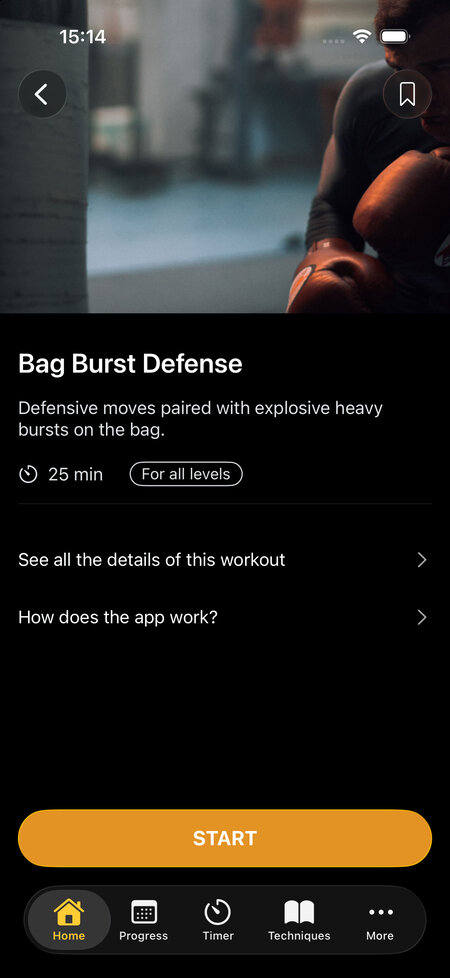
If you want more of this, the newer Bag Burst Defense workout follows the same idea. We covered it in the punching bag workouts update. And if you’re just getting started on the bag, add a step back or a slip after your combos from the very first session. Defense is a lot easier to build in from day one than to bolt on months later.