
Why Good Mitt Work Always Includes Defense
Finish a 1-2-3 on the mitts with a good coach and there is a decent chance a mitt comes swinging back at your head before your hook has even returned to your face.
That’s on purpose. Mitt work where only one person attacks is fun, and it quietly teaches you some of the worst habits in boxing.
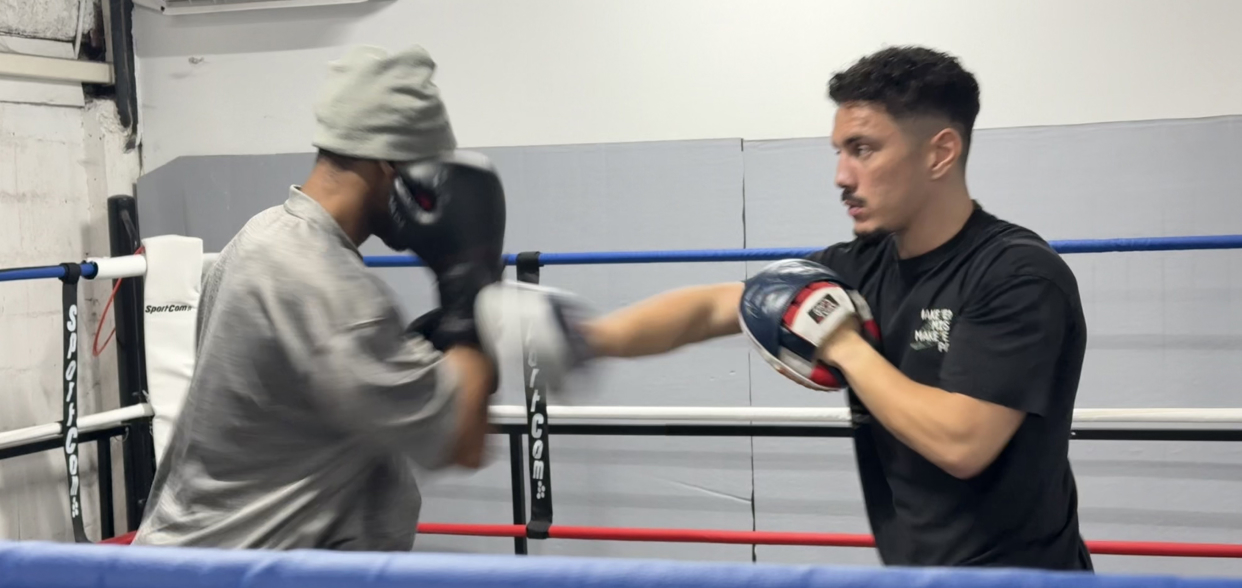
What one-way mitt work teaches you
Pads reward offense. The mitt is right where you expect it, the punch lands with a satisfying pop, and nothing ever comes back. Do enough rounds like that and your body learns a simple rule: the combination is over when the last punch lands. In sparring, that is exactly the moment your opponent starts theirs.
The habits that come out of it are easy to spot from the outside and hard to feel from the inside:
- Dropping the free hand. The rear hand drifts down to the chest while you jab, or the lead hand falls toward the hip when you throw the cross. On the mitts nothing punishes it, so it never gets fixed.
- Leaving the punch out there. The jab lands and the arm stays extended for half a second instead of snapping back to your face.
- Chin up at the end of the combo. Tired after the last punch, the head comes up and back, and the chin is the first thing in front of the other person.
- Standing still after the combo. You finish, admire the sound, and wait for the coach to set the next one. That pause, right in front of someone, is where counters land.
- Falling in on the power shot. Reaching for the mitt on the last punch pulls your weight over your lead foot, and you have nothing left to move with.
Dropped hands are near the top of our list of common beginner mistakes for a reason. Almost everyone does it, and one-way pad work is one of the places it grows.
What good coaches do about it
Anyone who has trained with an experienced pad holder knows the mitts do not just sit there. Good coaches build defense into the round, and they have a few ways of doing it.
The most common one is to swing back. After your combo, the coach throws a looping hook with the mitt and you roll under it, or pushes a straight shot toward your face and you slip or parry. It is slow and light compared to a real punch, but it forces you to finish every combination in a position where you can defend.
They also call defenses into the combo itself: “1-2, slip, 2” or “jab, roll, hook”. The defense stops being something that happens between rounds of offense. It sits in the middle of the sequence, and the punch after it has to come from wherever the slip or roll left you.
Then there is the less formal method. Drop your right hand while you jab and plenty of coaches will tap you on the head with the mitt. It doesn’t hurt, but it is annoying and a little embarrassing, and after the third tap your hand stays at your chin. That kind of feedback is hard to ignore, which is why it works so well.
Defense makes the punches better too
Adding defense to pad work is about more than not getting hit. Punches thrown from a balanced position, with the other hand at your face, are punches you can follow up. If you know a mitt might come back after your cross, you stop overreaching on it, and the cross gets shorter and faster as a result.
Slips and rolls also set up what comes next. In an orthodox stance, a slip to your left puts weight on your lead leg, ready for a lead hook or uppercut. A slip to your right loads the rear side for a cross. Once the movement is drilled inside the combo, the punch after it starts to come on its own. If you want the detail on doing it properly, we have a full guide on how to slip a punch.
The same goes for the moment between two combinations. In our article on two-phase attacks, the first thing that has to happen in the short pause between bursts is your guard coming back. That only becomes automatic if your training asks for it every time.
Getting the same thing without a coach
Most people get time on the mitts with a coach once or twice a week at best, and do the rest alone: shadow boxing, the heavy bag, a few rounds in the living room. That’s where defense tends to disappear completely, because nothing in an empty room asks for it.
This is why the Shadow Boxing App mixes defenses into its combos instead of keeping them in a separate corner. The Pad Work exercise calls combinations the way a coach would on the mitts, and some of them have a slip or a roll right in the middle, with a direction attached. You hear 1-2-Roll Right-2, you throw the 1-2, roll under the imaginary hook, and come back up with the cross.
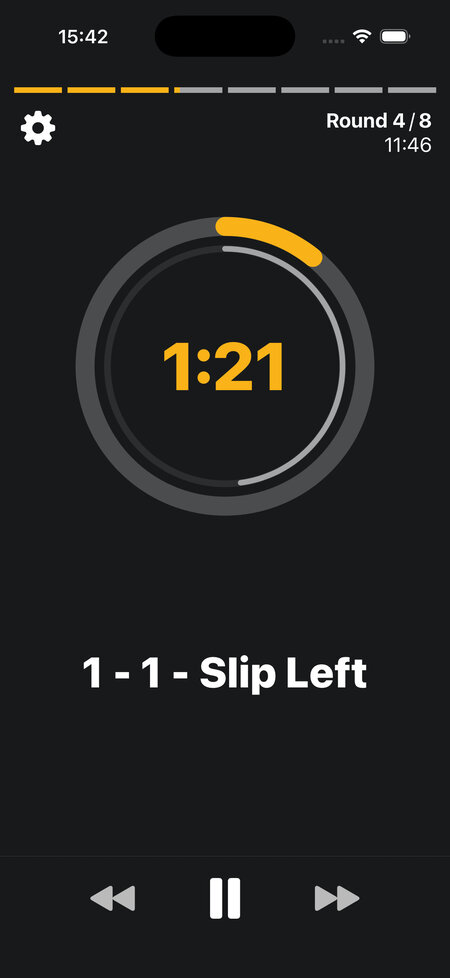
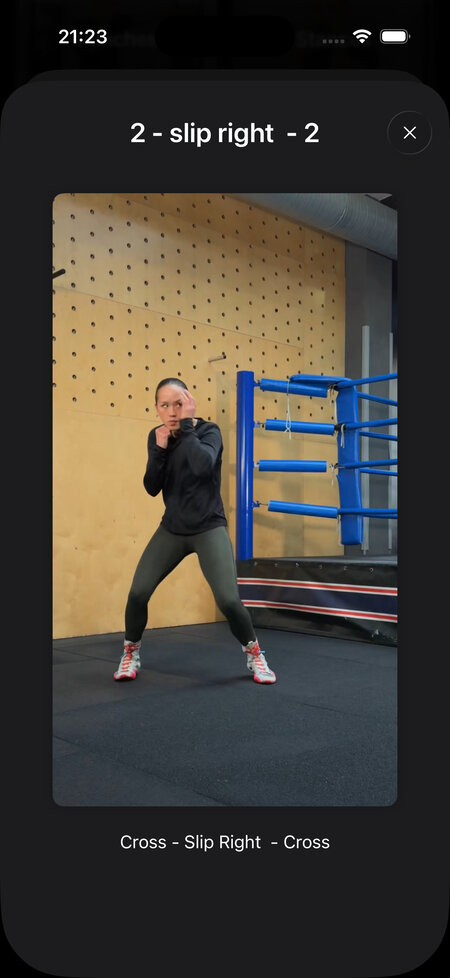
2 Phase Attacks goes a step further and follows the structure coaches like so much on the pads: an attack, a defense, then a second attack. The defense sits between the two combinations, and you have to come out of it ready to punch again. If the defensive moves are still new to you, the app has short tutorial videos for each one, including a cross, slip right, cross combination that shows how a slip fits between two punches.
There is one thing the app can’t do: reach out of your phone and tap you on the head when your hand drops. Don’t worry, we haven’t found a way to add that. The closest it gets is the Remember Defenses exercise, where the coach reminds you to keep your hands up while you slip and at your chin while you roll.
That means the job of noticing falls to you. A few things help:
- Check your free hand at the end of every combo. If it isn’t at your cheek, you’ll know.
- Film a round once in a while. Dropped hands are obvious on video even when they feel fine in the moment.
- Use a mirror for the first few rounds when you’re learning a new combination.
- Slow down. A clean 1-2-3-Roll at half speed teaches you more than a sloppy one at full speed.
When you finally spar, the habits you built on the pads and in shadow boxing are what show up. If you’ve spent months rolling under mitts and bringing your hand back to your chin, that’s what you’ll do when the punches are real. Our sparring tips for beginners start with keeping your hands up for exactly that reason.