Two-Phase Attacks: Why the Pause Between Combos Is the Point
Beginners tend to picture a boxing exchange as one long uninterrupted run of punches. You see a highlight reel of someone landing eight shots in a row and you assume that’s the goal. In practice, exchanges come in short bursts with small gaps between them, and learning to work in two phases is one of the more useful habits you can build early. Attack, pause, attack again, with the pause kept short.
What a two-phase attack actually is
You throw a short combination. You stop for a moment. Then you throw a second one.
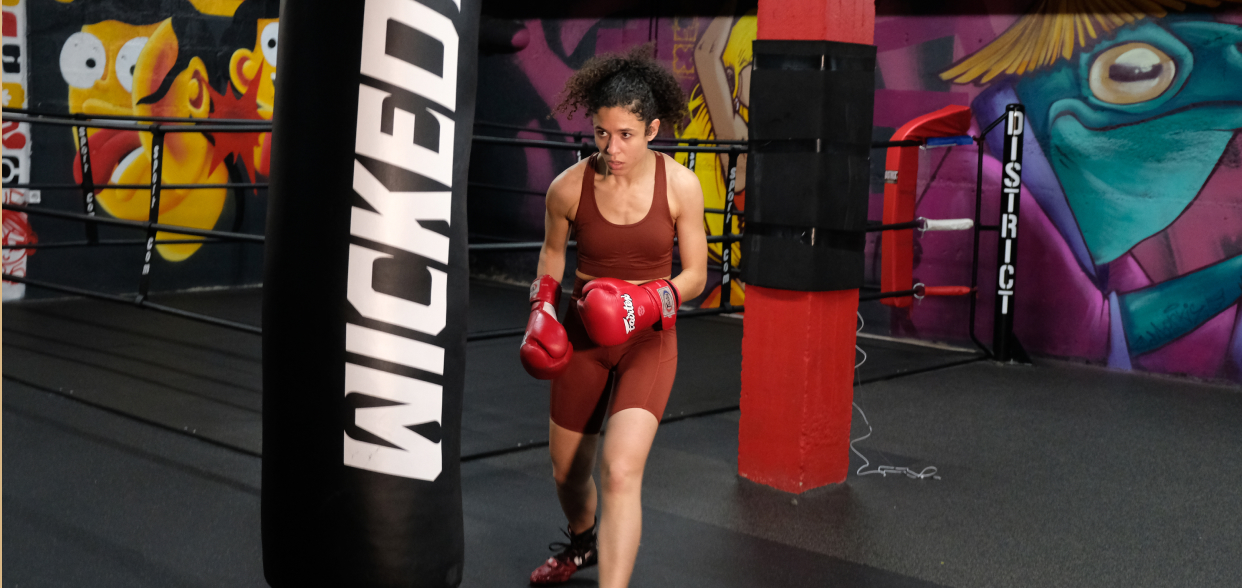
That’s it structurally. A 2-3 followed by a 3-2, or a 2-1-4 followed by a 4-3-4, with a real gap in the middle. We put a round of this on video recently, and on screen the callout literally shows the gap as an ellipsis: first combo, dots, second combo. The visual is a good summary of what your training should feel like.
What makes it a technique rather than just “two combos” is what you do with the gap, and how long you let it last. Get that part right and everything else follows.
What happens during the pause
Four things need to happen on your side of the gap, and they all have to happen quickly, because the pause has to stay short. A fifth one happens on the other side of it, and that one is the reason this works at all.
Your guard comes back. The moment you stop punching, your hands should already be home. Most beginners finish a combination with their rear hand hanging somewhere near their hip and their chin exposed, and they stay like that for half a second. That half second is when they get hit. Drilling the pause deliberately is how you make the recovery automatic.
Your feet reset. Long combinations pull you off balance. By the fourth or fifth punch your stance has drifted, your weight is forward, and you can’t move properly. Stopping forces you back into a position you can actually punch or defend from.
You look at what came back. The gap is when you find out what your opponent did with your first combination. Did they cover up and stay put? Did they step back? Did they answer with something? That information is what the second phase should respond to. Throwing your second combo without registering any of it is just throwing two combos.
You take a breath. Sounds trivial until you’ve done six rounds. People hold their breath through long strings of punches and gas out early. Two-phase work builds a natural breathing rhythm into the exchange.
Your opponent has to guess. This is the part that turns a training habit into a tactic. When your punches stop, they don’t know why. Is the combination finished, or is there more coming? Is this the moment to counter, or is that exactly what you want them to do? Did their block work, or did they just get lucky? While they’re working through that, you already know what your second phase is, because you decided it during the same gap. A boxer who is guessing is a boxer who is a fraction late, and a fraction is all you need.
How short is short
Somewhere between half a second and a second. Long enough to get your hands back and your feet under you, short enough that your opponent hasn’t finished processing the first combination before the second one arrives.
If the pause stretches past a second or so, you’ve handed the initiative over. They’ve reset too, they’ve had time to think, and now they’re the one choosing what happens next. A long pause also reads as hesitation, which invites people to walk in on you. When you’re drilling this, err on the side of too quick rather than too comfortable.
Two phases are only unpredictable if you also do the other two
If every attack you throw is a two-phase attack, you’ve traded one pattern for another. The pause stops being a question after the third time they see it, because they know a second combination is coming and they know roughly when.
What actually keeps someone guessing is mixing three things in the same round: isolated punches, straight combinations, and two-phase attacks. Sometimes you throw a jab and nothing follows. Sometimes you throw a 1-2-3 and it’s over. Sometimes you throw a 1-2, stop, and come back with a hook. Now the pause means nothing on its own, because it might be the end of the exchange or it might be the middle of one, and there’s no way to tell from the outside.
That’s also the point at which your single punches get dangerous. A jab thrown on its own is easy to ignore until it’s the same jab that opened your last three attacks. The app’s Single Punches exercise drills exactly that (a quick punch followed by a defensive movement), and workouts like Rhythm deliberately mix simple combos, single punches, and defenses in the same round for this reason.
Start with a jab, then something else
If you’re new to this, don’t try to design clever pairings yet. Make the first phase a jab and worry about the second phase after.
A jab, a short pause, then a 1-2. A jab, pause, then a 2-3. A jab, pause, then a jab to the body. The first phase is one punch you can throw without committing anything, and the second phase is where the actual work happens.
There are good reasons this is the version to learn first. A jab costs you almost nothing: your weight stays centred, your rear hand stays home, and you can pull it back and be exactly where you started. That makes the pause easy, because you have very little to recover from. Compare that to leading with a big rear hook, which drags your shoulder around and leaves you needing a full second just to be safe again.
The jab also does the job the pause exists for. It makes the other person respond, and their response is the information your second phase is built on. Throw a jab, see what moves, then pick. A jab that gets a flinch and a raised guard tells you to go to the body. A jab that gets nothing tells you they’re comfortable and you should probably change something.
Run whole rounds like this and nothing else. Jab, short pause, combination. It’s the least glamorous drill in boxing and it will do more for your timing than any six-punch sequence.
What the second phase should be
Once the jab version is comfortable, the second phase is where you start making choices. Most people default to “whatever I threw last time”, and there’s more available than that.
Punish whatever they gave you
If they covered up high after your first combo, the second one goes to the body. If they stepped back, you close the distance and start again with a jab. If they answered with a punch of their own, your second phase starts with a defensive move before it starts with a punch, which is exactly what the app’s 2 Phase Attacks exercise drills by dropping a block or a slip into the gap. There’s a short clip of that version too.
Come back on a different line
If your first combo was straight down the middle, hook around the guard on the second. If the first was head level, go downstairs. Repeating the same shape twice makes you readable, and someone who has already seen a 1-2 land is set up for the next one.
Mirror it
Something like 2-3 then 3-2 is worth drilling specifically. Same two punches, reversed order, which means you work the transition in both directions instead of grooving one pattern into your muscle memory. Doing this with a handful of your regular pairings will show you very quickly which ones you can only throw one way round.
Where beginners get it wrong
There are two failure modes and they’re opposites.
The first is never stopping. You throw, and throw, and throw, and the punches get progressively worse until you’re arm-punching from a square stance. If you’re gassed halfway through a round of bag work, this is usually why.
The second is stopping too long, which is the more common one once people hear the word “pause”. The gap turns into three seconds of standing still admiring your work, and in sparring that’s when you get countered. If you can feel yourself waiting, it’s already too long.
There’s also a middle failure worth naming: pausing with your hands down. A pause where your guard drops is worse than no pause at all, because you’ve stopped punching and stopped defending at the same time.
Drilling it on your own
This is a good technique to build solo, because the timing is something you can rehearse without a partner.
The Shadow Boxing App calls combinations out in this format across a lot of its exercises, so you get the two-phase rhythm without having to design it yourself. The 2 Phase Attacks exercise is the direct one: an attack, a defense, then a second attack. Hit and get out works a related habit, giving you combos that include a way to exit after punching. Counters (freestyle) flips it around, having you dodge on a signal and answer with a punch or a combination.
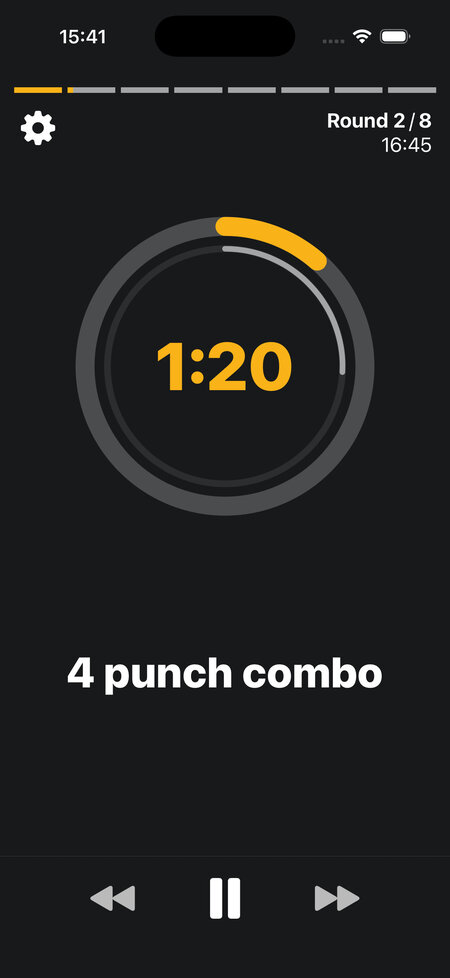
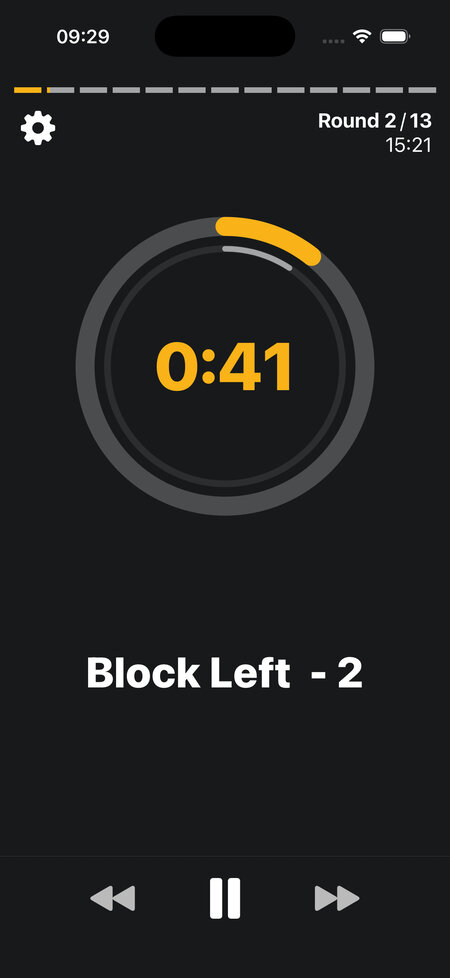
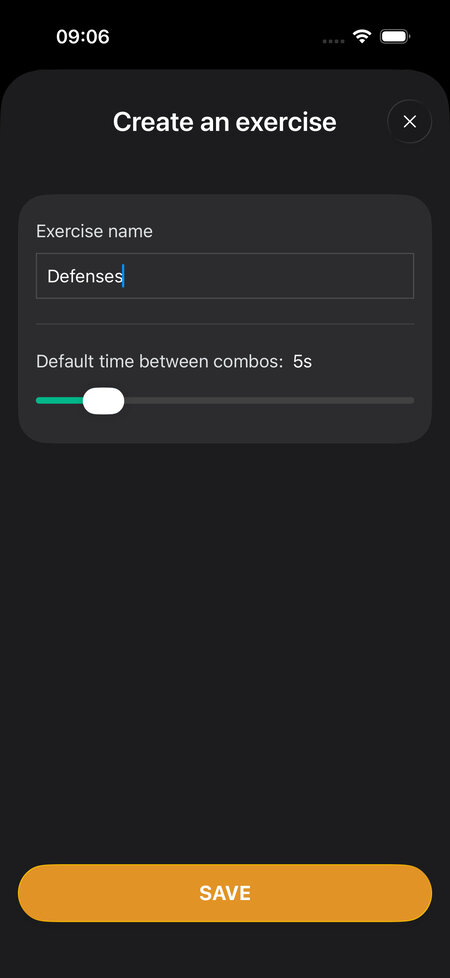
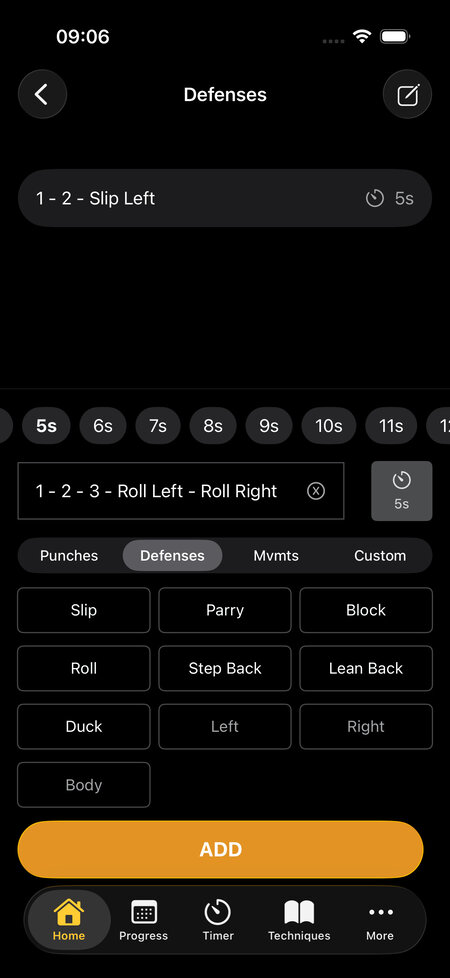
You can also build your own pairings in the combo creator. When you create a custom exercise it asks for a default time between combos, and that slider is precisely the pause we’ve been talking about. Five seconds is a reasonable setting while you’re still learning the sequences and need thinking time, but bring it down as they become automatic, because five seconds is nothing like the rhythm you want in a real exchange. If you want to put together a whole session around this, the piece on building your own boxing workout walks through how the custom builder fits together.
On the bag
Two-phase work is particularly good on the heavy bag, because the bag gives you something to react to. Throw your first combination, let the bag swing, reset your feet as it comes back, then throw the second one at whatever position it’s actually in. That forces the same adjustment a moving opponent would.
The app’s Punching Bag (defense) exercise has you slip or roll before following up with a freestyle combo, which is the bag version of the same idea.
In shadow boxing
Without a bag or a partner you have to supply the imagination yourself, and that’s fine. Picture a specific reaction during the pause and make your second combo answer it. It sounds like a small mental exercise, and it’s the difference between shadow boxing that improves your fighting and shadow boxing that’s only cardio. Our list of combos worth actually throwing is a decent source of pairings to work with.
Why it’s worth the trouble
Working in two phases makes you harder to time, especially once it sits alongside single punches and ordinary combinations in the same round. Someone facing a boxer who only throws one long burst knows roughly when it ends and when it’s safe to answer. Take that certainty away and every gap becomes a decision they have to make under pressure.
It also fixes a lot of small technical problems at once. Guard recovery, footwork under fatigue, breathing, distance management: all of them get trained by the same habit, without you needing a separate drill for each. That’s a good return for something that mostly amounts to remembering to stop.