
Shadow Boxing Combos That Are Actually Worth Throwing
Search for shadow boxing combos and you’ll find list after list: twenty combinations, fifty combinations, a hundred. This article has a list too, including a few signature combos borrowed from some of the best to ever do it. But if you take one thing away, make it this: the list is the easy part. What separates someone who looks sharp shadow boxing from someone punching air is everything that happens around the punches.
Combos are only half the job
Here’s the thing nobody puts in the title of their combo videos: a combination thrown flat-footed, from a standstill, with your hands dropping at the end, is just an arm exercise. The combo itself was never the point. It’s a small script inside a bigger performance, and the performance is what you’re actually training.
Shadow boxing works when you treat your imaginary opponent as real. Real opponents move, so you move. Real opponents watch for patterns, so you feint. And real opponents punch back, which means the moment your combo ends is exactly when you’re most likely to get hit. A few habits follow from that:
Never stop moving. Step in to throw, step out or pivot after. Change direction between combos. If your feet have been planted in the same spot for ten seconds, you’re doing bag work without the bag, not shadow boxing.
Mix up your rhythm. Don’t run every combo at the same metronome pace. Throw one fast, the next one slow and deliberate, pause mid-combo before the last punch, then explode. A predictable rhythm is as easy to read as a predictable combo, and rhythm changes are free: they cost no extra energy and make everything you throw harder to time.
Feint before you commit. Show the jab without throwing it. Drop your level for half a beat. Feinting makes your combos land in a fight because your opponent can no longer read your first move, and shadow boxing is the cheapest place to build the habit.
Defend after you attack. End combos with a slip, a roll, or at minimum bring your hands straight back to your guard. Your imaginary opponent should answer back after every exchange. If you build this reflex now, it will be there when someone is actually swinging at you.
Get out after an attack. Defense covers you, but getting out ends the exchange on your terms. Step back out of range, pivot off the line, roll out under the counter, or use the L step to leave at an angle. Punching and then standing right where you punched from is how people get caught, so make the exit part of the combo itself.
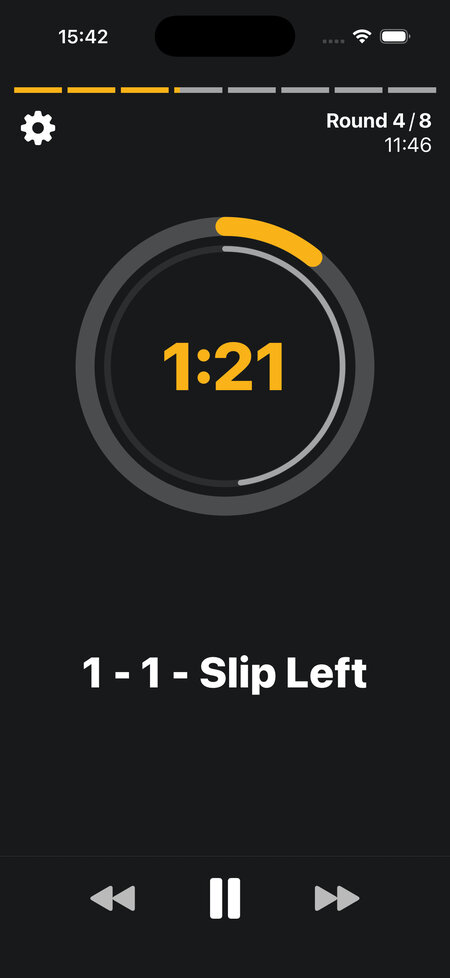
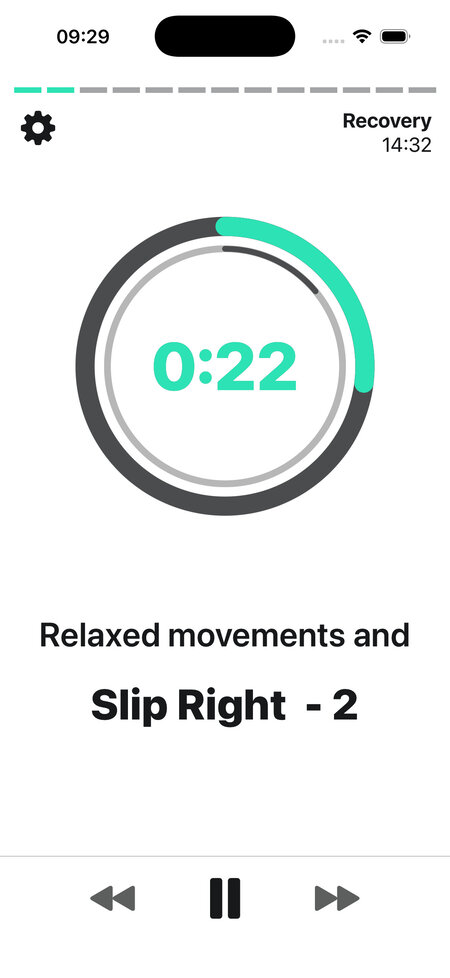
Every combo below is written with that in mind. Steal the sequences, but throw them like someone is trying to hit you back.
Core combos worth drilling
These are written in standard boxing notation, where the six basic punches are numbered: 1 is the jab, 2 the cross, 3 the lead hook, 4 the rear hook, 5 the lead uppercut, 6 the rear uppercut. “Body” after a number sends that punch downstairs.
1-2. The foundation of everything. Jab to find the range, cross to do damage. Finish it with a step to the side rather than standing in front of your target admiring your work.
1-1-2. The double jab changes your rhythm. The first jab is a question, the second is a distraction, the cross is the answer. Vary the speed between the two jabs and it becomes very hard to time you.
1-2-3. The classic three-punch combo. The cross turns your shoulders and loads the lead hook for free, so the 3 comes around with power you didn’t have to manufacture.
1-2-slip-2. A combo with the defense built in. You punch, you move your head off the center line, you punch again. This one teaches you that defense isn’t a pause in your offense; it can sit right in the middle of it.
1-2-3-roll-roll. Throw three, then get under the counter hook that would be coming back. Rolling twice moves you off the line and sets your feet for whatever comes next.
2 to the body, 3 to the head. Level changes win fights. Digging the cross downstairs pulls your opponent’s guard down, and the hook comes over the top. If you’ve never trained body shots deliberately, this is a good place to start.
You don’t need all of these at once. A short list drilled deep beats a long list you half-know, something we’ve written about before in why drilling a few combos beats memorizing a hundred.
When in doubt, jab
There’s one punch that doesn’t need a combo to justify itself. If you’re ever unsure what to do next in a round of shadow boxing, the answer is almost always a jab, and sprinkling jabs between your combos is one of the most realistic things you can do. Watch any real fight: the jab is thrown more than every other punch combined, yet most people shadow boxing barely use it outside of scripted sequences.
The jab earns its place everywhere because it does so many jobs at once:
It finds your range. Before committing to a full combo, pump a jab or two at your imaginary opponent to measure the distance. That’s exactly how you’d use it in sparring, so rehearse it the same way.
It covers your exit. After a long or complex combo, a jab on the way out keeps your opponent occupied while you step back or angle off. Finishing with a lazy retreat invites a chase; finishing behind a jab doesn’t.
It buys you time. Halfway through a round, tired, mind blank? Jab while you circle and think. It keeps you active and keeps an opponent from just walking you down while you recover.
It’s free practice for your most important punch. Every extra jab is a repetition of the punch you’ll use most for the rest of your boxing life. Speed, snap, and getting the hand back to your guard all improve just from volume.
It sets up everything else. A jab thrown on its own now makes the same jab believable as the start of a combo later. Mix in a jab to the body from time to time and your level changes get harder to read too.
So whichever combos you pick from this article, fill the space between them with jabs. Single jabs while moving, double jabs stepping in, a jab on every exit. If a round of your shadow boxing contains more jabs than anything else, you’re doing it right.
Signature combos from the greats
Some combinations are so tied to one fighter that they became part of their identity. They’re fun to shadow box, and each one teaches something specific.
Mike Tyson: right hook to the body, right uppercut to the head. In the numbers, that’s a 4 to the body into a 6. Tyson would slip low to his right, dig the hook into the ribs to force his opponent’s elbows down, then rip the uppercut through the gap he’d just created. Both punches come off the same side, which feels strange at first and then suddenly clicks. Notice that the combo starts from a defensive movement: the slip is what puts him in position. Attitude first, punches second.
Joe Frazier: bob and weave into the left hook. Frazier’s whole style was pressure. He’d weave under punches, roll left, roll right, and come up throwing that famous 3. Shadow box it as roll-roll-3, moving forward the whole time. It’s exhausting, which was rather the point of his style.
Muhammad Ali: double jab and out. Not every signature combo is a knockout sequence. Ali’s 1-1 with an angle out afterwards frustrated entire generations of heavyweights. Throw both jabs while moving, then pivot or step out before the counter arrives. If your legs aren’t burning after a few rounds of this, you’re not moving enough.
How the app trains the attitude, not just the sequences
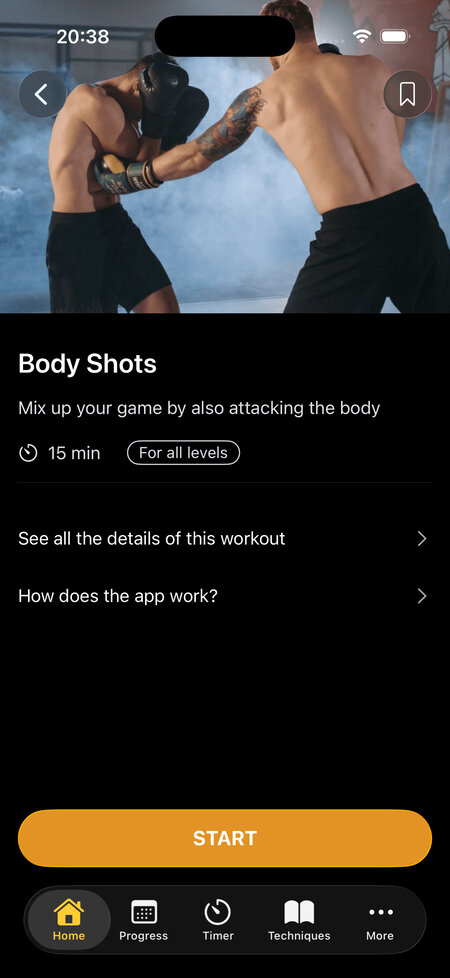
This philosophy is baked into the Shadow Boxing App. Plenty of exercises call out combos for you to throw, but the ones that will improve you fastest are built around everything else. The 2 Phase Attacks exercise gives you an attack, a defense, then a second attack, so defending mid-combo becomes normal. Getting Out adds an exit after your punches to build the reflex of leaving at an angle. There are dedicated Feints exercises, and defense-focused workouts where the combos include slips, rolls, and blocks as callouts, not just punches.
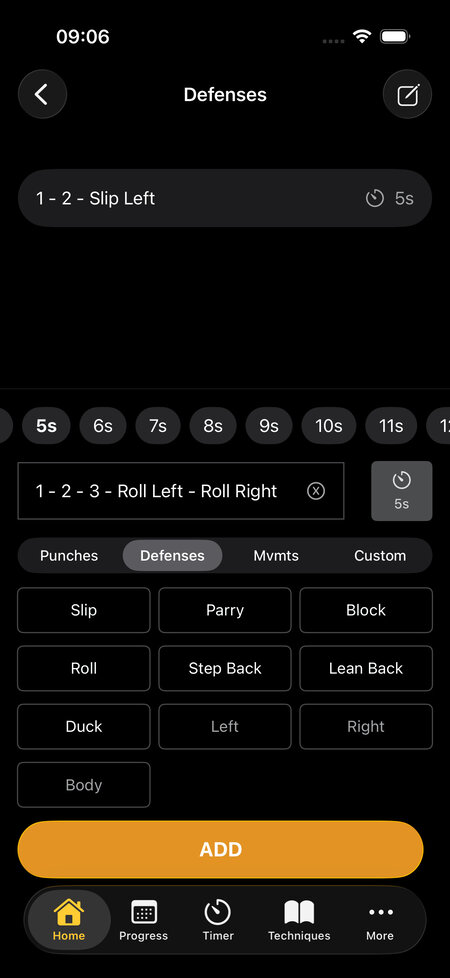
And if you want to drill the Tyson combo specifically, you can build it yourself in the Combo Creator: 4 body, 6, done. Add a slip in front of it for the full effect, and the app will call it out during your rounds.
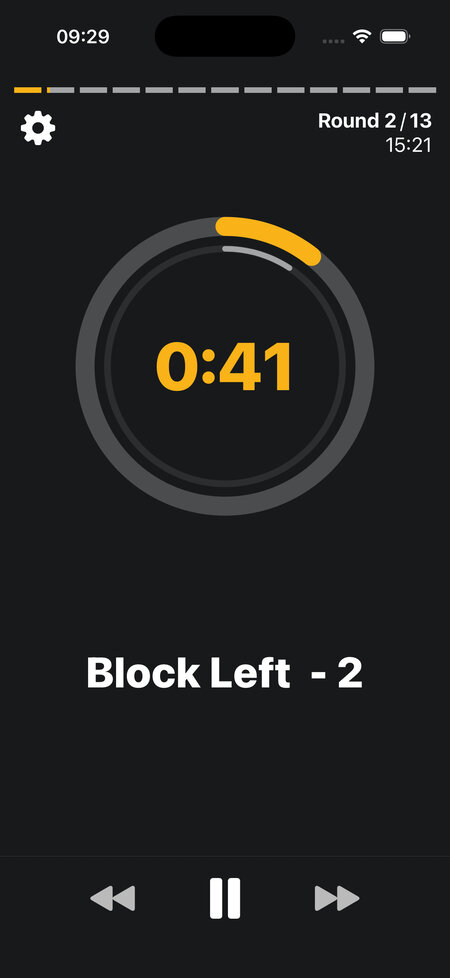
Grab a few combos from this list, put a timer on, and spend your next session throwing them the way they were meant to be thrown: on the move, behind a feint, with your head off the line at the end. The app is free to try, and it will happily do the calling out so you can focus on the moving.