
How to Start a Boxing Winter Arc (and Keep It Going Past January)
It’s dark by 5 PM, the outdoor runs have stopped, and your feed is full of people announcing their winter arc: the last few months of the year, spent putting in quiet work instead of waiting for January to start.
Boxing fits that idea well. It works in a living room, the weather doesn’t matter, and you notice the difference within a few weeks. Where most winter arcs go wrong is around week four.

If you’ve never boxed, learn before you grind
The temptation with a fresh start is to go straight for the hardest workout you can find. In boxing that mostly gets you sore shoulders and sloppy punches you’ll have to unlearn later. If you’re new, spend the first part of your winter arc learning the basics properly.
That’s what the Boxing 101 program in the Shadow Boxing App is for. Each day pairs a few short technique videos with a workout that uses what you just watched. Day 1 covers the stance, basic footwork, the jab and the cross, then puts you through an 11 minute workout built on those two punches. From there it adds hooks, uppercuts and body shots, moves into virtual pad work and defense, and finishes with combinations, a review day and a HIIT session once you’re ready for it.
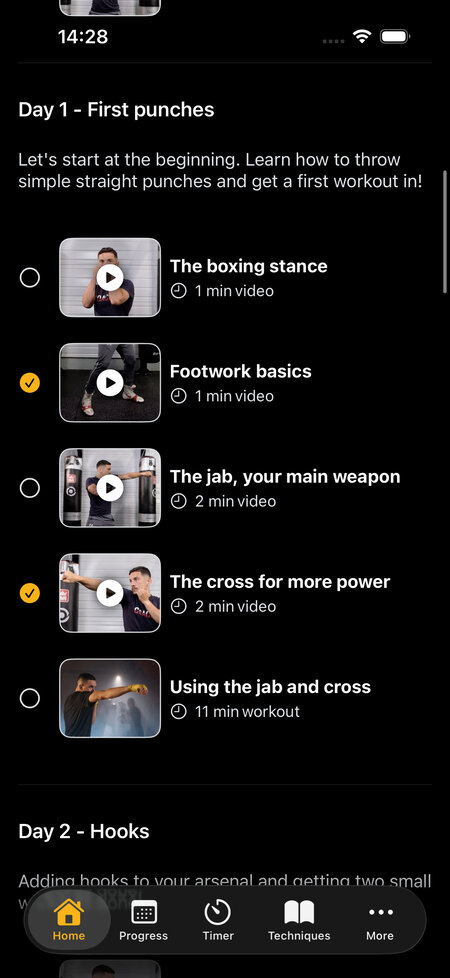
The program is 12 days. Out of a winter arc that runs for months, that’s nothing. Invest them in getting the basics right first, then grind harder once you know what you’re doing.
If even that sounds like a lot, Start Boxing in 30 Minutes is a shorter entry point for people with zero experience. If you already know the basics, skip ahead to a program that matches your level; the app recommends some based on your boxing level and equipment.
Pick a schedule you can keep
Before the first session, decide how many days a week you’ll train. Pick the number you can still hit during a week with a cold, a work deadline and a holiday party, not the one that sounds impressive. For most people that’s three.
Then set it in the app. In the Goals and reminders settings, you choose the days you want to train and a time for each one. You get a reminder when one of those slots comes up, and the number of days you picked becomes your weekly target.
That target drives your streak, which counts weeks instead of days. Reach your number of workouts in a week and that week counts. You don’t have to train on the exact days you picked, so if Tuesday falls apart and you train Wednesday instead, nothing breaks. Rest days don’t hurt it either, which matters: a daily streak pushes you to train through soreness and fatigue when you’d be better off resting. The Progress tab shows your current week streak, your total rounds and a calendar of the days you trained.
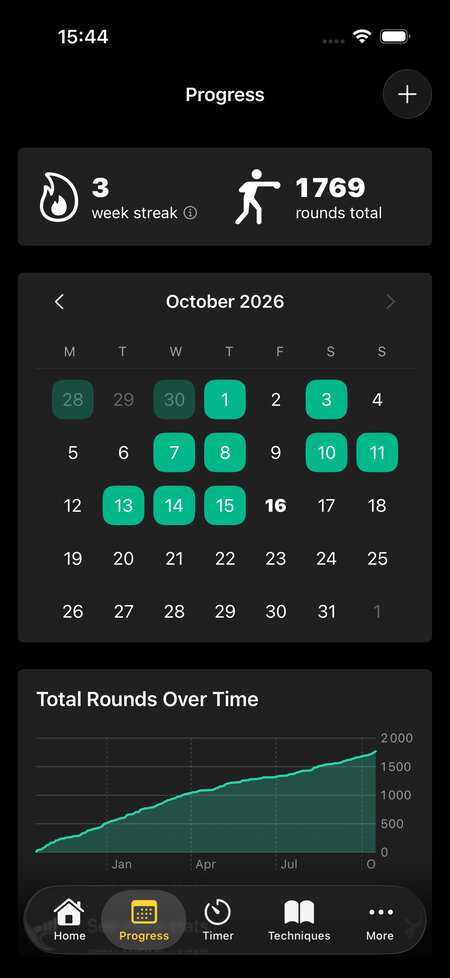
The streak starts doing its job around week five or six. The novelty has worn off, it’s cold, and the couch looks great. Seeing a 5 week streak you don’t want to lose is often what gets you off that couch and wrapping your hands.
For the days you don’t have time
December is busy. Some days you won’t have time to plan a session, let alone scroll through a list of workouts trying to pick one. Those are the days a winter arc usually ends: you skip once because there was no time, then again, and then it’s January.
Quick Start is built for those days. It asks four questions: how much time you have today, how technical you want it, how hard you want to go and how much variety you want. Then it generates a workout from your answers and your boxing profile. The result is different every time, so it also helps when you’re bored of your usual sessions. There’s more detail in this write-up on quick start workouts, including how to turn it into a bag workout.
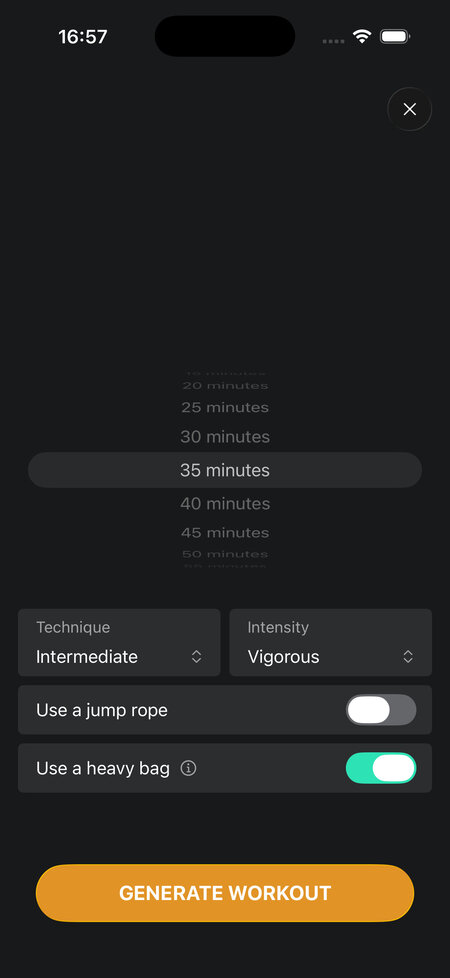
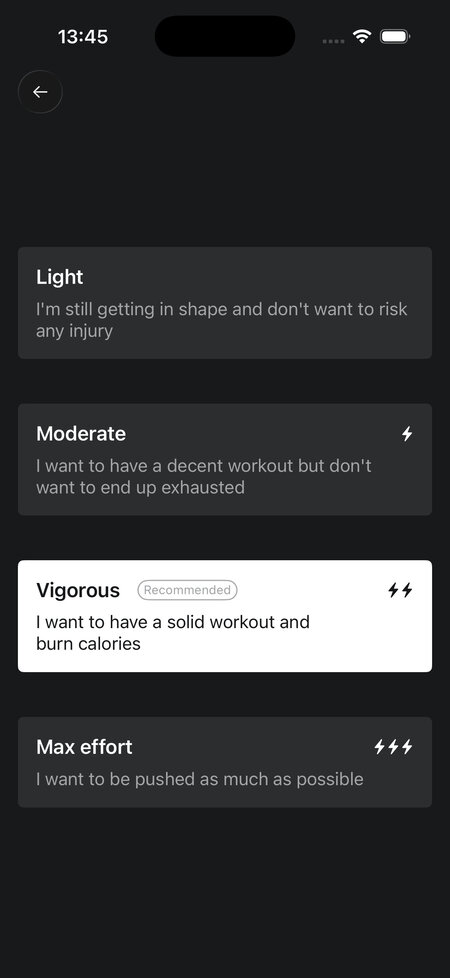
A short, light session still counts toward your week. On a bad day, pick the shortest duration, set the intensity to Light and get it done. Showing up is the whole point on those days.
How to get better, not just sweatier
Showing up gets you fitter. Getting better at boxing takes a bit more intent. A few things that make a difference over a couple of months:
- Pick one focus per week. One week it’s snapping your jab back to your face, the next it’s footwork, the next it’s defense. Trying to fix everything at once usually means fixing nothing.
- Add defense to your rounds. Slips, rolls and blocks belong in shadow boxing too; punching the air without them trains you to stand still after every combo.
- Watch your hands when you’re tired. The last round is where your guard drops, so that’s where to pay the most attention.
- Film a round every couple of weeks. Prop your phone up and compare with a video from a month earlier. You’ll see things you can’t feel.
- Raise the difficulty slowly. Once Boxing 101 feels easy, move on to a more advanced program, or bump the technicality up in Quick Start instead of only cranking the intensity.
Cold rooms deserve a mention too. Fast punches on stiff shoulders and cold wrists are an easy way to tweak something in the first round, so take a few minutes for a proper warm-up before you start, even on the short days.
Don’t starve your winter arc
A lot of winter arcs come as a package: new training plan, strict diet, no sugar, no alcohol, all starting the same Monday. The training is usually the first thing to go. Eating a lot less while adding three or four hard sessions a week leaves you running on empty, and by week three every round feels heavier than it should.
If you want to lose weight over the winter, keep the deficit small and let the training do part of the work. Get some protein in at every meal, since that’s what your body uses to rebuild after a session. The guide to recovering from boxing training has a simple daily target if you want a number.
Timing matters too. Shadow boxing on a full stomach is miserable, especially once the rounds include burpees or jump rope, so leave an hour or two after a real meal. If you train first thing in the morning while it’s still dark out, something small like a banana or a slice of toast is usually enough to get you through the rounds.
Water is easy to forget in winter. You feel less thirsty when it’s cold, but a heated room with the windows closed still makes you sweat plenty. Keep a bottle next to you during the session and keep drinking through the rest of the day.
Then there are the holidays. One big dinner doesn’t undo a month of training, so there’s no need to punish yourself with extra rounds the next day. If a late night means tomorrow morning’s session isn’t happening, move it to later in the week. Your streak counts workouts per week, so a session moved to Thursday still counts.
It’s only the beginning
The winter arc idea has an end date built in. That’s fine for getting started, but boxing doesn’t run on a three month calendar. Distance, timing and defense take a long time to build, and the people who get good are the ones still training a year later.
So build your arc around what you can keep doing. Train a bit less than you think you can at first. If three sessions a week feel easy after a month, add a fourth then. Going from nothing to six hard sessions a week is a reliable way to end up with sore wrists and a forced two week break in mid-December, which costs you more than the extra sessions ever gave you. Plan for January 1 as well. Ideally nothing changes that day: same schedule, same weekly target, same streak. The two years and 1,800 rounds review shows what that looks like over time: an average of 75 rounds a month over two years.
If your winter arc ends with a habit that carries into spring, it worked. Download the app, set your weekly target, and start with Boxing 101 or a Quick Start session tonight.