
Why Uppercuts Feel Awkward on the Heavy Bag (and How to Fix It)
Uppercuts feel awkward on a heavy bag mostly because of the bag. A standard hanging bag is a tall, straight cylinder: there’s no chin to come up under, your fist skids up the side instead of sinking in, and every hook before it sends the bag swinging out of range.
Part of it is technique, though. Most people throw their uppercuts from the same distance as their jab and reach for them. Fix the distance and the angle and the punch starts to land properly. Pick the right bag and it gets easier still.
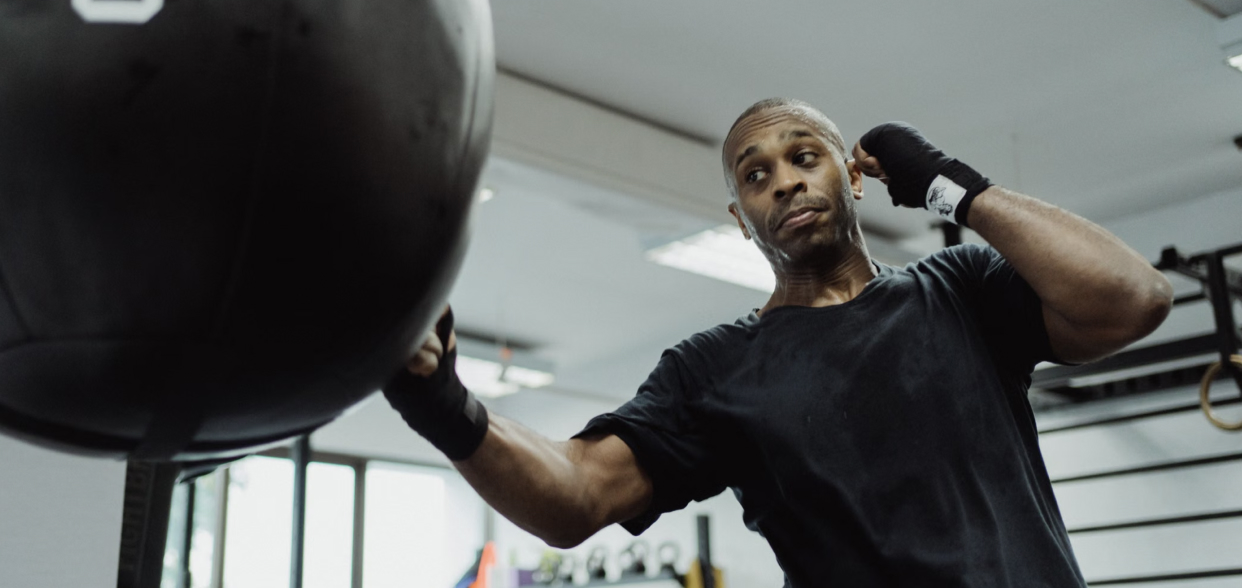
What makes the uppercut hard on a heavy bag
A straight bag has no chin
On a person, an uppercut comes up under the chin or digs into the body below the ribs. Both targets give your fist something to drive into. A cylinder bag gives you a vertical wall. If the punch travels straight up, your knuckles brush along the surface, your wrist bends, and it feels like nothing landed. That bent wrist is also how a lot of people end up with wrist pain after the punching bag.
You’re throwing it from too far away
The uppercut is a close-range punch. From where you throw your jab, the only way to reach the bag is to lean in and swing up with a nearly straight arm, which is weak and leaves you off balance. At the right distance your head is close to the bag and a bit off to the side. Most people feel crowded there, because the rest of their bag work happens at arm’s length.
The bag keeps moving
A hook pushes the bag sideways and a cross pushes it back. By the time the uppercut comes at the end of the combo, the bag has moved, and you either miss or catch it on the edge. On a person, a good combo sets up the uppercut. On a bag, the punches before it often take the target away.
Your arm is doing all the work
Without the legs and hips, an uppercut is basically a bicep curl. You can get away with that in the air. The bag exposes it, because there’s a lot of weight to move and an arm-only uppercut barely shifts it. Our full guide on how to throw an uppercut covers the mechanics in detail.
How to land a clean uppercut on a heavy bag
- Step into close range. Move in until your head is close to the bag and slightly to one side. It should feel tighter than your normal bag distance.
- Aim into the bag, not up its side. Drive the punch up and forward at an angle, as if you’re going through the bag to a point behind it. On a straight bag, most of your good uppercuts will land on the lower half, where body shots go.
- Dip and drive with the legs. Bend your knees a little toward the side you’re punching from, then push up with the legs and turn the hips. Pivot the foot on the punching side. The arm comes along for the ride.
- Time the swing. Let the bag swing back toward you and meet it with the uppercut as it arrives. It’s the closest a bag gets to an opponent stepping into your range.
- Return to guard, then continue or get out. Bring the hand straight back to your chin. From there, a hook from the same range works well, or step out.
Go at half power until the angle feels right. If your wrist complains, the punch is still skidding.
Which punching bags are best for uppercuts?
Uppercut bags and teardrop (also called angle) bags are the best for uppercuts. A standard straight heavy bag works once your distance and angle are right. Plain freestanding cylinder bags are the hardest to uppercut well.
| Bag type | For uppercuts | Why |
|---|---|---|
| Uppercut bag | Best | Mounted or hung sideways, so the punch comes up into an underside |
| Teardrop or angle bag | Very good | Wider at the bottom, so the curve gives you something to dig into |
| Torso-shaped standing bag | Good for aiming | Has a chin and a body, but the base can rock on upward shots |
| Straight heavy bag | Workable | Needs close range and an angled punch |
| Freestanding cylinder bag | Hardest | Vertical surface, and the base tips when you dig upward |
An uppercut bag does one job very well, and that’s also its limit. Most of them mount on a wall, and you can’t do much else with them. If you’re buying one bag and uppercuts matter to you, a teardrop or angle bag is the best all-round choice: it still works fine for jabs, crosses and hooks, and the shape at the bottom makes body uppercuts land the way they should. Round bags with a similar curved underside work the same way.
If a straight bag is what you have, you don’t need to replace it. Hang it so the lower half sits where you’d throw body shots, work the uppercut to that part of the bag, and use the swing. For more on choosing a bag for home, we have a list of the best punching bags.
Drilling uppercuts on the bag with the app
The exercise in the Shadow Boxing App that puts you right in uppercut range is Inside Fighting (bag). The round goes back and forth between light, constant work and explosive short-range combos. When the coach tells you to move closer to the bag and punch with power, you step in until you’re almost touching it and throw the combo it calls. Those combos are built from the punches that work at that distance: short hooks, uppercuts and body shots, with level changes mixed in.
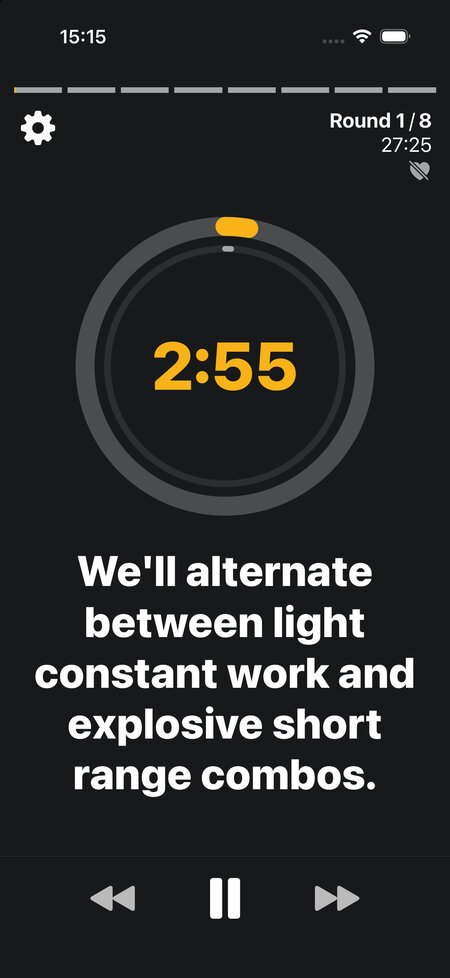
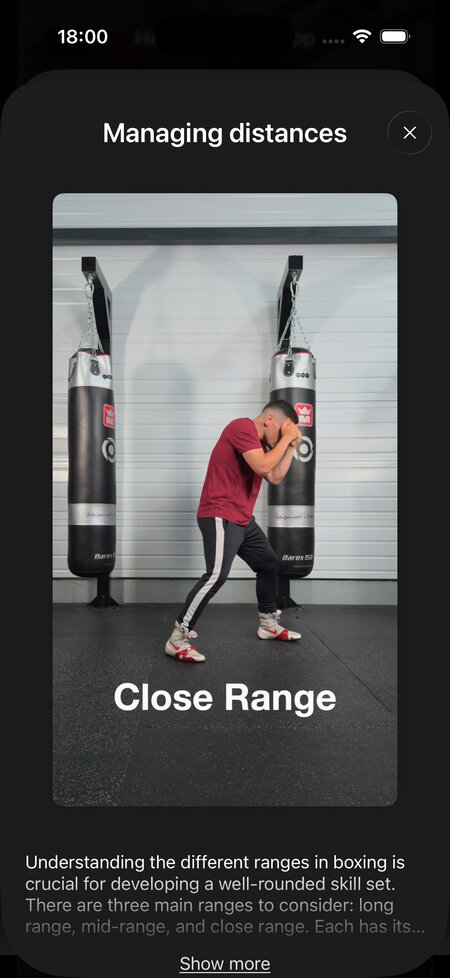
The first few rounds usually feel weak. Generating power with no wind-up and almost no space is a skill most people have never trained. That’s exactly why the uppercut feels awkward in the first place, and why it’s worth sticking with. If you want to understand the range itself first, the Managing distances tutorial in the techniques catalogue has a section on close range. We explain more about the exercise in our post on the punching bag workouts update.
If you’re new to the bag, don’t start here. Get your jab and cross landing cleanly first; hooks and uppercuts can come after a couple of sessions.