
What Is Shadow Boxing? The Complete 2026 Guide
Walk into any boxing gym in the world and you will see it within a minute: someone alone in a corner or in the ring, moving around an opponent who is not there, throwing punches at the air. That is shadow boxing. It is the oldest training method in the sport, it costs nothing, it needs no equipment, and it is still the thing coaches ask for first when a boxer is out of shape or out of rhythm. This guide covers what shadow boxing is, why it matters so much, how to do it well, and how the way people practice it has changed now that a coach can live in your pocket.
What shadow boxing actually is
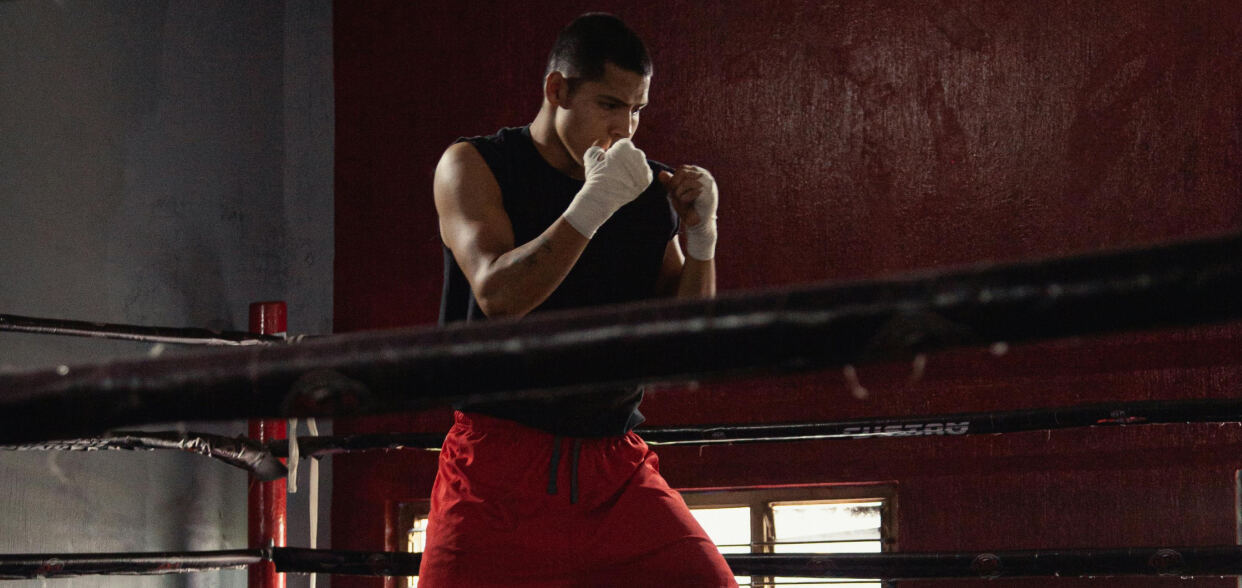
Shadow boxing is boxing without a partner, a bag, or pads. You stand in your stance, you move, and you throw punches and defensive movements against an opponent you imagine in front of you. That is the whole definition, and it is also why people underestimate it. From the outside it looks like a warmup. Done properly, it is the closest thing to a fight you can have without anyone hitting you back.
The word “shadow” is a good hint at how to think about it. Your shadow moves when you move and never stands still. A good shadow boxing round has that quality: you are not throwing punches at nothing, you are reacting to a person who jabs, steps, feints and counters. The moment you stop picturing them, the round turns into arm exercise.
You can do it in front of a mirror, in a ring, in your living room, or outside. Gloves are optional. Hand wraps are optional. Space is the only real requirement, and a 7 by 7 foot square is plenty if you are careful with your footwork.
Why every boxer shadow boxes
The reasons stack on top of each other, which is why coaches never drop it from a program.
It is where technique gets fixed
On the bag, the impact hides your mistakes. A sloppy hook still makes a satisfying thud. In shadow boxing there is nothing to hide behind. If your cross comes back low, you feel it. If you lean forward on the jab, the mirror shows it. Because nothing is resisting you, you can throw a punch at half speed, check the hip, the foot, the return, and throw it again. That kind of slow, deliberate repetition is how the basic punches go from something you know to something you do without thinking.
It teaches your feet to work
With no bag anchoring you in one spot, you have to move. Step in behind the jab, step out after the cross, pivot off the line, reset your stance after a combination. Most beginners forget the reset entirely, and shadow boxing is where they learn it, because there is no bag to lean on while they gather themselves. Balance improves for the same reason: you have to control your own weight through every movement rather than borrow stability from something you are hitting.
It builds the fight in your head
Ask any experienced boxer what they are thinking about while they shadow box and they will describe an opponent. A pressure fighter walking them down, so they circle and jab and pick their moments to plant and fire. A tall boxer keeping them on the end of a long jab, so they slip in and work the body. This is not a mystical visualization exercise. It is rehearsal. You are running the situations you will meet in sparring, over and over, until your response to each one is already there when you need it.
It is a real workout
Three hard rounds of shadow boxing with head movement and constant footwork leave most people breathing heavily. Six rounds at fight pace is a proper cardio session. Boxers use it to warm up before pads or sparring, to cool down after, and on days when they want the movement without the wear on their hands and shoulders.
What good shadow boxing looks like
Watch Vasiliy Lomachenko work a round on his own and you see everything at once: angles, feints, a jab thrown as a question rather than a statement, feet that never stop and never cross. He is clearly boxing someone. You can see when he lands, when he slips, when he gets out.
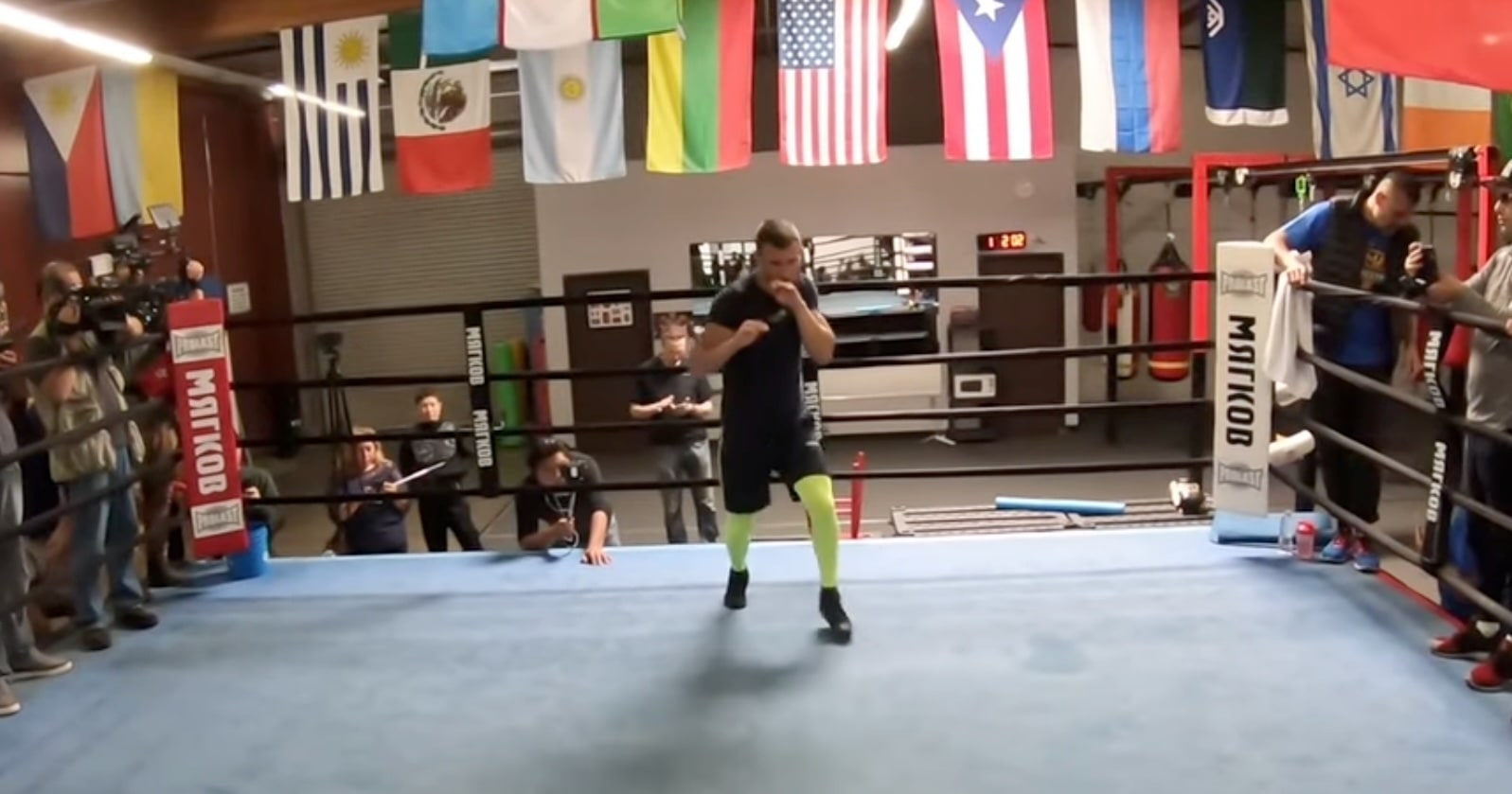
You do not need to move like him to get the point. Notice what is absent: no punches thrown from a standing-still position, no combination that ends with the hands down, no stretch where he is just waiting. Every second has a purpose. That is the standard to aim at, at whatever speed you can manage.
Self-directed versus reactive shadow boxing
For most of boxing history, shadow boxing meant one thing: you decide. You pick the combos, you set the pace, you choose when to move. That is still valuable, and it is the right way to drill a single technique.
It has one large weakness. In a fight you do not decide the rhythm. Someone else does, and your job is to answer. Self-directed shadow boxing lets you stay comfortable: you throw the combos you like, at the speed you like, and you never get surprised.
Reactive shadow boxing fixes this. Something outside of you calls the shots, a coach shouting numbers, a partner throwing hand signals, or an app calling out combinations and defenses through your headphones. You hear “1 - 2 - Slip Left - 2” and you throw it, now, without having planned it. Then the next one comes.
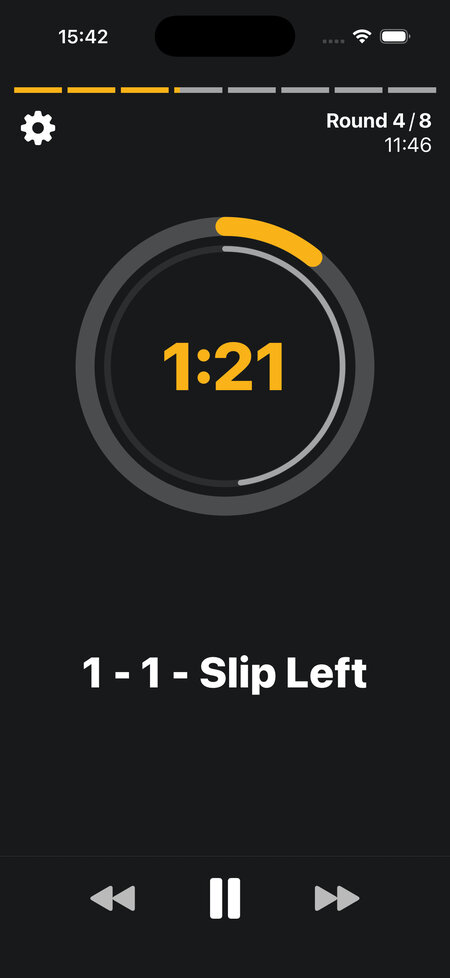
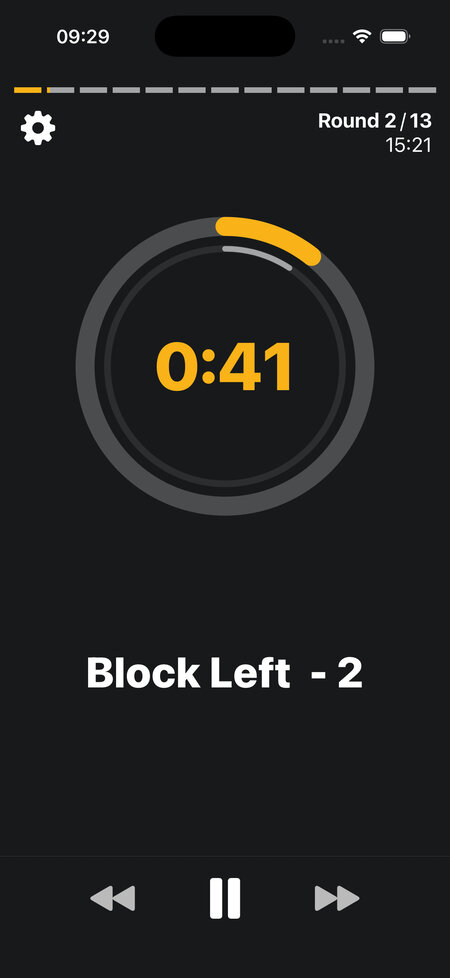
The effect on your boxing is different from anything the self-directed version gives you. Reaction time gets faster, because that is the entire exercise. Pattern recognition builds, because your body starts linking the sound of a callout to a movement before your conscious mind catches up. Weaknesses show themselves fast: if you are always a beat late on the hook or your guard drops after every uppercut, a reactive round will tell you in the first minute. And it keeps you honest, because you cannot drift back to your favorite combo when someone else is choosing.
The best training mixes the two. Self-directed rounds to groove technique and work on something specific. Reactive rounds to test it under a little pressure.
How to structure a shadow boxing session
Boxers work in rounds, and shadow boxing is no exception. Three minutes of work and one minute of rest is the classic format. Two minutes of work is fine for a beginner. Use a timer, any timer, so you are not glancing at a clock mid-round.
A session that covers everything might look like this.
- Round 1, loosen up. Light movement, single punches, no power. The goal is to get the hips and shoulders turning and the feet moving. Sloppy is fine here.
- Round 2, one thing. Pick a single technique or a single short combo and drill it. Jab-cross-pivot, over and over. Adjust one detail each time.
- Round 3, defense. Slip, roll, parry, step back. Imagine punches coming and answer them, then counter. Spend more time here than feels natural, because most people skip it.
- Round 4, the whole fight. Everything mixed together at fight pace. Offense, defense, movement, and the short pauses between exchanges that real rounds have.
- Extra rounds, if you have them. A specific scenario, like fighting off the ropes or boxing a southpaw. A pure footwork round with no punches. A round copying a style you admire.
If you want a fuller plan, including warmup and cooldown, we wrote a separate guide on structuring a shadow boxing workout at home.
Mistakes that waste your rounds
Everyone makes these at the start, and plenty of people keep making them for years.
- Punching from a standstill. Feet planted, upper body doing all the work. In a fight you would be an easy target.
- Not bringing the hands back. A punch is not finished until the hand is back on your face. Shadow boxing with nothing to hit makes this easy to forget.
- Forgetting the opponent. Random combos thrown at the air. If you could not say where the other person is, you are not shadow boxing.
- Skipping defense entirely. A round with no slips, rolls or steps back is half a round. The defensive techniques need at least as much practice as the punches.
- Going fast before going right. Speed makes bad form worse. Get the movement correct at half pace, then build up.
- Watching yourself instead of boxing. The mirror is for checking form. If your eyes are on it the whole round, your head is not moving and your chin is up.
That last one applies to phones too. If you are following a video, your body settles into whatever position lets you see the screen, which is the opposite of what you want. We wrote about why the app hides the video once a round starts for exactly that reason.
Small things that make a big difference
Record a round on your phone now and then, prop it up somewhere and watch it back afterwards. You will spot things no mirror shows you, like your rear hand dropping when you jab. Set one goal per round before it starts, even something as small as “step after every combo”. Put music on if it helps your rhythm, and turn it off if it makes you throw to the beat instead of to the opponent. Change your imaginary opponent from session to session. Fighting the same person in your head every day teaches you to beat one person.
Shadow boxing at home with the app
Most of what makes shadow boxing hard to do alone is the lack of a voice. Without a coach you decide everything, you drift toward what is comfortable, and you rarely know whether a round was good or just long. The Shadow Boxing App exists to be that voice. It calls out punches, defenses and footwork in real time, so every round is reactive from the first second. It runs the timer. It builds the session for you, from a light warmup round to full-pace rounds, and it adapts the difficulty to your level.
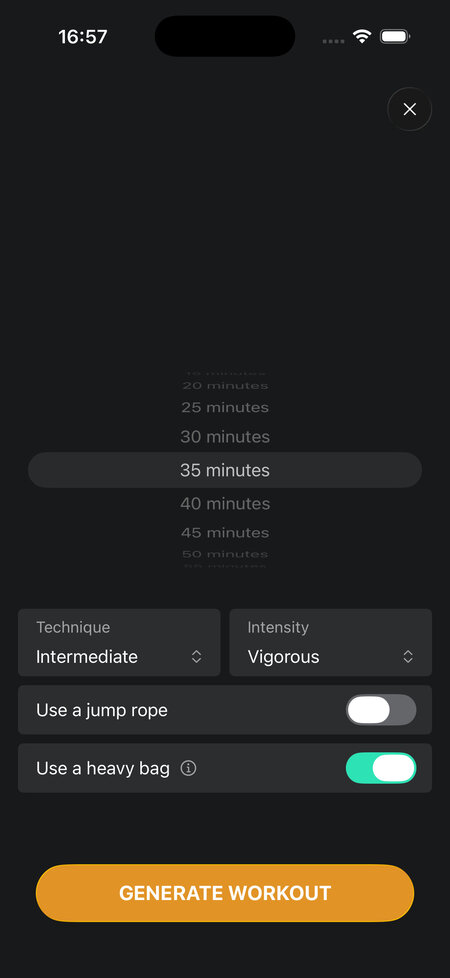
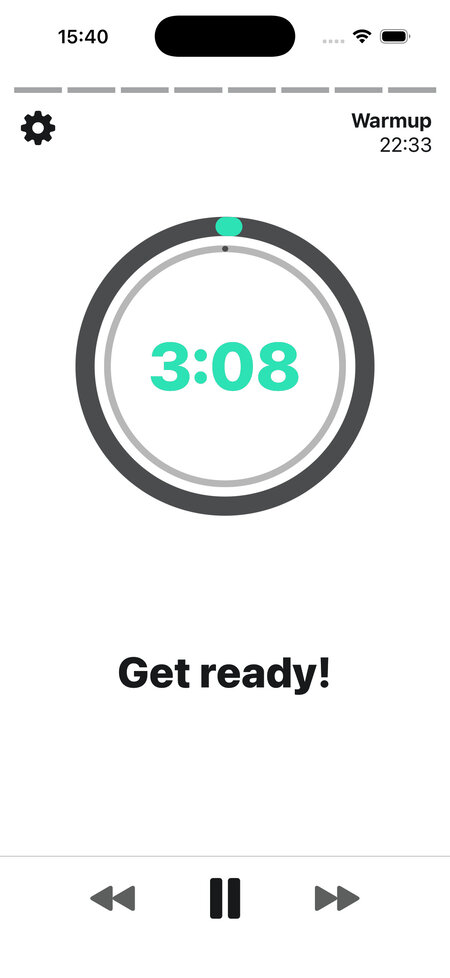
If you do not know the techniques yet, each one has a tutorial video from a real coach, and the beginner programs teach the six punches and the main defenses before they ask you to throw them in a round. If you already know them, you can skip straight to a workout, or build your own with the combos you want to work on. It is free to try.
Beyond boxing
Shadow boxing belongs to every striking sport. Muay Thai fighters shadow box with elbows, knees and clinch entries. Kickboxers add kicks and the footwork that sets them up. MMA fighters mix in level changes and sprawls. The principle is identical: rehearse the fight alone, against someone who is not there, until the movements are yours. The app covers the basics of kickboxing and Muay Thai striking too, though boxing remains the focus.
Where to start
If you have never shadow boxed, start with two rounds. Stance, guard, jab, cross, and moving your feet between punches. Do not worry about looking good. Picture someone in front of you and box them. Add a round each week, add defense once the punches feel natural, and start mixing in reactive rounds as soon as you can, because that is where the real progress hides.
Shadow boxing is where every boxer begins and where every boxer goes back to. It is the one part of training you can do anywhere, any day, for as long as you box. Learn to do it well and everything else in the sport gets easier.