
Boxing Combo Ideas to Run on the Speed Ladder
Most people use a speed ladder for feet only: quick steps through the rungs, eyes down, arms doing nothing. That’s a fine cardio drill and it leaves the best part on the table. Add punches on top of the footwork and the ladder becomes something else entirely: a coordination exercise that forces you to box while your feet are busy, which is what boxing actually is.
Why punching on the ladder works
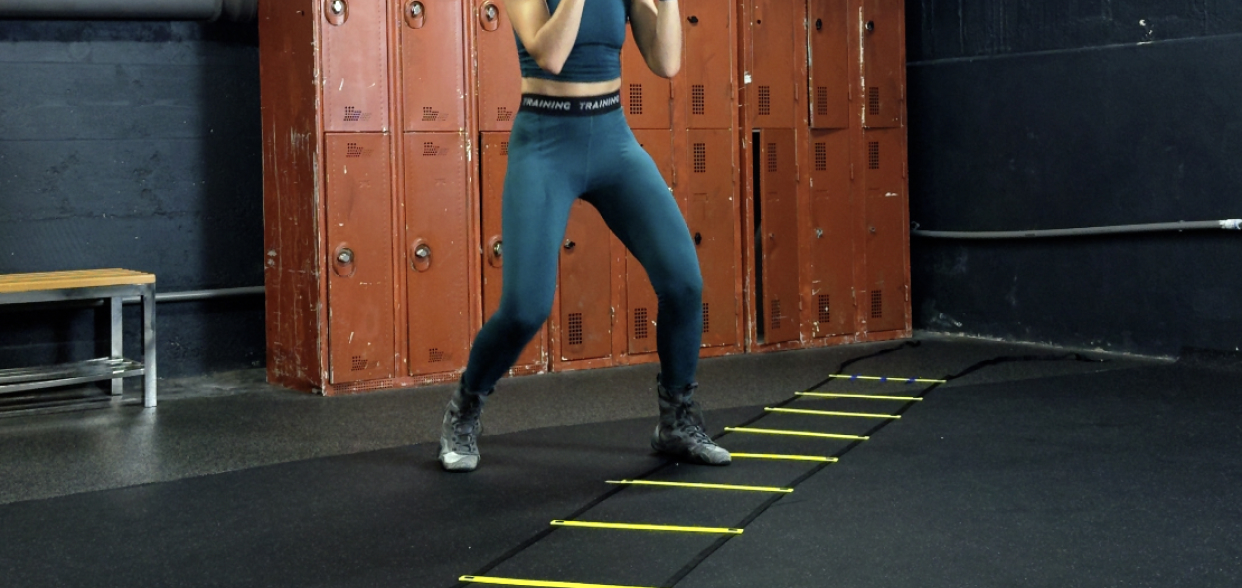
Almost everyone can throw a decent 1-2 standing still. Far fewer can throw it while moving, and that’s the version that matters, because in a real exchange your feet are never parked. The problem with training this in shadow boxing is that you can cheat: you slow your feet down when the punches come, or you stop punching when the footwork gets complicated, and you never notice you’re doing it.
The ladder removes the cheat. The rungs dictate where your feet go and when, so your legs can’t quietly take a break while your hands work. Your brain has to run both patterns at once, and the first few rounds of that are humbling for most people. Then it clicks, and punching on the move starts feeling normal. That carries straight back into your shadow boxing and your bag work.
There’s a conditioning bonus too. Constant foot fire with punches layered on top pushes your heart rate up faster than either one alone, so these rounds double as cardio without feeling like a treadmill session.
Combo ideas to run on the ladder
The Shadow Boxing App added speed ladder training recently, and a chunk of the catalogue is exactly this: combos layered over ladder movement. During a round, the app shows a coach performing the drill on video, calls out the sequence, and runs the timer, so you put the phone at the end of the ladder and follow along. The ideas below are all exercises from those workouts, ordered roughly from first-session material to things you’ll grow into.
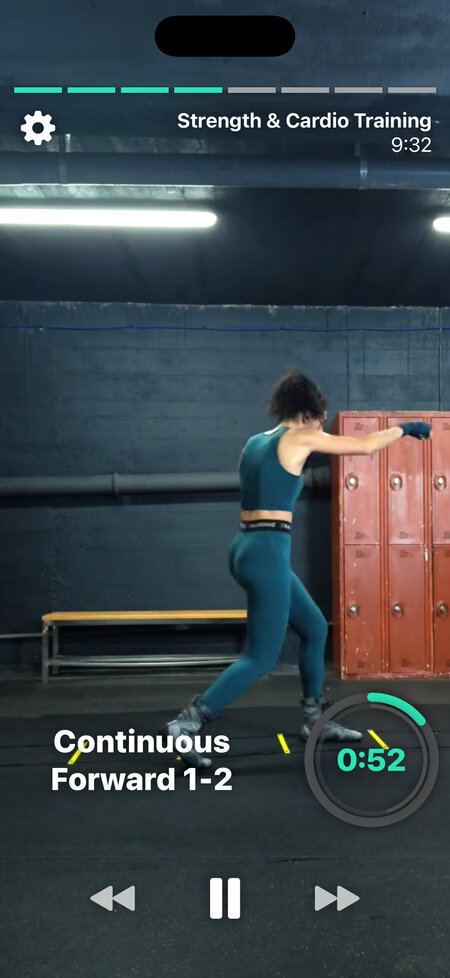
Continuous Forward 1-2
The foundation. You move down the ladder one step per rung, throwing an unbroken stream of jab-cross the whole way. Nothing about it is complicated on paper, and that’s the point: with the simplest possible punches and the simplest possible footwork, all of the difficulty lives in the synchronization. If your hands and feet drift out of rhythm, this drill exposes it within two rungs. Get it smooth before anything else, because every other combo here is built on this timing.
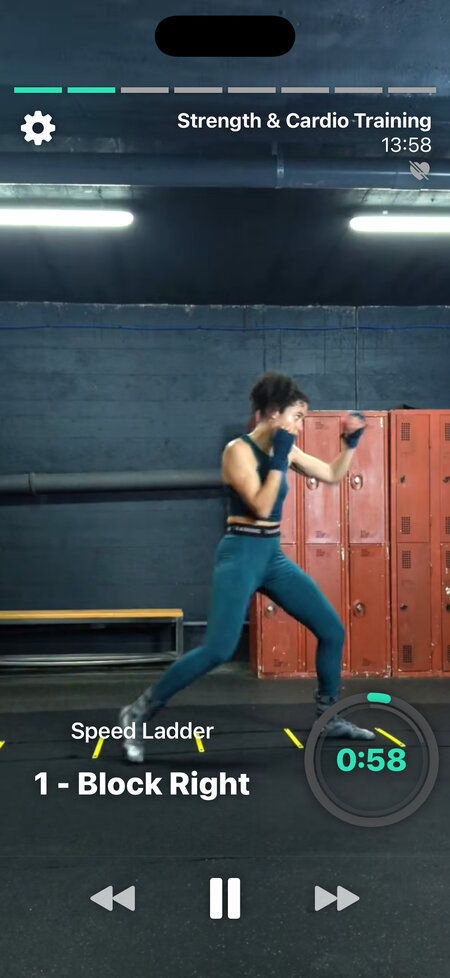
1 - Block Right
Now defense joins in. You’re still stepping through the rungs and jabbing, but each jab is followed by a block brought back in the same rhythm. This is a habit worth overtraining: the moment after your punch is when the counter arrives, and most people’s guard drifts exactly then. Drilling punch-then-block while your feet are occupied makes the recovery automatic, because there’s no spare attention left to do it consciously.
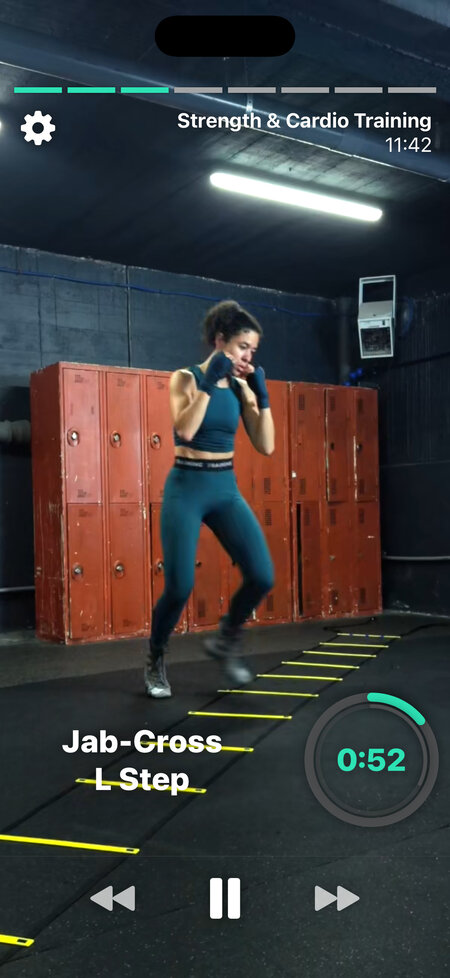
Jab-Cross L Step
The one to grow into. You punch your way forward with the 1-2, then use the L Step to angle off the line, the same footwork you’d use to escape along the ropes after landing. In open space it’s easy to make an L Step lazy and shallow; the ladder keeps score on your precision, because a sloppy angle lands your foot on a rung. When this one clicks, you’ve effectively rehearsed the full shape of an exchange: get in, punch, get out somewhere your opponent isn’t facing.
1-2-3 Roll Left
The sideways family. Instead of moving down the ladder, you straddle-step along it while throwing jab, cross, lead hook, then roll under as you keep drifting laterally. Rolling while moving is meaningfully harder than rolling in place, and it’s the version you actually need: in a real exchange you roll under a hook while repositioning, not while standing your ground. There’s a mirror version rolling right off a 1-2, so both directions get their turn.
Ali Shuffle + Punches
The show-off one, and sneakily useful. The Ali Shuffle has you switching your stance rapidly with a scissor step, and this exercise makes you punch through the switches. Very few drills teach you to stay dangerous mid-stance-change; this one does, and it will also flag immediately whether your balance actually lives in the middle of your stance or secretly leans on your lead leg.
Every drill has its own tutorial video in the technique catalogue, so you can watch the footwork slowly before attempting it at speed.
How to approach it
Feet first. Run each ladder movement empty-handed until the pattern is automatic, because if you have to think about your feet, the punches will be garbage, and vice versa. The app’s level setting helps here: keep it low until the basic movements stop requiring attention.
Keep the punches honest. The strong temptation on the ladder is to paw the air just to keep up with the callout. Slow the whole drill down instead and throw punches you’d accept in shadow boxing: full extension on the straights, hands back to your chin between shots.
Expect to feel uncoordinated. That’s not a sign the drill is too hard, it’s the drill working. The rounds are short (under a minute per exercise in most sessions), so a movement that falls apart today gets another attempt tomorrow.
And if you don’t own a ladder yet, this is cheap gear: a flat 15-foot ladder does everything these workouts need, and our guide to picking one explains why the option under $20 is the right one.
Where to find the workouts
Filter the workout list by speed ladder and you’ll find sessions from a 7-minute movements-only starter up to Ladder + Combos, a 17-minute session that mixes footwork drills with the punching exercises above. The announcement article covers how the whole section is organized, and if you want the case for the ladder as a boxing tool in general, we wrote about why it belongs in your training.
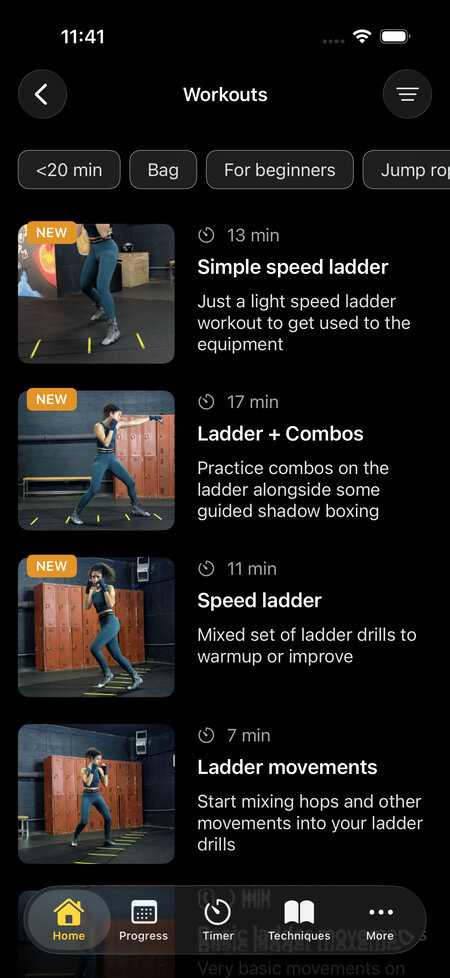
The workouts guide you through the whole thing, one exercise at a time, video included. Grab the app, lay the ladder down, and see how your 1-2 holds up when your feet have somewhere to be.