
Shadow Boxing Combos for Inside Fighters
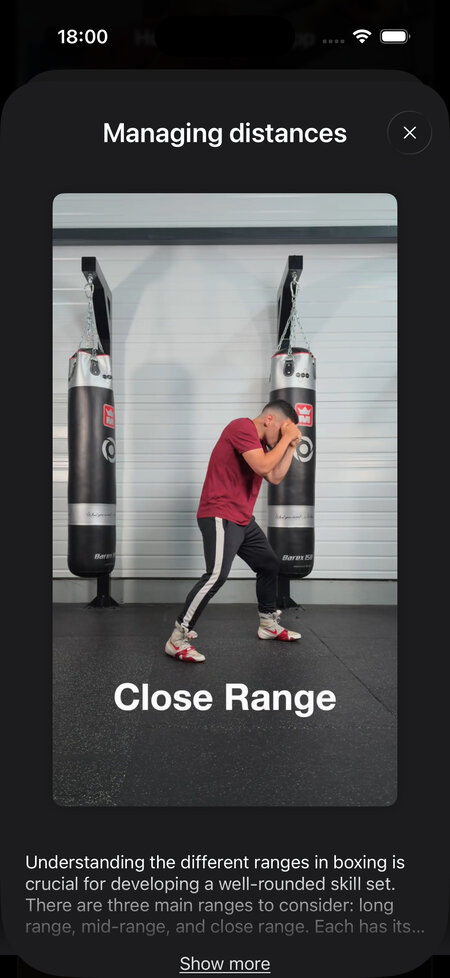
Most shadow boxing happens at an imaginary long range: jab, cross, step around, repeat. That’s fine, and it’s also only half the sport. If your style is to get close and stay there, or you keep ending up there whether you like it or not, your shadow boxing should spend real time at short range too. The punches change, the rhythm changes, and the combos that work are not the ones you drill at distance.
What changes on the inside
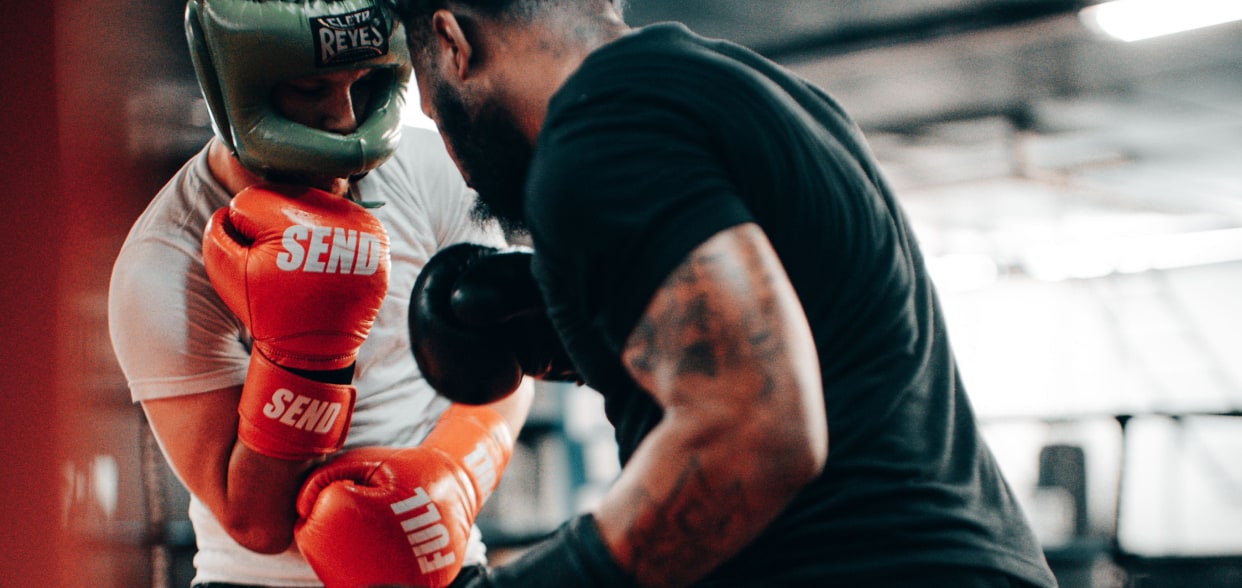
At short range the straight punches mostly go away. There’s no room to extend a full cross, so the work shifts to hooks, uppercuts and body shots, thrown short and tight. Your feet stop covering distance and start creating angles instead. And defense stops being optional between combos: at this range everything your opponent throws can reach you, so slips and rolls have to live inside your sequences, not after them.
That last point is the big one for shadow boxing. When you drill inside combos, build the defensive movement into the combo itself instead of pausing to “do defense” separately.
Four combos worth drilling
Lead hook to the body, lead hook to the head. The classic level change, and still the best introduction to inside work. The body shot makes the elbow drop; the second hook goes over it. Because both punches come off the same hand, you have to load your hips twice in a row, which teaches you to punch from rotation instead of arm strength. If your lead hook needs work first, the piece on palm down versus palm in covers the mechanics.
5-2-3, lead uppercut, cross, lead hook. The uppercut splits a tight guard from below, the cross goes straight through the gap it creates, and the hook comes around whatever is left. The hands alternate, so the weight transfer happens naturally, and the sequence covers all three lines an opponent has to defend: up the middle, straight, and around the side.
2-3, roll. Cross, lead hook, then roll under. The reason for the roll is simple: the most common answer to your lead hook is their rear hook, and if you finish this combo properly you’re already underneath it. Ending combos with a defensive movement instead of a punch feels unsatisfying at first. It’s also what keeps inside fighters upright. Our guide to boxing defense techniques breaks down the roll if it’s new to you.
1-1, slip, 6. This one is an entry rather than a pure inside combo. You jab your way forward, slip the counter jab that usually comes back, and arrive at short range with a rear uppercut already loaded. Inside fighting starts with getting inside, and having a rehearsed way in beats walking forward with your face.
General advice for inside rounds
Keep the punches short. If your arm reaches full extension during an inside round, you’ve drifted back out to range without noticing. A useful check during shadow boxing: imagine your opponent is close enough that you could rest your forehead on them.
Keep your guard tight and your chin down the entire round, not just while punching. At long range a lazy guard costs you occasionally; at short range it costs you every exchange.
Move your head constantly, including between combos. On the inside, standing still with a high guard is not defense, it’s waiting. Small slips and rolls between sequences should become as automatic as breathing.
Stay in your stance. The most common inside fighting mistake is squaring up as you get close, which takes all the rotation out of your punches and leaves you nothing to push off from. Your feet can be closer together than at range, but the stagger stays.
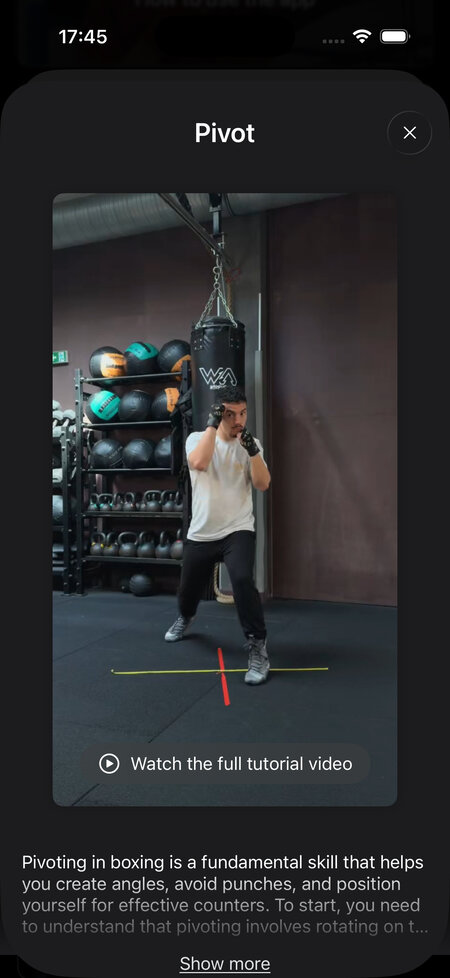
Finally, practice leaving. Pivot out after a combo, or step back with a punch covering the exit. Fighters who can get inside but not out tend to discover that the ability to leave was the part that mattered. The pivot has its own page in the app’s technique catalogue, with a video showing how to rotate on the lead foot to create the angle.
The new Inside Fighting workouts
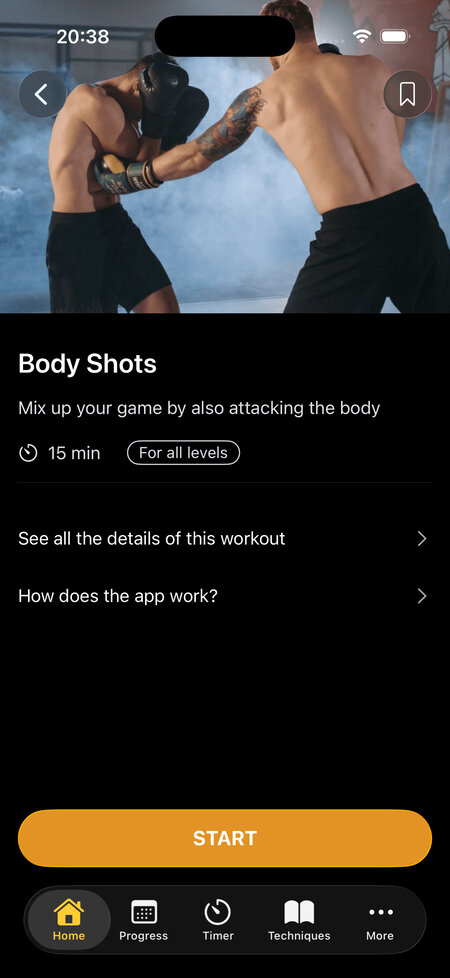
The Shadow Boxing App recently added two workouts built around exactly this. Inside Fighting keeps you at short range for the whole session: head and body combos, rolls, pivots, and some leg work mixed in, because staying low in a compressed stance burns your legs faster than boxing at range does. During the rounds the app reminds you to keep your guard tight and keep your head moving, which are precisely the two habits from the list above that fall apart when you get tired.
Closing the Distance works the other half of the problem: getting in and getting back out. It’s the workout version of that 1-1, slip entry, drilled until crossing range stops feeling like a gamble.
Both slot into your week alongside whatever else you train, and if you want to drill one specific sequence from this article on repeat, the combo creator lets you build it and have it called out during any session. For more sequences beyond the four here, our list of shadow boxing combos worth throwing covers the fundamentals at every range.