
Level Changes in Boxing: Why You Need to Mix Head and Body Shots
Watch a beginner shadow box for a minute and you will notice something: every punch goes to the same place. Jab to the head, cross to the head, hook to the head. It feels natural because the head is the target we picture when we think of boxing, and it is where the knockouts happen on TV. The problem is that an opponent who only has to protect one spot can do it with very little effort.
Changing levels, which just means switching your target between the head and the body, is one of the simplest ways to become harder to defend against, and it is a habit you can build long before you ever spar.
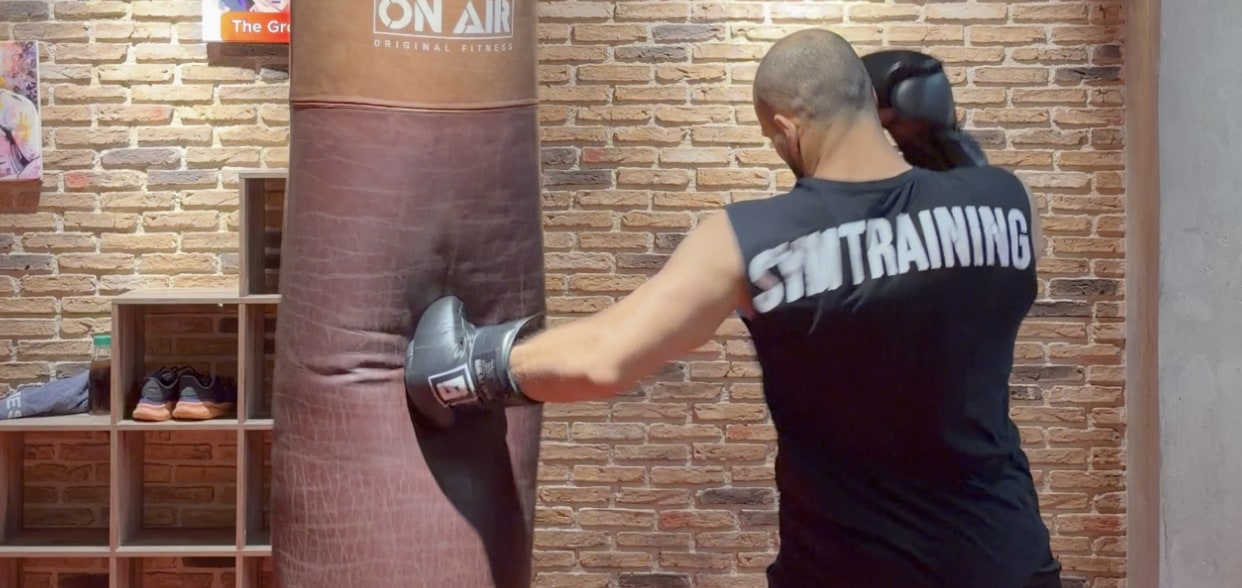
A one-level attack is easy to read
Think about what a guard actually is. Two gloves in front of the face, elbows tucked against the ribs. That position covers the head well and the body reasonably well, but it cannot cover both perfectly at the same time. Every time the gloves go up to block a punch to the head, the elbows lift and the ribs open a little. Every time the elbows drop to cover a body shot, the gloves come down with them and the chin is there.
If all your punches go to the head, your opponent never has to make that trade. They tighten up high, tuck the chin, and let the shots land on the gloves. You can throw as many combinations as you want; you are not getting through, and after a few rounds you are tired and they are not.
The moment you start touching the body, the guard has to move. That movement is what creates openings.
Body first, then head
The classic pattern is to hit low and come back up. A hard shot to the body does two things. In the short term, the hands drop to protect the ribs, even if only by an inch or two, and the head is briefly exposed. Over the longer term, body shots drain the legs and the breathing, so your opponent slows down and their guard gets lazier as the rounds go on. We covered the physical side in detail in our article on body shots in boxing, so here the focus is on how to use them to set up the head.
A few patterns that work for almost everyone:
- Jab to the head, cross to the body. The jab brings the guard up, the cross slips in under the lead elbow. One of the first body combinations most coaches teach.
- Cross to the body, lead hook to the head. The cross makes them hunch forward and drop the lead hand. The hook arrives where that hand used to be.
- Lead hook to the body, lead hook to the head. Same hand, two levels, no reset in between. Hitting high then low or low then high from the same side is hard to read because the shoulder and hip look identical for both punches.
Notice how in each case the body shot is doing the work and the head shot is collecting. You are not hoping to knock someone out with a body punch on the first try. You are using it to move the guard.
Head first, then body
The reverse also works and is underused. Throw to the head, get the gloves up and the elbows flared, then go downstairs. A 1-2 to the head followed by a left hook to the body is a staple for a reason: the two straight punches make the opponent cover high and lean back, and the hook lands on the side of the ribs with the elbow nowhere near it.
The head-first version tends to be safer for beginners because you are starting from the position you know. You throw your usual combination, then add one punch at a different level at the end. Over time you can move the body shot earlier in the sequence.
The tactic: train them, then break the pattern
This is where level changes stop being a technique and become a strategy. People adapt. If you go to the body three or four times in a row, your opponent will start to anticipate it. Their elbows will begin dropping a fraction early, their hands will drift down, and they will lean into the body shot before it lands. That is exactly what you want, because a defense that has started reacting ahead of time is a defense you can exploit.
Once they are expecting the body, feint it. Dip your shoulder, bend your knees, start the motion of the body shot, and when the hands come down, go to the head instead. We wrote a full article on feints in boxing if you want to go deeper, but the short version is that a feint only works if there is a real pattern behind it. Nobody falls for a fake body shot if you have never thrown a real one.
The same idea works in the other direction. Spend a round working the head until they are hiding behind a high guard and tipping their head forward, then feint high and dig to the body. Which version you use depends on the opponent. Someone who covers high and tight is asking for body work. Someone who keeps their elbows glued to their ribs and their hands low is asking for shots over the top.
A few things to keep in mind when you do this:
- Invest early. Body shots in round one pay off in round five. Do not wait until you are tired to start going low.
- Keep the pattern honest. Throw real body shots with real intent for a while before you fake one. The feint borrows its credibility from the punches that came before it.
- Do not overuse the trick. Once someone has been caught by a body feint to the head, they will be suspicious of the next one. Go back to real body shots and let them forget.
This pairs naturally with the idea of attacking in short bursts with a pause in between, which we covered in the article on two-phase attacks. The first burst sets the level, the pause lets the guard settle into the wrong position, and the second burst exploits it.
Changing levels without getting hit
The risk with level changes is what happens to your own guard. When you go to the body, you have to get lower, and the lazy way to do it is to bend at the waist. That drops your head forward and down, which puts it right in line for a counter uppercut or a hook. The correct way is to bend the knees and keep the back relatively straight so that your head goes down with your whole body, not ahead of it.
The other hand matters too. When your right hand goes to the body, your left glove should still be at your cheek. It is very common to see both hands drop when a beginner throws a body shot because the whole upper body is leaning into it. Keep the non-punching hand up and bring the punching hand straight back to guard when the shot is done.
If you cannot do a body shot without your head ending up at the height of your opponent’s chest and your free hand down by your hip, slow down and fix the mechanics first. Level changes are only an advantage if you are not paying for them.
How to drill it
The good news is that you do not need a partner to build this habit. Shadow boxing is where most of the work happens, because you can slow down and pay attention to where your head is and what your free hand is doing. Start with a single combination, say a 1-2 to the head and a 3 to the body, and repeat it until the drop into the body shot feels automatic. Then switch the order. Then start adding the feint: same setup, but the last punch goes to the head after a shoulder dip.
On the heavy bag the same drills work, with the added benefit that you learn to actually sit down on the body shots. Aim for the lower third of the bag and bend your knees to get there. If you want to see what that looks like, we have a short body hooks on the heavy bag video.
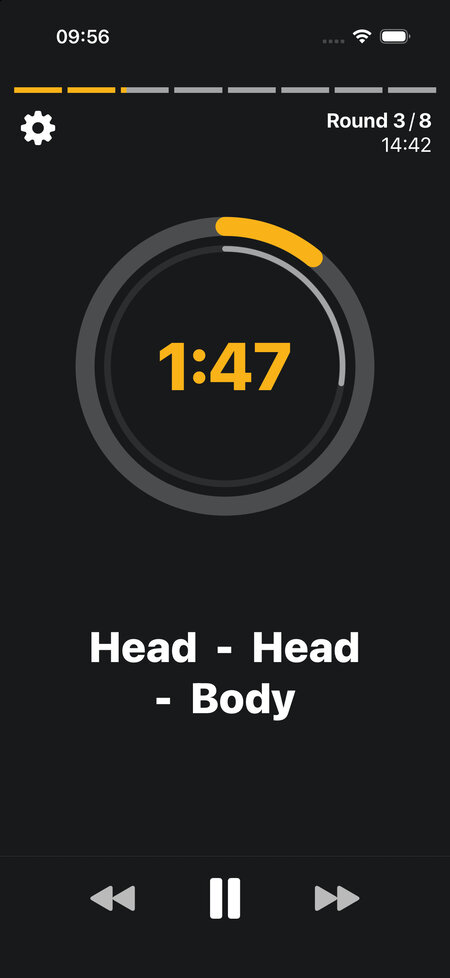
In the Shadow Boxing App, there is a dedicated exercise for this called Level Changes. The idea is simple: the app picks the target and you pick the punch. It calls out something like Head - Head - Body and you decide which punches to throw at each level, so instead of repeating a fixed combo you have to make the level switch on the fly with whatever hands make sense from where you are standing. That is much closer to how it works in sparring, where the opening decides the level and you have to find a punch that gets there.
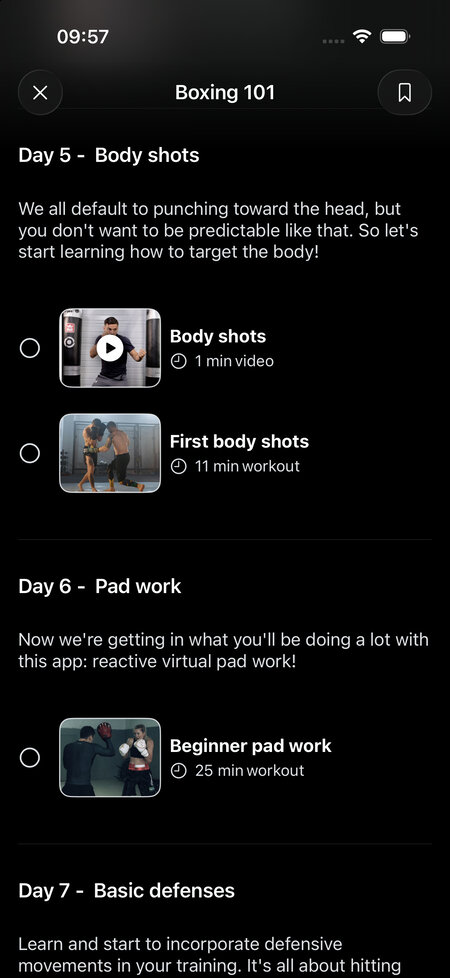
If you are new to boxing, you do not have to go looking for it. The Boxing 101 program, the beginner program in the app, has a whole day dedicated to body shots. Day 5 pairs a short video on how to throw them with a First body shots workout built around level changes, and it comes right after the days spent learning the punches themselves. We put it that early on purpose: changing levels belongs with the fundamentals, not with advanced tactics you pick up a year in.
If you have been throwing everything at the head for months, expect it to feel strange at first. It should. That strangeness is exactly what your opponent will feel when you start doing it to them.