
What Size Hand Wraps to Buy: The Longer the Better
You’ve gone around the wrist, you’ve covered the knuckles, and there’s barely any wrap left. So you skip the fingers, stick the Velcro wherever it reaches and pull your glove on. If that sounds familiar, your wraps are too short.
Buy the longest ones you can find. 180 inches is the standard, and anything below that is too short, full stop. Longer wraps take a bit more time to put on, and they’re 100% worth it.
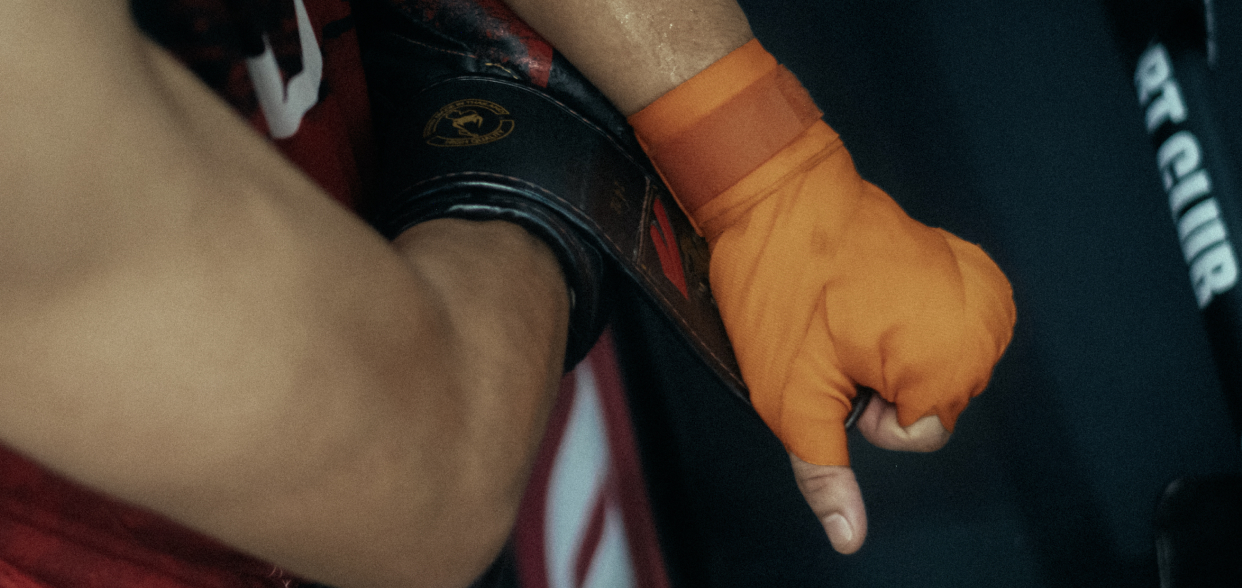
Which length to buy
The number on the package is the length of the wrap once it’s fully unrolled. Here’s how to read it:
- Under 180 inches: too short. You’ll see 100 and 120-inch wraps sold as the cheap option. Skip them.
- 180 inches: the standard length, and your minimum.
- Over 180 inches: better. They’re harder to find, but if you come across them, use them.
I use 200-inch wraps myself.
Having small hands doesn’t change any of this. You’ll sometimes hear that shorter wraps suit smaller hands, but a long wrap on a small hand just means more layers, and more layers is what you want.
Why longer wraps are better
A wrap protects your hand through the layers it puts on it, and length decides how many layers you get. An adult wrist is about 7 inches around, so the 60 inches between a 120-inch wrap and a 180-inch wrap comes to roughly eight more laps. Going from 180 to 200 adds almost three.
More support for your wrist
The wrist is the joint that folds when a punch lands a little off. Every lap around it makes it stiffer and harder to bend, which you’ll notice most on hooks and late in a bag session when your forearms are tired. Wraps won’t fix a bad punch, but on the days your form slips they give you more margin. We go through the other causes in our article on wrist pain after the punching bag.
More padding over your knuckles
Extra laps over the knuckles add a cushion under the glove’s foam. You won’t feel much difference in round one. You will in round eight, on a hard bag, or in gloves that have lost some of their padding.
Nothing gets skipped
Wraps also hold the small bones of your hand together so they don’t spread on impact. That job takes laps between the fingers and across the back of the hand, and those are the first to go when you’re running out of wrap. With a short wrap, every lap on the wrist is one you can’t put on the knuckles, so you end up rationing. With a long one you do every step and still have enough left to finish around the wrist.
What the extra length costs you
The main cost is time. You have a few more laps on each hand before the session and a bit more to roll up after you wash them. You pay those seconds once, and your hands get the benefit on every punch that follows.
Bulk is the other one. More layers take up more room in the glove, so check that you can still close your fist all the way. If you can’t, put more of the extra length on the wrist and less on the knuckles, or go up a glove size.
A longer wrap doesn’t need to be a tighter one, either. Keep the same snug tension you’d use on any wrap. If your fingers tingle or change color, start over.
If you want a boxing workout app that tells you what to throw once the wraps are on, the Shadow Boxing App is free to try, with or without a bag.