
Rope and Bag: The Old-School Combo That Will Wreck You
Walk into almost any boxing gym and two of the sounds you’ll hear most are the slap of a rope on the floor and the thud of gloves on a bag.
Put them back to back in the same workout and you get one of the hardest sessions you can do at home. The rope gets your legs and lungs going, and then you have to hit a bag with whatever you have left.
Why rope and bag work so well together
The rope and the bag tire you out in different places. Skipping hammers your calves and your breathing and keeps you light on your feet. The bag works your shoulders, your core and your punching power. When you alternate them, one part of you gets a break while the other works, so you can keep going far longer than you would on either alone. Your heart rate never really drops, which is what makes the session so brutal.
The rope also sets up your feet for the bag. A good boxer skip has you bouncing lightly on the balls of your feet, shifting your weight from one foot to the other. That’s the footwork you want on the bag, and coming off the rope your feet are already moving. The hard part is keeping them moving once the gloves are on.
How the Rope and bag workout runs in the app
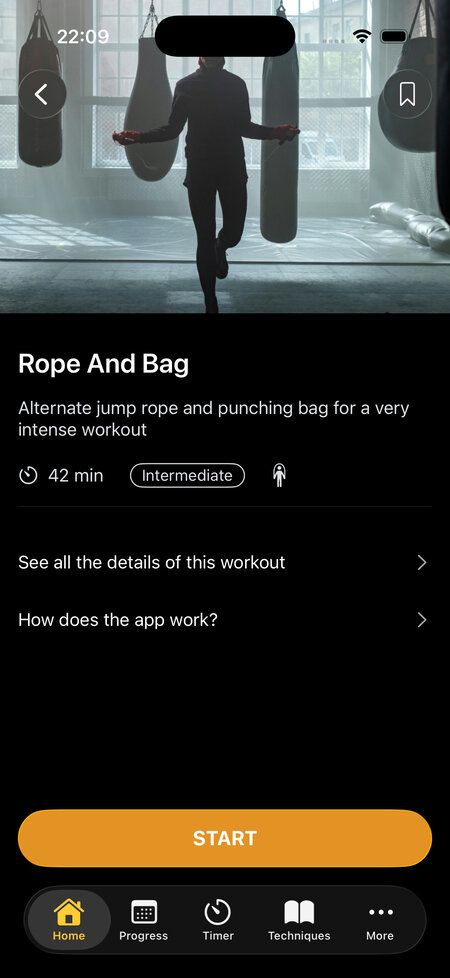
The Shadow Boxing App has a workout built around this called Rope and bag. It starts with a guided warmup, then alternates bag rounds and rope rounds for the rest of the session. There are no separate rest rounds to hide in: the rope is your break from the bag, and the bag is your break from the rope.
The bag rounds draw from the app’s bag exercises, so they don’t all feel the same. One round might have you drilling a single combo over and over to build muscle memory. The next might be the reflex round, where the coach says “On my signal, throw” and you have to react the instant the call comes. Some rounds ask you to defend after every hard combo, which gets much harder when your legs are already burning from the rope.
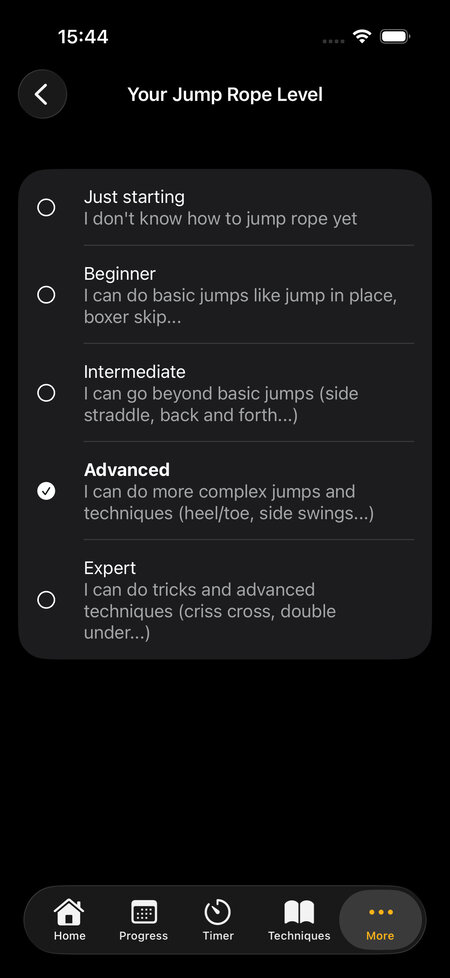
The rope rounds use the Adaptive exercise, which picks jumps for your current rope level and switches moves on you without a break (“New move, don’t stop”), along with some boxer skip work. If the rope rounds feel too easy or too hard, check your jump rope level in the settings. We go into how that works in our post on adaptive jump rope exercises. The bag rounds scale to your boxing level and your intensity setting the same way the rest of the bag workouts do.
You don’t need to watch the screen. The coach announces each switch, so you can leave the phone somewhere you’ll hear it and go from rope to bag on the cue.
How to punch on tired legs
The first bag round after the rope is where form falls apart. A few things to watch:
- Flat feet. Your calves are tired, so you plant. Keep a small bounce between combos, like a lighter version of the skip you just did.
- Arm punches. When the legs are gone, punches start coming from the shoulders only. Sit down slightly into your stance and turn your hips into the shots, even if they come out lighter.
- Dropping hands. Fatigue is when the guard drops most. Bring your gloves back to your face after every combo. We go deeper on this in the bag doesn’t hit back, but you still need your guard.
- Holding your breath. Breathe out on each punch. If you notice you’ve been holding it, slow down for a few seconds and get your breathing back.
When something has to give, drop the power before you drop the form. A clean, lighter round is worth more than a sloppy, heavy one.
Setting up your space
Before you start, think about where you’ll skip. Jumping right next to a hanging bag means the rope can clip it on the way around, so give yourself a few steps of room away from the bag, with enough clearance overhead for the rope to turn.
Gloves are the other practical problem. You can’t skip properly in boxing gloves, so do the rope in your hand wraps and keep your bag gloves within reach. Gloves with a hook-and-loop strap go on in a few seconds by yourself. Lace-ups don’t. The faster you get from rope to bag, the more of the workout you actually spend working.
The floor matters too. A rubber mat or a wooden floor is kinder to your legs than bare concrete, and it’ll make your rope last longer.
Is Rope and bag too hard for beginners?
Yes, for most people it’s a tough place to start. It’s listed as an intermediate workout, and it assumes you can already skip without tripping every few seconds and hit a bag without losing your form.
If either one is new, learn them separately first. The Learn to jump rope program gets you from tripping over the rope to a steady boxer skip, and the Hitting the Bag program does the same for bag work. Come back to Rope and bag once both feel comfortable on their own. And treat it as a hard day when you do: plan an easier session the day after rather than stacking it with another heavy one.