
It's the Details: How the App Decides Which Way You Move
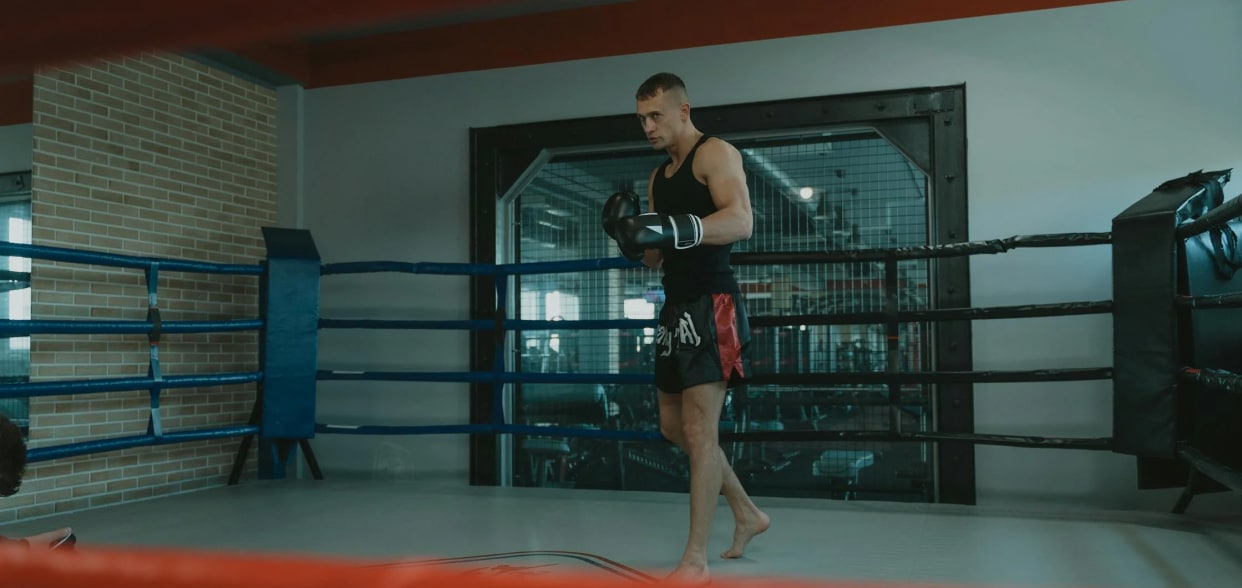
One of the footwork exercises in the Shadow Boxing App works like this: the app calls a direction, you take one step that way, then you throw a few punches. Forward, back, left, right, again and again for a whole round. You can see it in our footwork drill video. It raises a question that sounds trivial: how does the app decide which direction to call next?
Two easy answers that don’t work
The first idea is a fixed pattern. Forward, right, back, left, and repeat. You stay in place and every direction gets the same amount of work. It also takes about two laps before you stop listening and start moving on autopilot. You end up boxing like a robot, which is the opposite of what footwork training is for. In the ring, you don’t know where you will have to go next.
The second idea is to pick at random. That fixes the autopilot problem and creates a new one: random directions drift. With four directions and around 40 calls in a 3 minute round, you get the same direction three times in a row a couple of times per round. Worse, random steps don’t cancel out. By the end of the round you are, on average, about six steps from where you started. Six steps back from the middle of a living room is usually a wall.
What the app does
The app picks at random, and it keeps count. Every forward call adds one step to where you should be standing, every back call removes one, and the same goes for left and right.
While that count says you are close to your starting point, any direction can come up. Once it says you have drifted a few steps one way, the next call brings you back. You stay inside a small area, about the space you would clear for shadow boxing anyway, and the order of the calls never settles into a loop you can memorize.
There is one limit. The app counts steps and has no idea how big yours are. If your steps back are longer than your steps forward, you will still creep backward over a round. Keep them short and even, which is how you should be stepping in a boxing stance anyway.
Where the idea comes from
This is how coaches run the same drill in a gym. The coach stands in front of the group and calls directions, and everyone moves together. From the front of the room, the coach can see at a glance how much space everyone has left. As soon as the group starts drifting toward the ropes, the next calls bring it back to the middle, well before anyone runs out of room.
A boxing app can’t do that. It doesn’t see you or your living room. Whatever a coach anticipates by looking has to be thought through in advance and built into the exercise. That is a big part of what we get from working with real boxing coaches: they can tell us which adjustments they make without thinking about it.
1% better every day
Nobody will open the app and notice that the directions are balanced. You would only notice the opposite, the day a workout backs you into a bookshelf. A lot of the work on the app goes into things like this.
There are a lot of boxing apps out there now that were generated with AI in a few days. We know the care we put into details like this one will make a difference over time. It is why, as we wrote in our stance on AI, every workout in the app is designed and tested by real coaches and boxers.
Boxing is learned the same way. No single round makes you a better boxer. Your jab gets a little cleaner one day, your feet a little quieter the next, and a year later you move like someone else.
We try to improve the app the way you improve at boxing: 1% better every day. Most of those improvements are too small to announce. They add up, the same way your rounds do.