
Are AI Boxing Apps Worth it in 2026?
People ask us fairly often which AI boxing app they should get. We’ve tried a lot of them, because we build a boxing app ourselves and we want to know what’s out there. Our answer, as of today, is that we don’t recommend any of them. Not because AI is useless, and not because we refuse to touch it, but because in boxing specifically the current crop of AI features either does nothing useful or actively teaches you bad habits. This will change at some point. It hasn’t yet.

We’d rather not write this article, to be blunt. There’s a wave of AI boxing apps that came out through 2026, and we’re not going to name any of them or pick fights with other small teams trying things. But the question keeps landing in our inbox, phrased more or less the same way every time: what’s the difference between what you do and the app that films me and scores my punches? People are asking because it’s a fair thing to wonder about, and giving a vague answer would be dodging it.
So this is the clear version. Here’s what those apps do, what we found when we tested them, where we use AI ourselves and where we refuse to, and what we think you should actually train with.
The two kinds of AI boxing app
Almost everything marketed as an AI boxing app falls into one of two buckets.
The first generates your workouts. You answer a few questions, a model writes you a session, and you follow it. The second uses your phone camera: you film yourself shadow boxing, and the app counts your punches, scores your form, and hands you a number at the end.
There’s a third thing worth covering separately, which is AI-generated technique video, where the demonstration you’re copying was never filmed with a real boxer. We’ll get to that one too, because it’s the one that worries us most.
AI-generated workouts are worse than they look
A language model can produce something that looks exactly like a boxing workout. Rounds, rest periods, combinations, a difficulty label. On paper it’s convincing. The problem shows up when you actually do it.
Combos that read fine turn out not to flow. The 1-2-3 that a model happily writes might land you with your weight on the wrong foot for whatever comes next, and you won’t know why the round felt awkward, you’ll just know it did. Rest gets placed by convention rather than by how tired that particular sequence makes you. Progression across a program tends to be cosmetic: week two says “intermediate” and contains roughly what week one contained, with a longer round timer.
None of this is a model being stupid. It’s that a workout is a physical object, not a text object. The only way to know whether the recovery round comes one round too late is for a person to be standing there sweating through it. We wrote about this at length in our stance on AI, and it’s the reason our workouts get tested by real people before they ship, which is slow and irritating and worth it.
There’s a specific version of this that catches beginners: an AI-generated session has no idea what you can’t do yet. A coach watching you for ninety seconds knows you’re dropping your right hand and will spend the session on that. A generated workout has no way to know, so it gives everyone the same plausible average session.
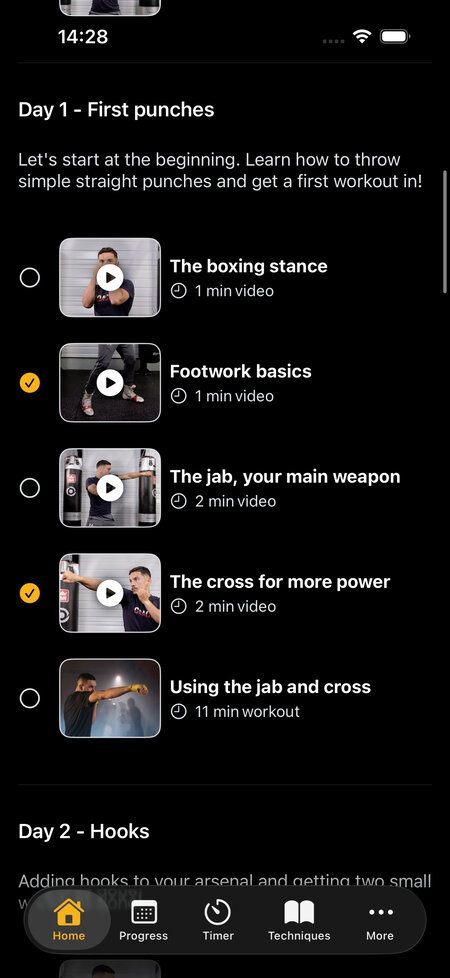
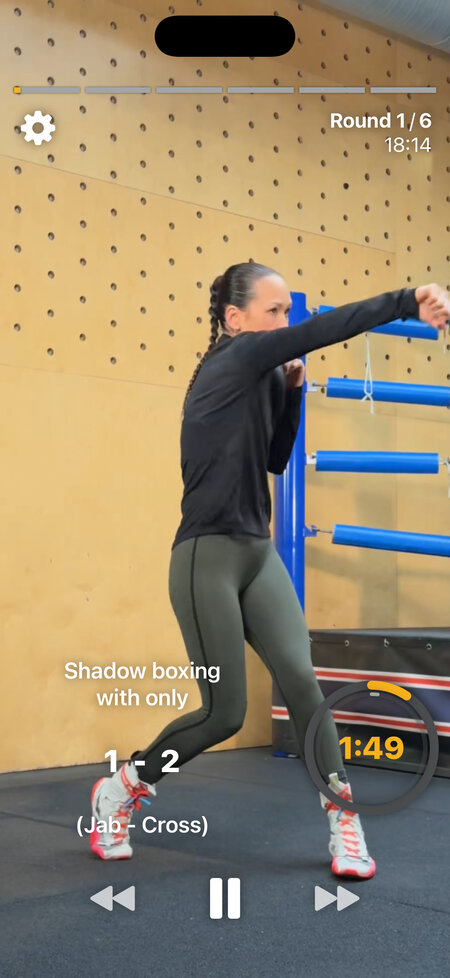
The camera apps: filming yourself and getting a score
This is the flashier category, and the one people are most curious about. Prop up your phone, box in front of it, and the app tells you how you did. We’ve spent real time with these. Here’s where they break.
Punch counting is unreliable
Counting punches from a phone camera sounds simple and isn’t. Anything thrown fast, at an angle, or partly out of frame gets miscounted. Hooks and uppercuts are worse than straights. Doubling up a jab often registers as one punch. Bring your hands back to guard sharply and you can get phantom counts.
Even when the count is roughly right, what is it telling you? That you threw 340 punches in twelve minutes. Not whether any of them were any good, not whether your feet were under you, not whether you were breathing. Punch count is the easiest thing to measure and one of the least useful things to know, which is exactly why it’s the number these apps show you.
Form checking picks the wrong details
Some apps go further and try to grade technique. In practice they latch onto a handful of things a pose model can detect: whether your hands come back to guard, roughly how extended your arm gets, whether your elbow flares.
Guard discipline does matter, so scoring it isn’t crazy. But it’s one detail out of dozens, and the app has no idea when it should matter. Nobody tells you that if you’re drilling a specific counter, or working in close, or deliberately practising a low guard because that’s what your style asks for, the app will mark you down for it. It’s a rule applied without context, which is not what coaching is.
We put a fair amount of effort into testing this properly rather than trying one app once. We went through a pile of them, and where an app allowed it we fed in our own recorded workouts, footage of professional boxers, and clips of beginners at their first sessions. If the scoring worked, the pros should have come out well ahead and the beginners should have been picked apart on specific, fixable things.
That isn’t what happened. The results were all over the place. The same clip could score differently on different runs. A beginner with obvious problems sometimes scored higher than a professional throwing clean shots, usually because the professional was doing something the model didn’t expect, like slipping or turning off the line. Two apps looking at identical footage disagreed completely.
Getting a number at the end of a round is fun, we won’t pretend otherwise. But a number you can’t trust in either direction tells you nothing. You can’t use it to decide what to work on, you can’t use it to tell whether you’re improving, and if you do use it you’ll be chasing whatever the model happens to reward that day.
Meanwhile the things that actually make a punch work go unmeasured. Whether your hip turned before your shoulder. Whether your rear heel came off the floor. Whether your weight transferred or you arm-punched. Whether that shoulder crept up towards your ear on the cross. We wrote a whole piece on how much the small details matter in boxing, and none of the ones that separate a good jab from a bad one survive being flattened into skeleton coordinates on a phone.
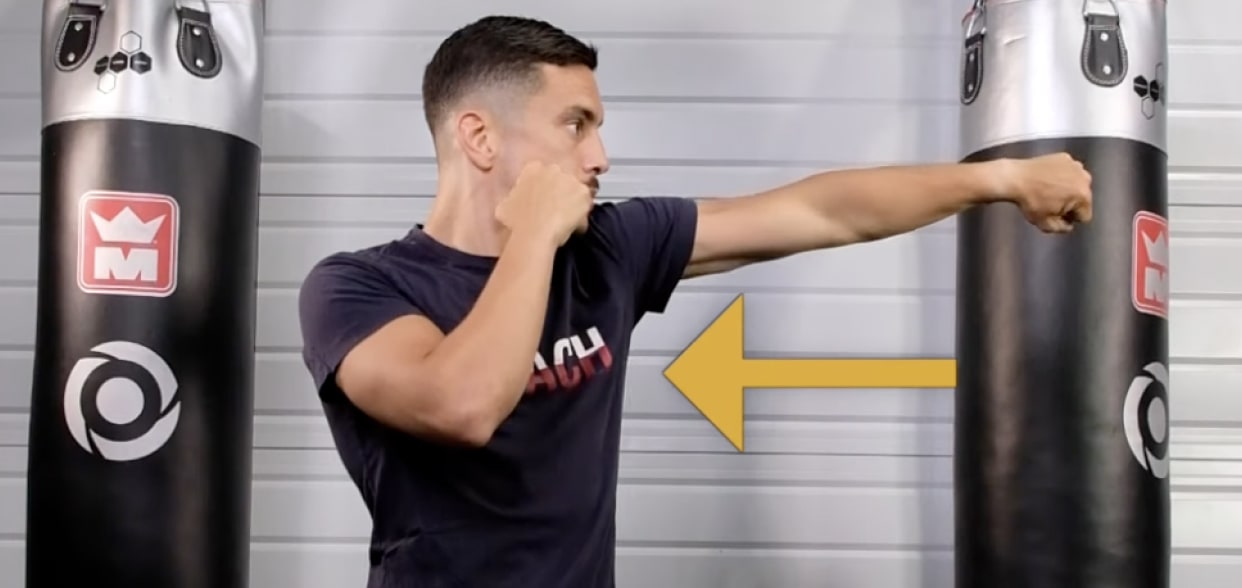
This is the level a tutorial has to work at: pointing out the one thing in the movement that decides whether the punch is any good. That’s what a coach does with you in a gym, and it’s what a score out of a hundred can’t do.
They teach you to stand still
This is the part that genuinely bothers us, more than any accuracy issue.
For the camera to see you, you have to stay in frame. So you stand in one spot, square to the phone, and box in a way that keeps the model happy. That’s the opposite of what shadow boxing is for. You should be moving: circling, stepping in and out, changing angles, pivoting off after a combination. A round spent planted in front of a lens so a phone can count your jabs is a round training a habit you’ll spend years undoing.
Some apps ask you to keep a specific distance and orientation. You’re now optimising for the camera instead of for boxing, and the more seriously you take the score, the worse the habit gets.
No data is better than bad data. A wrong number that you trust will change how you train. Nothing at all just leaves you where you were, which is a much better starting point than confidently chasing the wrong thing.
If you want to see yourself, just film yourself
None of this means video is useless. Watching yourself box is one of the best things you can do, and it’s usually a shock the first time. The useful part is the footage, not the score attached to it.
Our app has a recording feature for exactly that. Hit record during a workout and it films you through the round, then saves the video on your phone so you can watch it back afterwards. There’s no grading, no punch count, no verdict. You watch your own round and see what everyone sees: the hand that drops, the feet that stopped moving in the last thirty seconds, the combo that fell apart at the third punch. It’s worth recording a round or two rather than a whole session, both because of file size and because you’ll actually rewatch two rounds.
The round timer and the combo being called stay on the video, so when you watch it back you can see what you were being asked for at that exact moment and whether you did it.
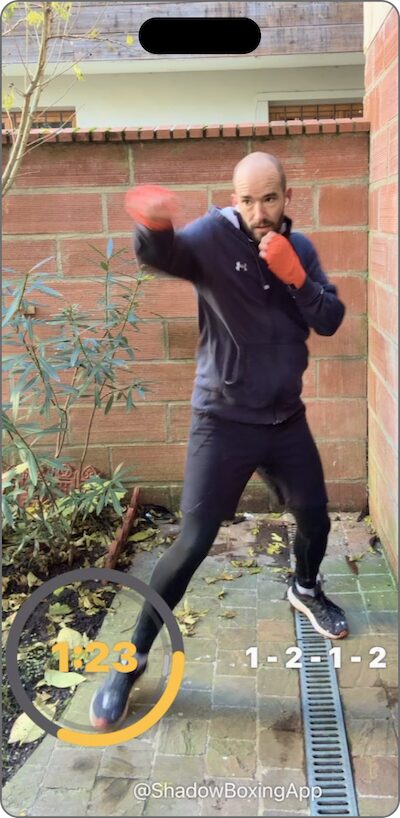
If you have a coach, or a friend who boxes, that clip is also the single most useful thing you can send them. A person watching thirty seconds of you will tell you more than any app currently can.
No coach and nobody around who boxes? There are places online that will look at your footage. The r/amateur_boxing subreddit is the obvious one: people post rounds of shadow boxing, bag work and sparring and ask for feedback, and experienced boxers and coaches answer. Take what you get there with some judgement, since anyone can reply and advice sometimes contradicts itself, but even mixed feedback from people who box beats a score generated by a phone. Post a short clip, say what you’re working on, and you’ll usually get something specific back.
AI-generated technique videos are the worst of it
The last category is demonstration video that no boxer ever performed. Generated footage of a jab, a slip, a pivot, dropped into a tutorial.
Boxing is a details sport. The difference between a cross that lands and one that doesn’t is small: how the rear foot pivots, how the shoulder covers the chin, how the hand comes back. Generated video gets the overall gesture right and the details wrong, because the details are exactly what it has no reason to preserve. A slightly raised shoulder, a hand that returns a few inches low, a foot that stays flat. It looks like boxing at a glance.
If you’re a beginner, you can’t tell. That’s the whole problem. You copy what you’re shown, and you’re being shown something subtly wrong by a system that doesn’t know it’s wrong. Weeks later you’ve built the mechanics into your muscle memory and someone has to take them back out of you.
Everything in our app is filmed in a gym with real coaches and athletes, and we explained why in how we make our tutorial videos. It costs us time and money we could avoid. We’ll keep paying it.
We go further than video too. We’ve written long breakdowns of each punch, one at a time, because there’s more to say about a jab than fits in a thirty second clip: how to throw a jab, how to throw a cross, how to throw a hook and how to throw an uppercut. Those articles exist because someone sat down and worked out what beginners get wrong about each one, in order. A model has no view on which mistake comes first.
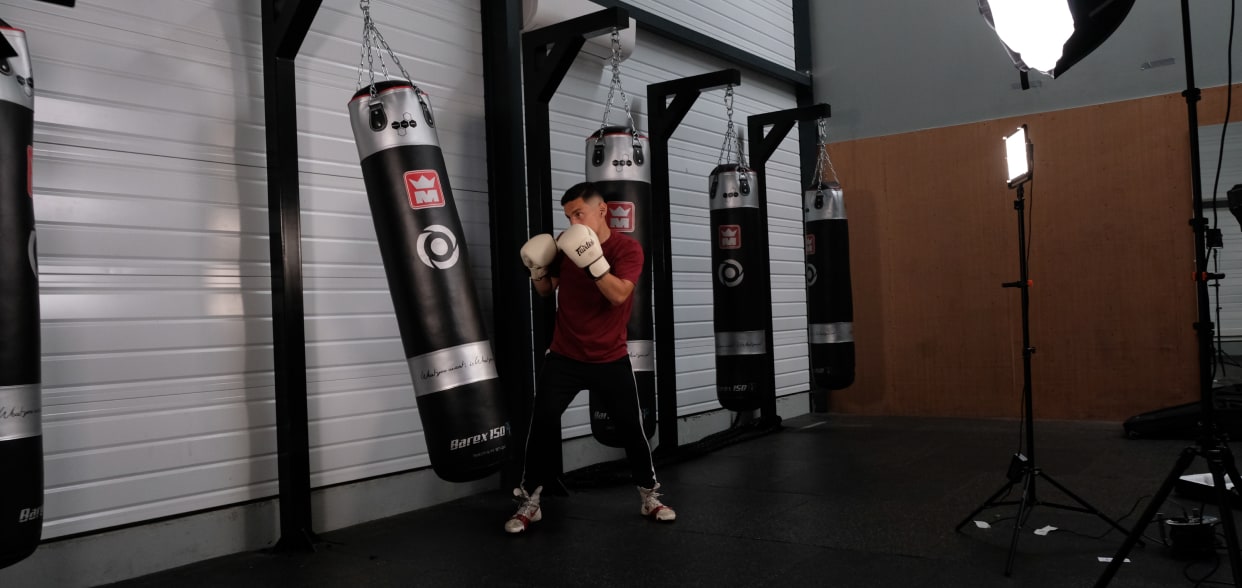
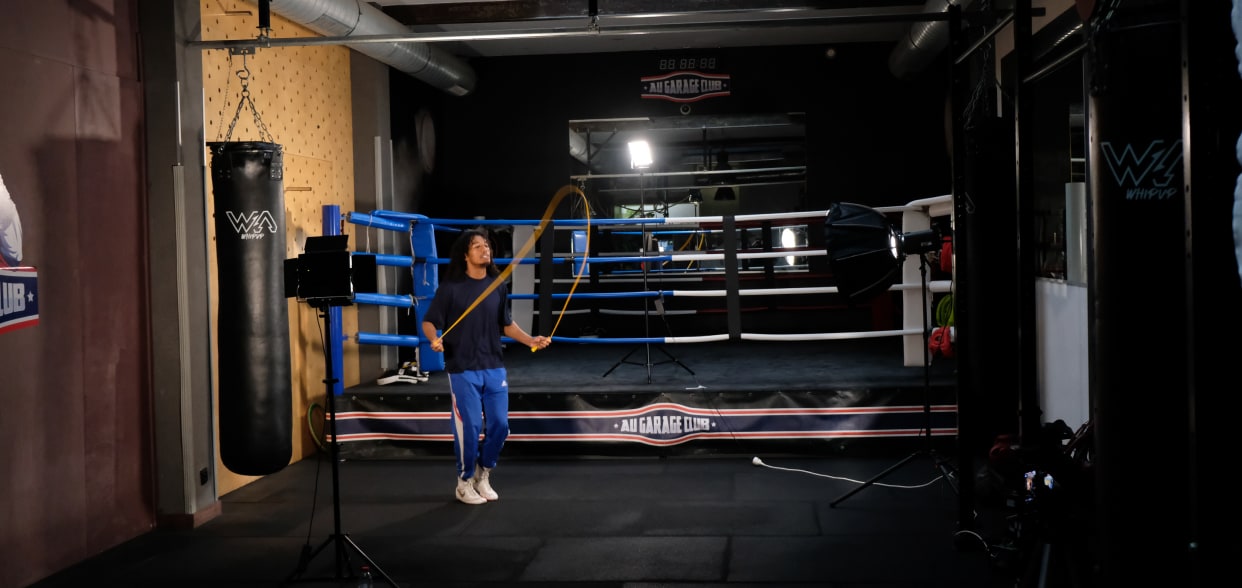
The same goes for equipment, and with a jump rope it’s not only a question of technique. Rope work is repeated impact on your calves, ankles and knees for minutes at a time, so a demonstration that has you landing flat footed, bouncing too high, or turning the rope from the shoulders instead of the wrists will hurt you eventually. Not dramatically, just a sore Achilles that turns up three weeks in and stops you training. The speed ladder is the same story, where the whole point is precise foot placement at speed and a sloppy model of the movement is how you catch a rung and go over.
That’s why we film these with the people who teach them. A coach who has taken hundreds of beginners through their first rope sessions knows what goes wrong and in what order: who lands heavy, who swings from the shoulders, who gives up in week one and why. So the tutorial gets built around the mistakes people actually make, and when the coach tells us a cue isn’t landing or a step comes too early, we change it.
Where we do use AI, so you know exactly what you’re getting
We’re not here to pretend we’re AI free, and you should know what’s under the hood of anything you train with.
AI helps us write code, catch bugs, and handle translations, which lets a small independent team ship for iPhone and Android at all. And the coach voice you hear during workouts is generated, because recording every combo name, every exercise, every cue, in every language we support, isn’t something we could do otherwise.
What that voice says is written by people who box. Every callout, every combination, every bit of timing was designed by coaches and tested in real sessions. The words are human, the delivery is synthetic. That’s the line, and we’re not planning to move it.
The app also generates workouts in Quick Start, and that’s worth being precise about too. It assembles exercises coaches designed and real people tested, using logic we wrote and reviewed ourselves. No model is improvising your rounds.
Why we keep doing it the slow way
We work with boxing coaches. We meet real boxers, film with them, and put our progressions in front of them before shipping anything. We go to gyms. We read every message users send us and change things when they’re right.
That’s not a marketing position, it’s the only method we’ve found that catches the problems. A coach will tell you within a minute that a drill is teaching the wrong reset, and no amount of prompting gets you that. We went into more detail on working with real coaches if you want the specifics of how it works day to day.
We also ask our users to film themselves training and send it to us, and a lot of them do. Watching someone go through one of our workouts in their living room tells us things no message ever will: where they hesitate, where they’re a beat behind the callout, where they clearly have no idea what the app just asked for. On top of that we go to gyms and watch people use the app in person, which catches the things nobody thinks to mention because they assume it’s their fault rather than ours.
Then we adjust. Usually it’s small. A vocal cue that lands a half second too late to be useful. A word that’s ambiguous when you’re tired. A combo that reads fine on paper and doesn’t flow when a real person does it at speed, because the second punch leaves you in the wrong position for the third. We’ve been making these adjustments since 2020, one at a time, and we’re still finding them. That’s how many small details there are in this.
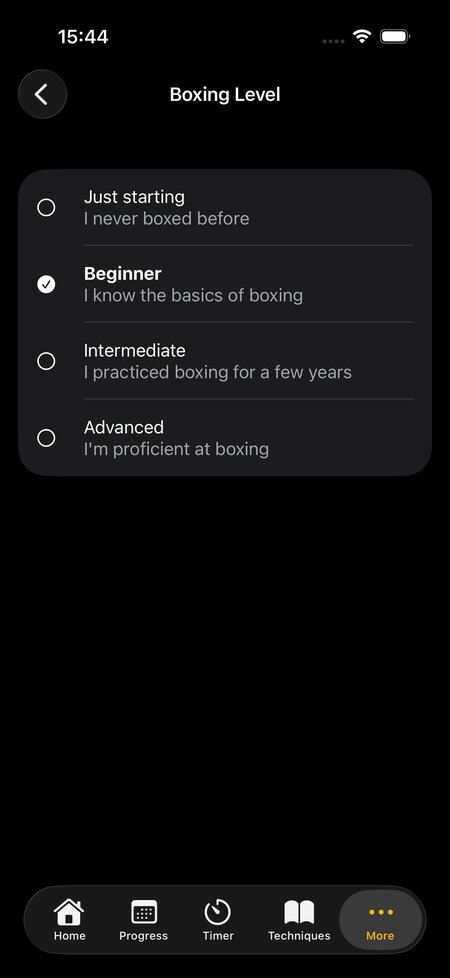
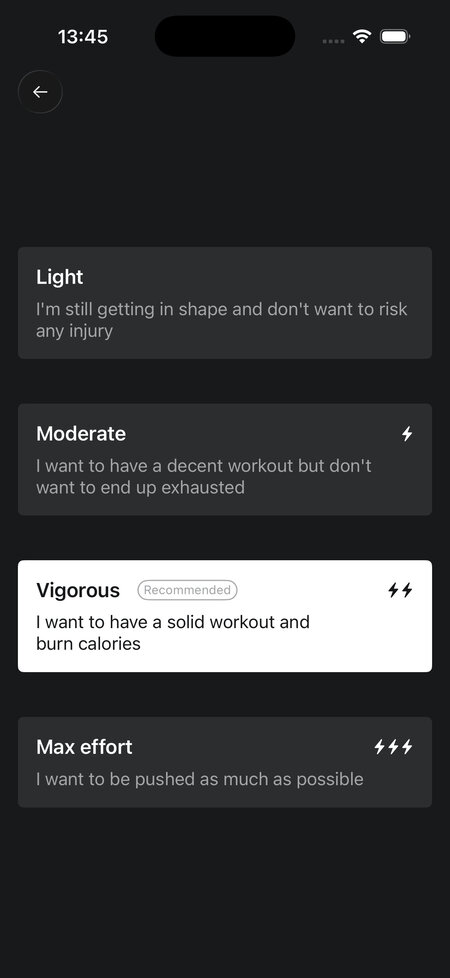
A big part of what that work feeds into is the fact that a workout doesn’t behave the same way for everybody. You tell the app your boxing level and your fitness level separately, and the cues, the timing between them, and how much you’re asked to do all shift accordingly. The same session given to a beginner and to someone who’s been boxing for five years shouldn’t sound the same, and it doesn’t. Getting that right isn’t something you can reason your way to at a desk. It takes running the workout at every level, with people at every level, and fixing what comes back.
We also box ourselves, all of us, week in and week out. Rough edges in a workout are obvious when you’re the one in round six with your arms burning.
So what should you actually use
If you can get a coach, get a coach. Nothing in an app beats a person watching you move and telling you what to fix. Pad work with someone who knows what they’re doing is worth more than any amount of screen time, and if there’s a gym near you and you can afford it, that’s where your money should go first.
If you can’t, or if you want to train more than your gym schedule allows, that’s the gap the Shadow Boxing App is built for. Structured rounds, callouts timed by people who box, tutorial videos filmed with real athletes, and progressions that were tested on humans before they reached you. Not a score, not a punch count, no camera judging your guard. Just training you can actually follow at home.
Maybe in a few years a phone will read your mechanics well enough to be worth listening to. When it does, we’ll be interested. Today the AI features in boxing apps are a gimmick, and we’d rather tell you that than sell you one.
The app is free to download if you want to see what the human version looks like.