
Shadow Boxing vs HIIT: Differences and How to Combine Them
Search “shadow boxing vs HIIT” and you will find them treated like rival workouts you have to pick between. They are not really the same kind of thing. Shadow boxing is a skill you practice, and HIIT is a way of structuring effort. You can do one as the other, and some of the best boxing conditioning is exactly that. But they pull in different directions, and knowing what each actually trains makes it much easier to build a week that covers both instead of accidentally doing neither well.

What shadow boxing trains
Shadow boxing is skill work first. With no target and no clock forcing your hand, you decide the pace, and that freedom is the point. You can spend a round throwing the same combination slowly, checking your balance after the cross, watching whether you actually reset your guard or let your hands drift down.
It is the best home tool for technique, footwork, head movement, and flow. You also train the mental side: imagining an opponent, reading distance, setting up shots with a feint before you throw. If you want the full picture of why it matters, the importance of shadow boxing and what shadow boxing actually is both go deeper.
The thing to understand is that intensity is optional. A shadow boxing round can be a slow, thoughtful technical drill or an all-out sprint. That flexibility is what lets it double as a HIIT session when you want it to.
What HIIT trains
HIIT, high intensity interval training, is not a boxing thing at all. It is a structure: short bursts of hard effort with brief recovery in between, repeated. The format does not care whether you are sprinting, doing burpees, or throwing punches. What it cares about is that you push near your limit, back off just enough to keep going, and push again.
That structure is good at specific things: cardiovascular conditioning, explosive power, and the kind of stamina that holds up when you are gassed. Because you keep your heart rate high and your rest short, you get a strong conditioning effect in a compressed amount of time. The deeper case for it is laid out in the benefits of HIIT for boxing.
Where they overlap
Here is the part the “versus” framing misses: boxing is already built like HIIT. A round is a hard interval, the rest between rounds is your recovery, and the bell starts the next burst. Shadow boxing done at high output, with the rest kept short, is a HIIT workout by any definition.
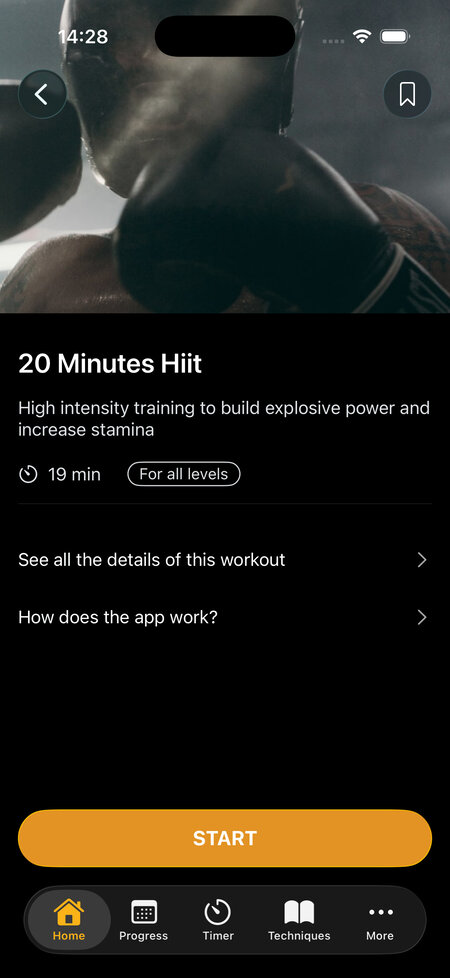
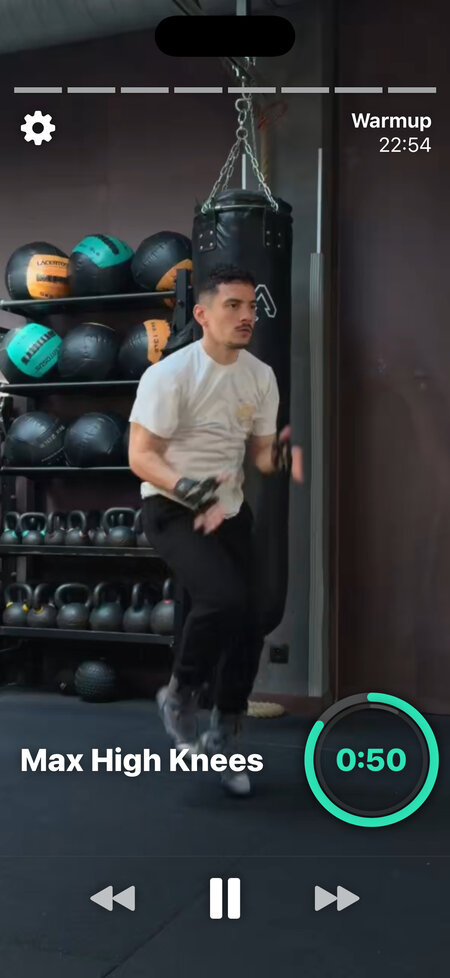
That is exactly how the Shadow Boxing App handles it. The “20 minutes HIIT” and “30 minutes HIIT” workouts are shadow boxing structured as high intensity intervals: the app calls out fast combinations through a hard round, gives you a short break, then drives the pace back up. There are HIIT exercises like Max High Knees mixed in to spike the heart rate between punching, so the conditioning hits while you are still working on your hands.
If you want a full breakdown of how a boxing session becomes a conditioning workout, boxing as the ultimate HIIT workout covers it, and cardio boxing is the version that keeps punches in the mix while raising your heart rate.
Where each one falls short
Shadow boxing at a relaxed, technical pace will not give you the conditioning a real HIIT session does. If your only training is light, deliberate rounds, your technique might be clean but your gas tank will not improve much. The intensity has to be there for the conditioning benefit to show up.
HIIT has the opposite problem. When you go max effort, form is the first thing to fall apart: punches get arm-heavy, feet stop moving, the guard drops. Pure conditioning work with no technical sessions to balance it can quietly reinforce sloppy mechanics, so you end up fit but with habits you then have to unlearn. This is the same trade-off that shows up in shadow boxing versus heavy bag work, where going hard for output can crowd out the careful, technical side of training.
How to combine them in a week
You do not choose one. You schedule both. A simple split that works: use lighter shadow boxing sessions for technical days, where you slow down and fix specific things, and use HIIT sessions on the days you want to push conditioning and come away soaked.
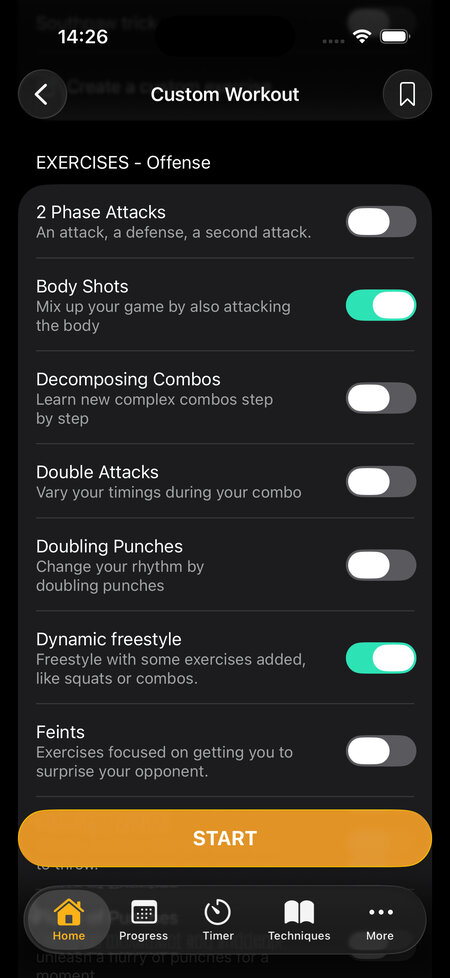
The practical way to control this is round and rest length. Long rounds with short rest push a session toward HIIT, while shorter rounds at a relaxed pace keep it technical. You can set both yourself when you build your own boxing workout, so the same shadow boxing turns into a skill drill or a conditioning grind depending on how you configure it.
The honest takeaway is that “shadow boxing vs HIIT” is the wrong question. Shadow boxing is what you are doing, and HIIT is one way to do it hard. Keep some technical sessions where intensity takes a back seat, run real HIIT sessions when you want the conditioning, and you get the technique and the engine at the same time.