
Lay the Rope Down: Jump Rope Footwork Drills for Boxing
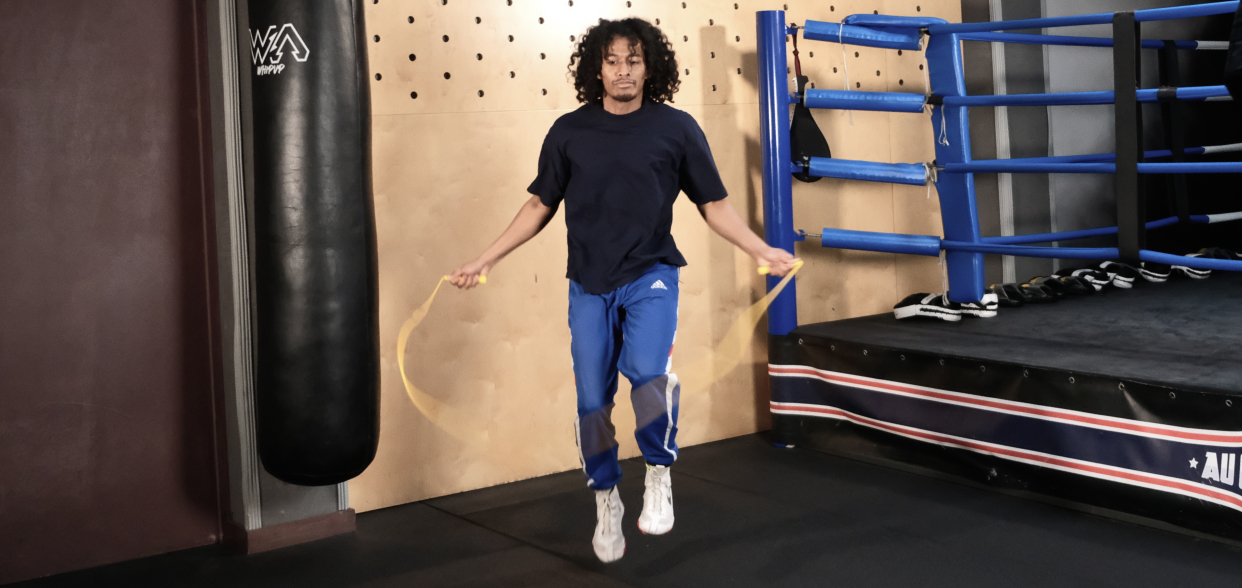
Ask most people what a jump rope is for and they will say cardio: spin it, bounce, get your heart rate up. That is half of it. In boxing the same rope does a second job that has nothing to do with jumping. Drop it on the floor and it turns into a footwork tool, a line or a shape you move around while you punch. That second job is the part almost every jump rope app ignores, and it is one of the things we built most carefully into the Shadow Boxing App.
A jump rope app and a boxing app are not the same thing
There are plenty of apps that will count your jumps or run a rope timer. They treat the rope as a fitness gadget, and for general fitness that is fine. We came at it from the other direction. Every rope exercise in the app was built with real boxing coaches and tested with boxers before it shipped, because we did not want a generic skipping section bolted onto a boxing app. The goal was rope work that makes you a better boxer, not just a fitter one.
Part of that is the cardio and the technique ladder, from the basic bounce up to double unders. The part people do not expect is what happens when you stop jumping and put the rope on the ground.
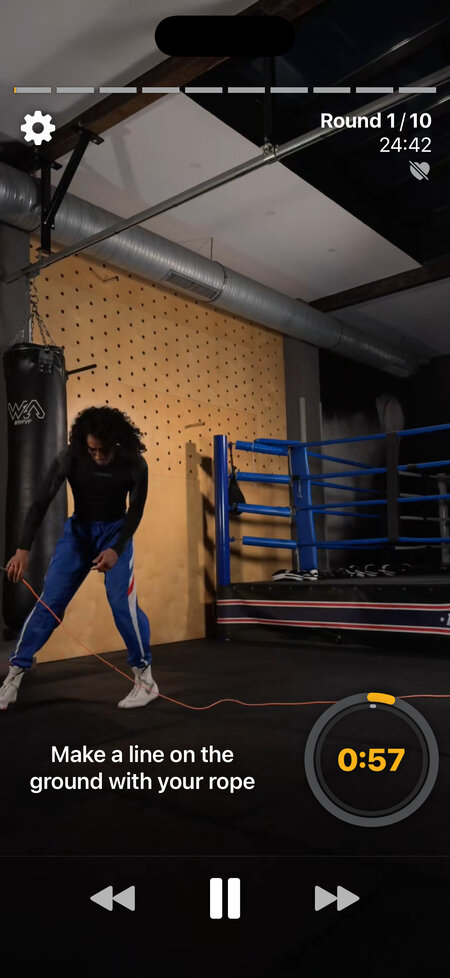
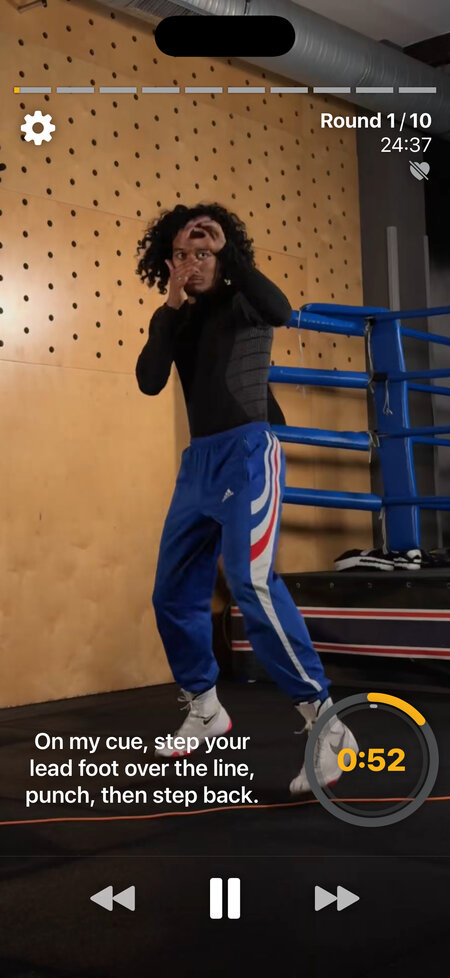
Make a line, step over it, throw
Lay your rope out in a straight line in front of you. Now it is a reference for distance. On the coach’s cue you step your lead foot over the line, throw a punch or a short combo, then step back out behind it. That stepping in to land and stepping out to safety is one of the most important habits in boxing, and most beginners never drill it in isolation because there is nothing telling them where “in” and “out” actually are. The line fixes that. You can see the boundary, so your feet learn it.
The app has this as a guided exercise, with a tutorial that walks you through stepping in and stepping out before the workout starts calling it live.
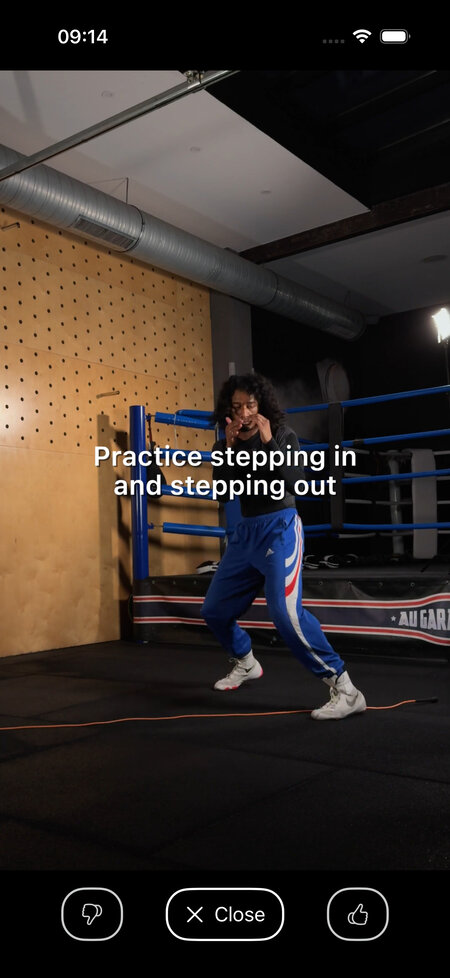
You are not freestyling and hoping your range is right; you are stepping over a real mark and punching from the correct distance every time.
Make a circle, switch direction
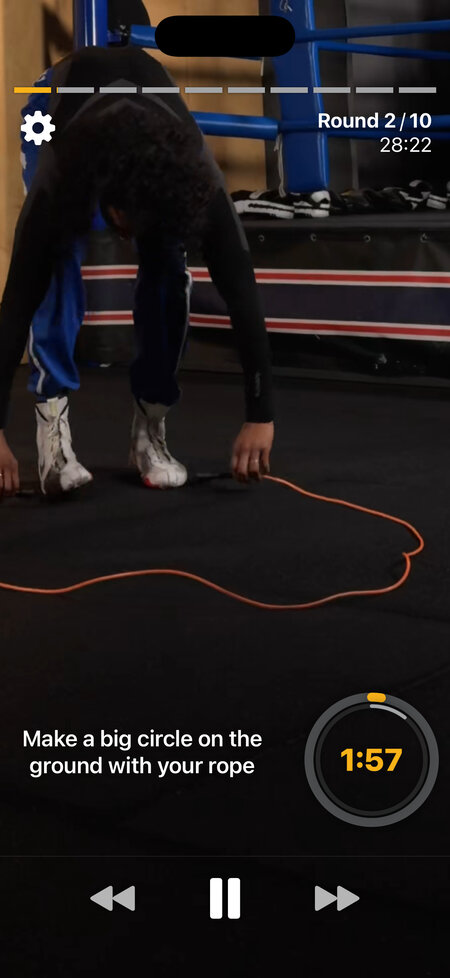
Now arrange the rope into a circle. A small one is for stepping in and out of; a big one is for moving around. Circling is how you avoid getting stuck square in front of an opponent, and it is awkward to practise without a reference because you drift and lose your shape. With the rope on the floor you have a track to follow.
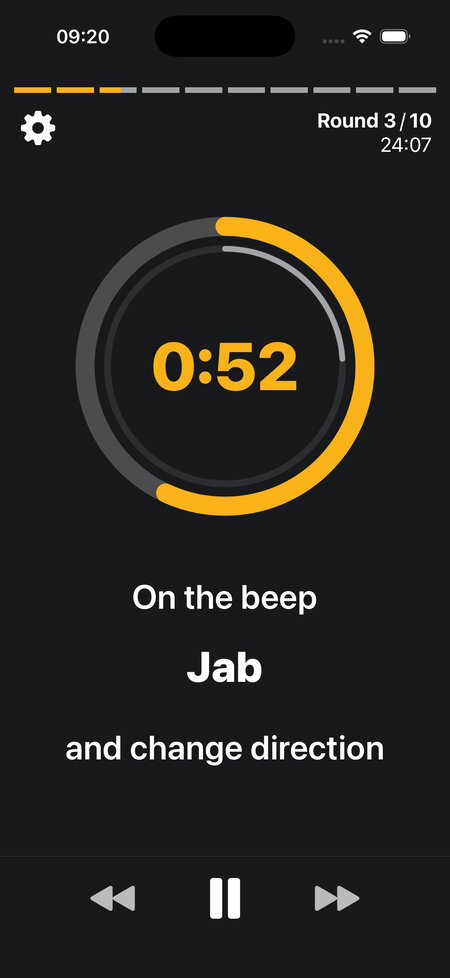
The exercise has you moving around the circle and changing direction on the beep, often throwing a jab as you switch. That trains the thing that wins exchanges: cutting angles, resetting your feet, and staying mobile instead of planted. Do a few rounds of it and circling starts to feel deliberate rather than like wandering.
Why a marker on the floor beats counting jumps
Footwork is the hardest thing to teach yourself, because there is no obvious feedback. You can watch yourself throw a jab in a mirror, but you cannot easily tell whether you stepped in at the right range or circled cleanly. A line or a circle on the ground gives you that missing reference. Your eyes have something to measure against, so your feet stop guessing.
This is where rope work crosses straight over into the rest of your training. The stepping in and out you drill over the line is the same movement you want when you shadow box or work the bag. The circling is the same footwork you need when you spar. The rope is not a separate skill sitting off to the side; it feeds the boxing.
It is still excellent cardio
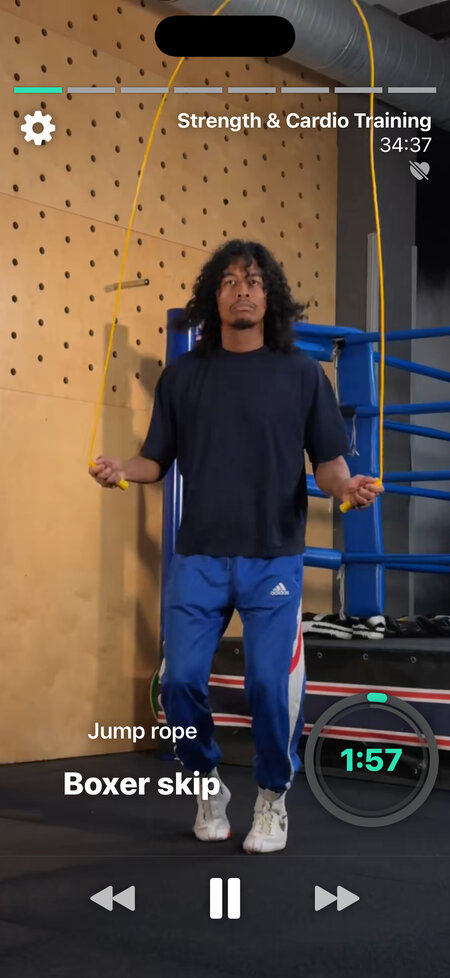
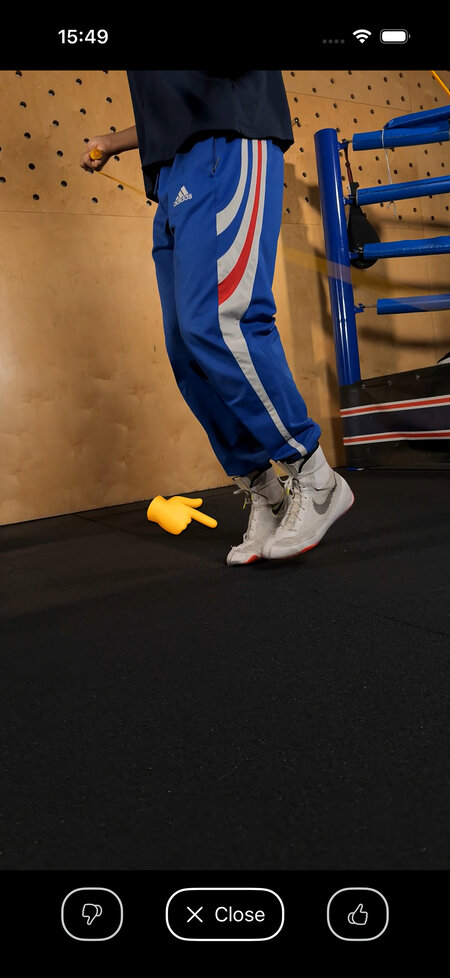
None of this means you stop jumping. The boxer skip, where you shift your weight foot to foot with each turn of the rope, is still one of the best conditioning tools in the gym and builds the light, quick feet boxing runs on. If you want the case for trading some of your roadwork for the rope, we made it in detail in jump rope versus running for boxing cardio. The point of the floor drills is that the rope gives you both: conditioning when you jump it, footwork when you lay it down.
Built with coaches, scaled to your level
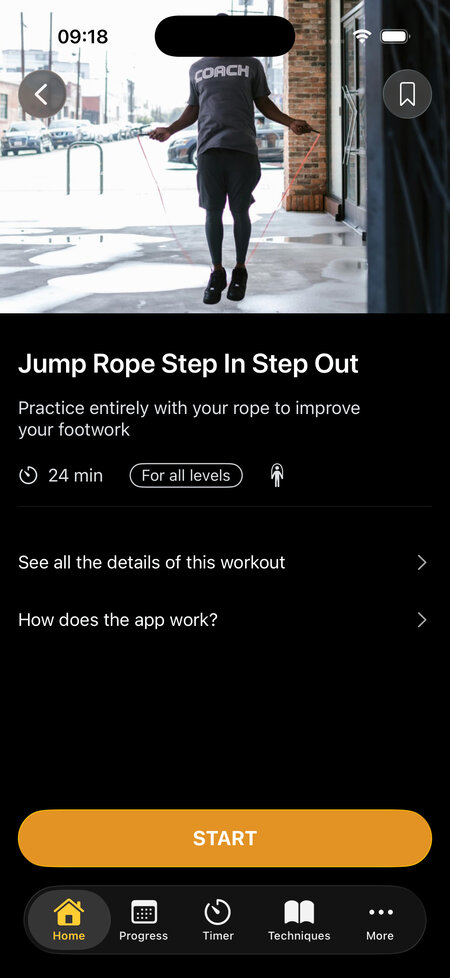
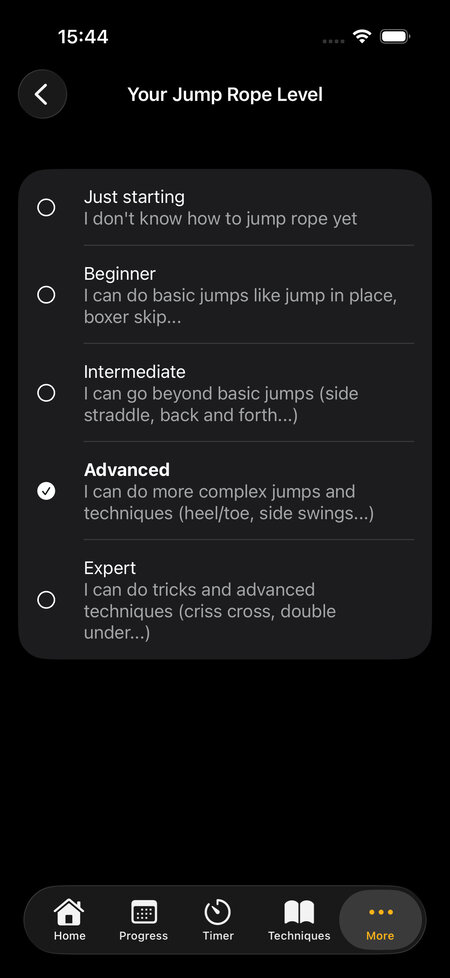
These drills are not dumped on you at random. The step in and step out work lives inside structured sessions like Jump Rope Step In Step Out, a 24 minute workout built entirely around using the rope to sharpen footwork. And because we tested everything with boxers across different abilities, the difficulty scales: you set your jump rope level in your profile and the app adjusts what it calls, so a beginner gets clean line work and a more advanced boxer gets faster direction changes and combos layered on top. Everyone finds something that is both doable and useful.
Where to start
The good news for the floor drills is that they need no jumping skill at all. You do not have to be able to string together a hundred rotations to lay a rope down and step over it, so anyone can start here today. If you also want the jumping side and you are new to the rope, the Learn to Jump Rope program takes you from picking a rope through the basic bounce and boxer skip, and the adaptive jump rope workouts for beginners meet you wherever your level is.
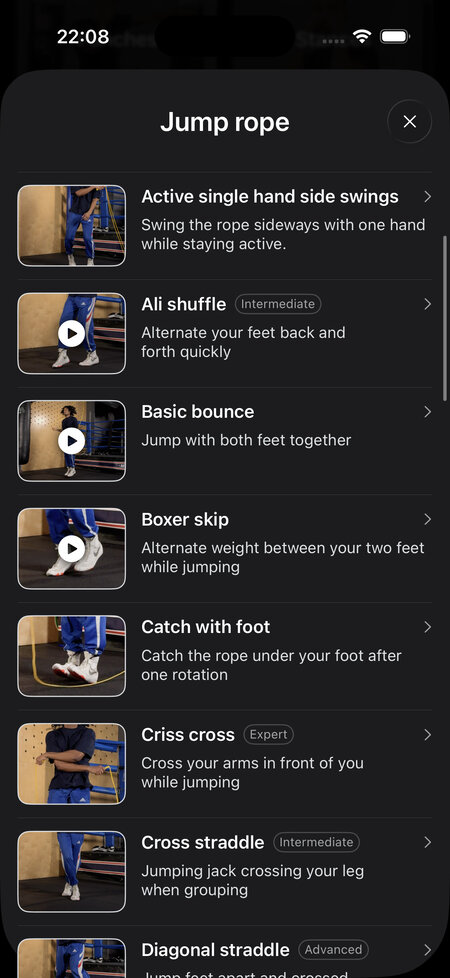
The fastest way to try it is Quick Start: flip on Use a jump rope and the app builds a session for you, footwork drills included. Have a look at the technique catalogue too if you want to see every rope movement broken down with a video before you train it.