
Cardio Boxing: Why Adding Punches to Your Conditioning Makes It Better
Running in place, jumping jacks, burpees. These work. They raise your heart rate and burn calories, and there is nothing wrong with them. But if you are training for boxing, spending a big chunk of your session on movements that have no connection to the sport is a missed opportunity. Cardio boxing exercises let you build the same fitness while actually practicing boxing at the same time.
What cardio boxing exercises are
The idea is simple: take a conditioning movement and add punches to it. Squats become squat-with-side-punches. Jogging in place becomes jog-with-jabs. Shuffles become lateral shuffles with a 1-2 thrown at the end. The cardio load is similar, but you are also reinforcing your stance, your guard, and your movement patterns while you do it.
This is not a new concept. Boxers have always mixed conditioning and technique in the same drills. What changes when you train at home without a coach is that the conditioning tends to drift toward generic exercises because they are easier to programme. Jumping jacks do not require you to think about form. A squat with side punches does.
Why it matters for skill development
Every repetition counts. When you spend 20 minutes on generic cardio, you are training your heart but not your boxing. When you spend 20 minutes on cardio boxing drills, you are training both. At the beginner stage especially, volume of practice matters a lot. More punches thrown in good form means faster progress on the basics.
There is also a coordination benefit that generic cardio does not give you. Throwing punches while your legs are moving teaches you to relax your upper body under fatigue, which is exactly the problem most beginners face when they start sparring or hitting the bag hard. Their shoulders tense up, their guard drops, and their punches shorten. Drilling that connection between legs and hands when you are tired trains the fix directly.
What this looks like in practice
A few examples of exercises that work well:
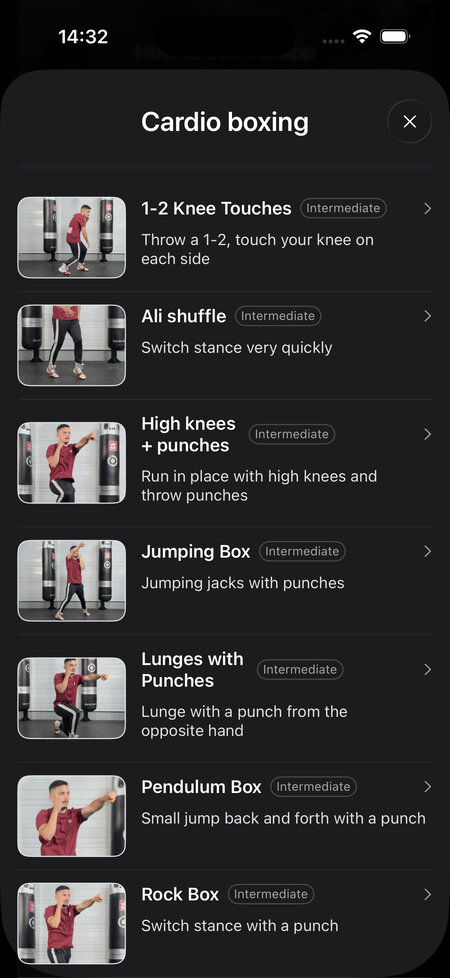
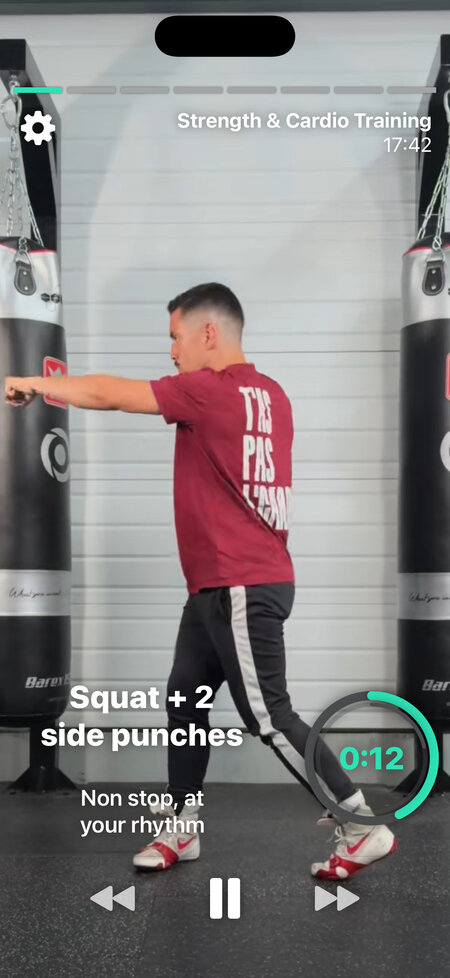
Squat with side punches. Drop into a squat, throw a hook to each side on the way up. Keeps the glutes and legs working while the arms stay active and the core stays engaged.
Jab while stepping. Step forward with the lead foot and throw a jab, step back and reset. Repeat for a full round. Simple, but it drills the connection between footwork and punching that beginners often miss.
Jog with combinations. Light jog in place, then call a combination and throw it, then go back to jogging. Works well as a warm-up format.
Punch burpees. Standard burpee, but at the top you throw a quick 1-2 before going back down. Brutal but efficient.
Where it fits in a session
Cardio boxing exercises work well in two places: as a warm-up or as conditioning rounds between more technical work. As a warm-up, they get the blood moving while cueing your body that boxing is happening, not a general gym session. As conditioning rounds, they keep the intensity up between rounds of bag work or technique drills without switching your brain out of boxing mode entirely.
They are not a replacement for actual technique training. If you only ever do cardio boxing circuits, you will get fit but you will not necessarily improve your boxing. The goal is to make the conditioning portion of your training as useful as possible, not to replace drilling with conditioning.
The Shadow Boxing App includes workouts that mix cardio exercises with boxing combinations so you are not manually programming this yourself. The technique catalogue also covers the individual movements if you want to brush up on form before adding them to a conditioning circuit.