There Are Only Three Punches in Boxing (Sort Of)
People who haven’t trained often assume boxing is simple to learn. There are basically three kinds of punches, you keep your hands up, you move your feet. An afternoon of practice and you’ve got the gist. The first part isn’t even wrong: almost everything thrown in a boxing match comes from three families. The trouble starts when you try to actually throw one well.

The simple version
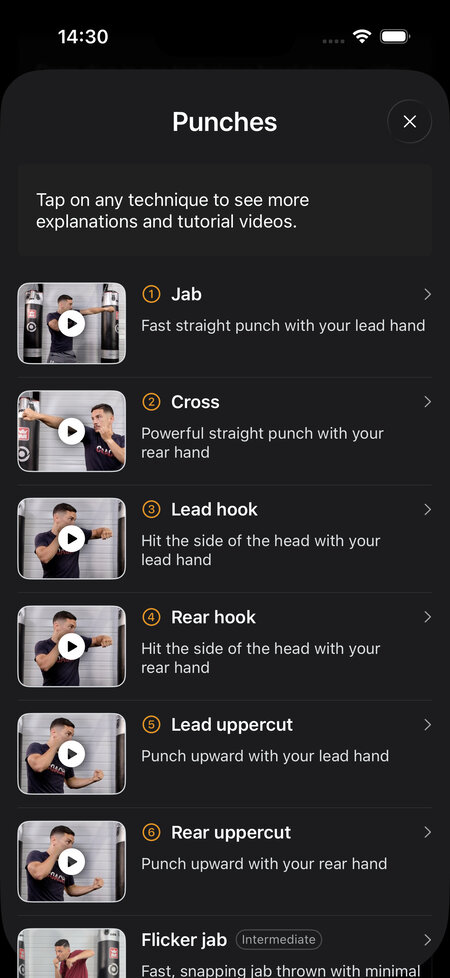
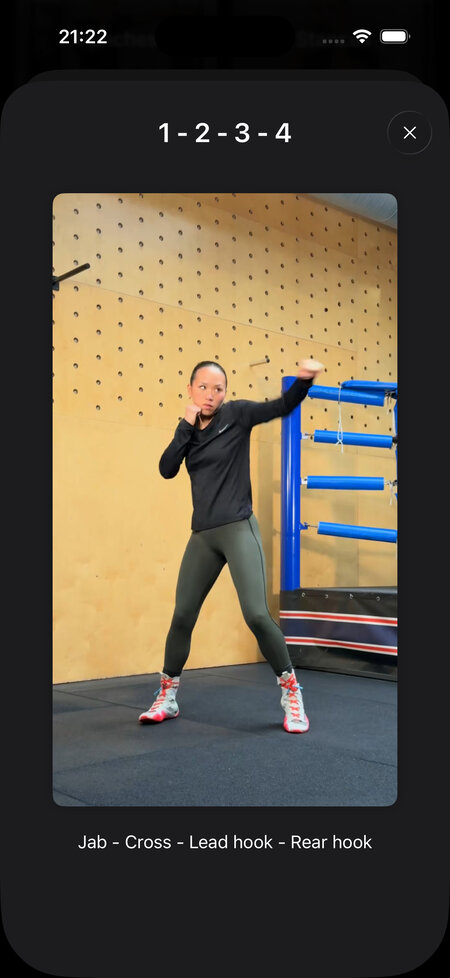
If you strip boxing down to its punches, there really are only three shapes. Straight punches travel in a line toward the target. Hooks come around the side in an arc. Uppercuts rise up from below. Throw each of those with your lead hand or your rear hand and you get six punches, which is exactly why most gyms number them 1 through 6: jab, cross, lead hook, rear hook, lead uppercut, rear uppercut.
That numbering is genuinely useful, and it’s how the Shadow Boxing App calls combinations out loud during a round. It also makes boxing sound like a closed system. Six options, learn them, done. If you’ve ever spent ten minutes throwing what you thought was a clean jab while someone who actually boxes watched, you know it doesn’t work like that.
Then you try to throw a jab
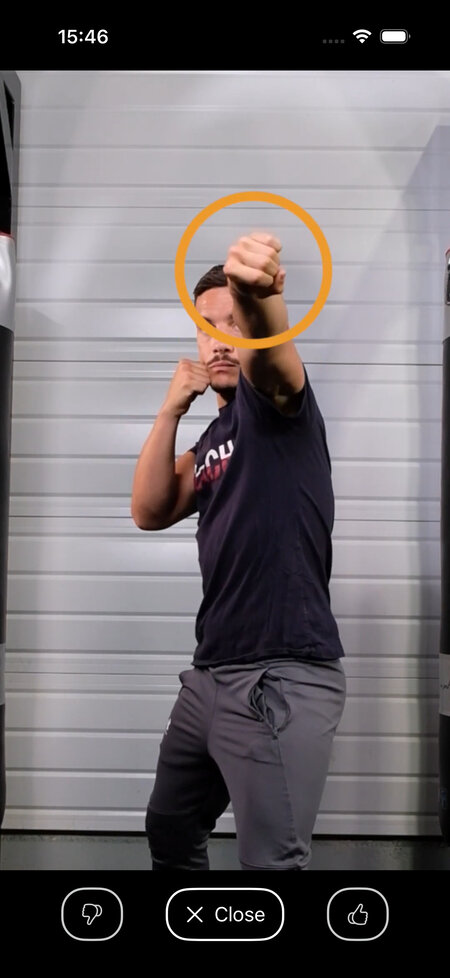
The jab is supposedly the simplest punch in the sport. It’s also the one I’d point to first when someone says boxing is just three punches, because the jab isn’t one thing. It’s a category.
- The range-finder. A quick jab you paw out to measure distance and annoy your opponent.
- The flicker jab. Fast and snapping with barely any shoulder behind it, thrown more to disrupt than to hurt.
- The step-in jab. You close distance with your feet and put real weight into it, which lands very differently from a jab thrown standing still.
- The double jab. Two in a row to break rhythm and walk someone onto the second one.
- The body jab. Makes you bend your knees and change levels before you throw.
- The feint jab. Thrown purely as a fake, where the whole point is that it doesn’t land.
Same punch on paper. Completely different timing, distance, intent, and mechanics. Learning “the jab” means learning all of those and knowing which one the moment calls for.
Every punch does this
The jab isn’t special in this regard, it’s just the clearest example. The same branching happens everywhere once you look.
The hook splits into a whole debate about whether your palm faces down or stays vertical at impact, and that’s before you get to the shovel hook or the check hook used to spin away from a charging opponent. The cross changes character depending on whether you sit down on it for power or fire it quick to beat someone to the punch. Uppercuts thrown to the head and uppercuts dug into the body feel like different moves entirely. Add in doubling punches, mixing levels, and throwing off either foot, and the six-punch starter set quietly turns into a long list.
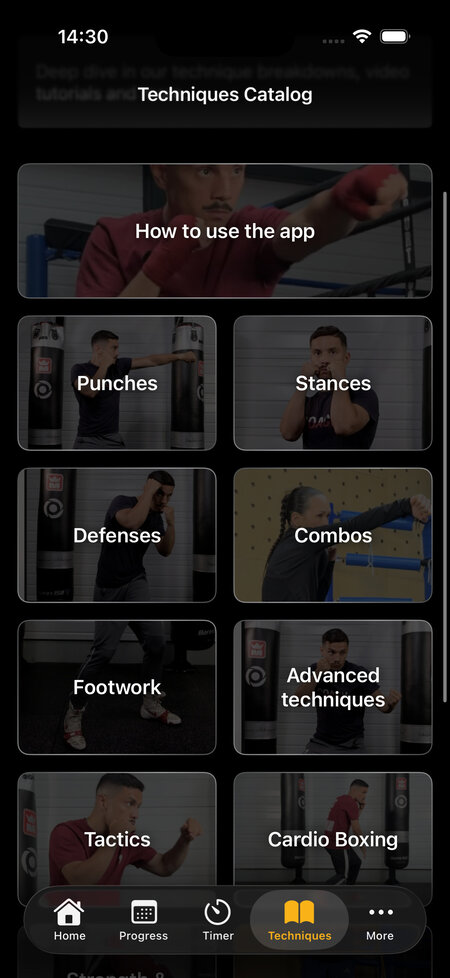
This is roughly why the technique catalogue in the app is organised the way it is. Punches sit alongside footwork, defenses, feints, and tactics, with each entry getting its own breakdown and tutorial video, because “jab” by itself isn’t enough information to train on.
The punch is only half the job
Here’s the part that makes boxing genuinely deep rather than just having a lot of named techniques: the punch you throw matters less than everything wrapped around it.
A jab thrown at the wrong distance is a wasted motion. The same jab thrown a beat after a feint, while your opponent is reacting to something that wasn’t real, can win you the exchange. Distance, timing, the setup before, the exit after, where your weight is, whether your guard comes back: all of that decides whether a punch does anything. Two boxers can throw the identical mechanical jab and have it mean completely different things based on when and why they chose it.
That’s the layer the numbering system can’t capture. The app can call “1” and you can throw a technically clean jab, but choosing the right jab, at the right range, at the right moment, is the skill that takes years rather than an afternoon.
Why this is good news for training
If boxing really were just six punches, you’d hit a ceiling fast and get bored. The depth is what keeps it interesting. There is always a variation to refine, a setup to add, a bad habit in your jab you didn’t know you had.
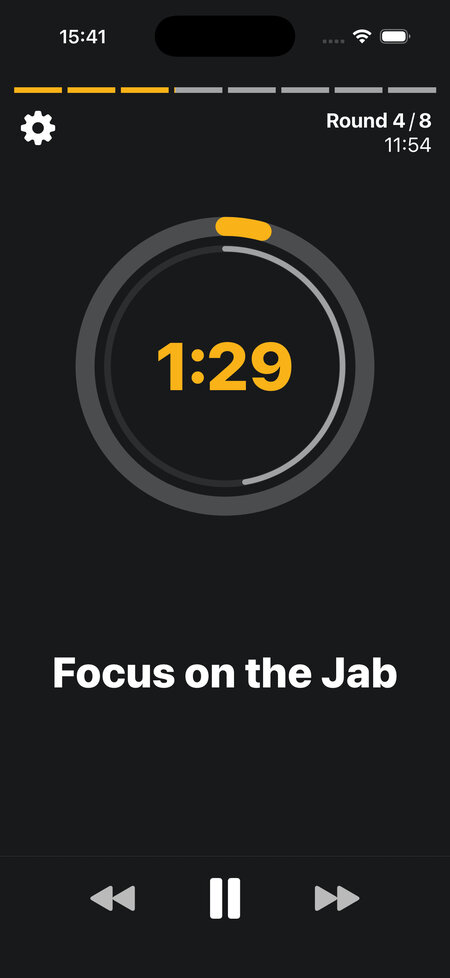
It also means you can train productively at any level. A beginner works on throwing a straight, balanced jab and getting the guard back, which is exactly what our boxing fundamentals guides walk through. Someone more experienced spends a round drilling nothing but jab variations: range-finder, double, step-in, body, feint. The app has exercises for exactly this, from a Foundation Jab session focused purely on form to a Focus on the Jab round that builds combinations around it. You can also browse the full technique catalogue and the in-app exercises to see how far past the basics it goes.
Three punches is the honest beginner’s summary of boxing. It’s also the reason the sport is still teaching people things decades into training. Both are true, which is sort of the whole appeal.