
Boxing After 40: How to Train at Home for Long-Term Health
40 is not old. It is the age where a lot of people finally have the patience, discipline, and self-awareness to take training seriously. The body has changed, sure, but the obstacles to picking up boxing at this stage are smaller than most people assume. You do not need a gym membership, a sparring partner, or the recovery of a 22 year old. You need a clear plan, a few square feet of floor, and the willingness to show up two or three times a week.
Why Boxing Works After 40
Boxing is one of the better full-body workouts available once you cross 40. It hits cardio, coordination, balance, and core stability at the same time, which matters more with each passing year. The cardiovascular gains are real, and the constant rotation through the hips and trunk keeps mobility honest in a way that lifting weights alone never will.
There is also a mental side that people underestimate. Throwing punches in rhythm forces you to think about timing, sequencing, and breath. It is closer to a moving meditation than a brainless cardio session, and that focus is genuinely useful when your week is already full of work, family, and the low-grade stress that piles up in your 40s. The broader health benefits of boxing go well beyond burning calories.
What Actually Changes After 40
Be honest with yourself about what is different. Recovery takes longer. Joints, especially shoulders, knees, and hips, want a proper warm-up before they cooperate. Sleep matters more than it used to. None of this means you cannot train hard. It means you have to train smart.
A few practical adjustments:
- Warm up for at least 8 to 10 minutes before any real work. A proper boxing warm-up is the difference between a sore week and a productive one.
- Train 3 to 4 days a week instead of 6. Two of those sessions can be lighter mobility or footwork days.
- Replace some of the impact volume with shadow boxing or pad work. Heavy bag every single day is not necessary, and over time it grinds wrists and shoulders.
- Sleep 7 hours when you can. This is not optional advice at this age.
Training at Home with an App
The biggest obstacle for most people over 40 is not fitness, it is logistics. Driving 25 minutes to a gym after work, dealing with a crowded class, then driving home is a system that breaks the first week things get busy. Training at home solves that, and shadow boxing is the most realistic at-home boxing format because it needs no equipment beyond a 5 by 5 foot patch of floor.
This is where the Shadow Boxing App earns its keep. The app calls out punches, runs the round timer, and structures the session so you are not standing in the living room wondering what to do next. There are programs aimed at total beginners, a Start Boxing in 30 Minutes program for people who want to throw their first punches today, and full structured workouts for people who already have some experience.
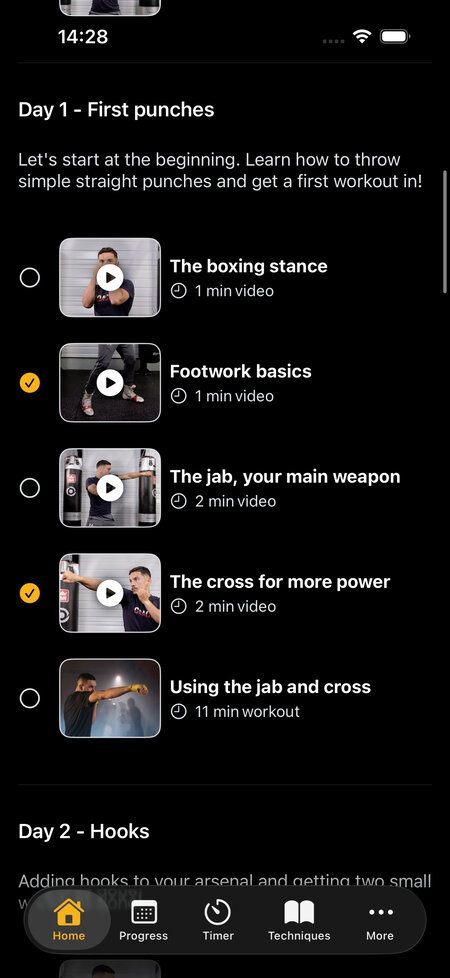
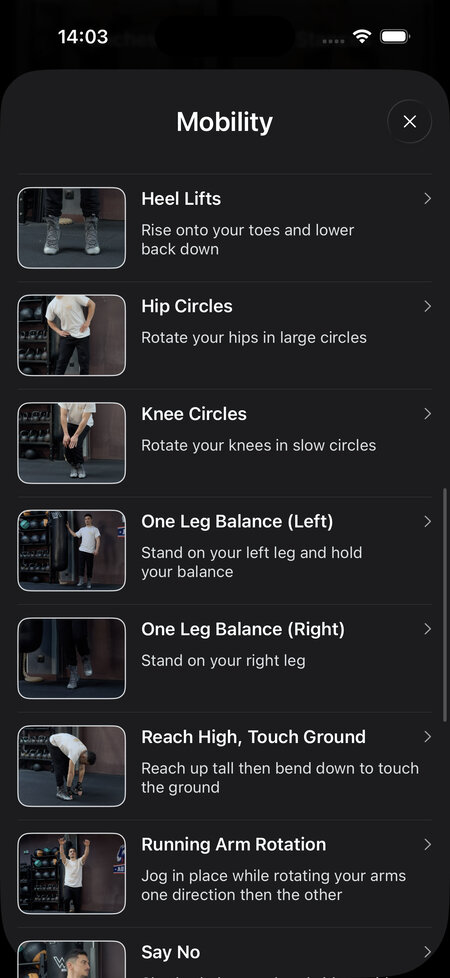
The mobility and warm-up exercises are particularly useful for the 40-plus crowd. The app includes a library of joint-friendly mobility work, from hip circles to controlled torso rotations, so you can build a proper warm-up routine without having to invent one from scratch. If you are coming back to training after years away, the getting back into boxing approach of slowly layering volume on top of mobility work is the safest way in.
A Realistic Weekly Plan
Here is what a sustainable week can look like for someone starting in their 40s:
- Monday: 20 minute beginner shadow boxing session, focus on the jab and cross.
- Tuesday: 15 minute mobility and footwork session.
- Wednesday: Rest, or a 30 minute walk.
- Thursday: 25 minute shadow boxing session with longer combos.
- Friday: Rest.
- Saturday: 30 minute session, a mix of cardio and technique.
- Sunday: Light mobility or active recovery.
That is roughly 90 minutes of real training per week. It is enough to see real fitness changes within 6 to 8 weeks, especially if you have been sedentary. There is no reason to do more in the first two months. The point is to make this a habit your body trusts, not a sprint that ends in tendinitis.
Stress, Breathing, and the Quiet Wins
One of the better-kept secrets of boxing training is what it does for your nervous system. Coordinating breath with movement, especially during longer rounds, has the same downstream effect as breathwork practices. Pair your training with a few minutes of slow breathing afterward, like the 4-7-8 breathing pattern, and you have a complete stress management tool, not just a workout.


The Honest Pitch
40 is a fine age to start boxing. It is also a fine age to come back to it after 15 years off. What you give up in raw recovery you gain in patience, consistency, and the ability to actually follow a training plan instead of bouncing between random YouTube workouts. Train at home, keep the sessions short and structured, warm up like an adult, and use an app to handle the timing and structure. That is genuinely most of what you need.