
How to Slip a Punch in Boxing
Most beginners learn to punch first and defend later. That’s understandable, but it creates a habit that’s hard to break: standing upright and eating shots while you figure out when to fire back. The slip fixes that. It’s a small movement, it’s efficient, and once it clicks, it changes how you think about boxing.
What the slip actually is
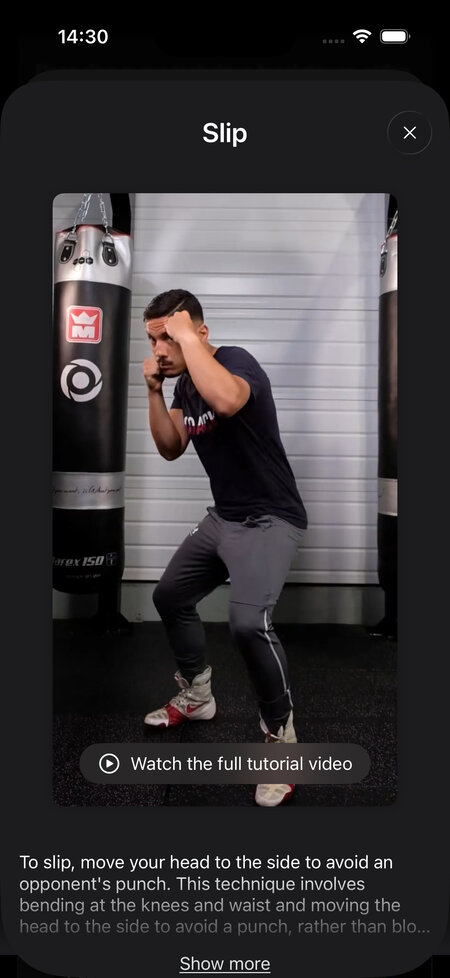
A slip is a lateral head movement that takes your head off the line of an incoming punch. Instead of blocking, you move so the punch misses. Done right, it’s barely noticeable from the outside: a few inches to the left or right, weight shifting onto the lead or rear leg, head dipping slightly while your hands stay up.
There are two versions. Slipping outside moves your head to the outside of the punch (away from your opponent’s body). Slipping inside moves your head between their arms. Outside is safer for beginners; inside opens up counter opportunities but leaves you more exposed if you misread the punch.
Both are worth learning. Start with outside.
The mechanics
From your regular stance, when a jab comes at your head:
- Bend slightly at the knees and rotate your torso
- Let your head move a few inches to the right (for orthodox fighters slipping a jab)
- Keep your weight balanced, not falling forward
- Hands stay at chin level throughout
The movement comes from the hips and knees, not the neck. If you’re just tilting your head, you’re doing it wrong and you’ll get hit by the follow-up cross. The whole upper body moves as a unit.
Coming back up is as important as going down. You want to return to your stance in a position where you can punch, not one where you’re recovering your balance.
The most common mistakes
Moving too early. If you slip before the punch is thrown, you’re telegraphing your defence. Your opponent adjusts, and now you’re out of position.
Moving too far. A big exaggerated dip looks impressive in slow motion but it takes too long and leaves you low for body shots. Keep it tight.
Dropping your hands. The guard comes down almost automatically when you slip, especially under fatigue. Keep it up.
Not countering. A slip puts you in a good position to throw back. If you’re slipping and then just returning to guard, you’re doing defensive work for no offensive payoff. A jab-slip-cross is a basic sequence worth drilling early.
How to practice it
Shadowboxing is the right place to start. Throw a jab in the mirror, then slip your own imaginary return. Feel where your weight goes, where your head ends up, whether your hands stayed up.
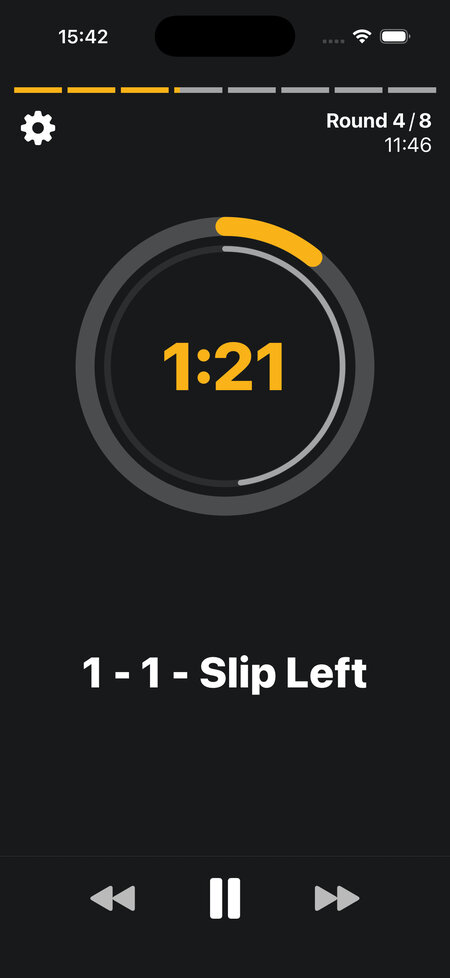
The next step is pairing the slip with combinations. The 1-1-slip (jab, jab, slip) is a good beginner drill because it connects offence and defence in a short, repeatable sequence. The Shadow Boxing App includes coached combinations that mix in slips so you’re not just throwing punches but building full exchanges.
Where it fits with the rest of your defence
The slip works best when it’s one of several tools, not your only one. Blocks and parries deal with shots you didn’t see coming. Rolling handles hooks and wide shots where slipping isn’t ideal. The slip is for straight punches: jabs, crosses, and the occasional stiff uppercut if you’re close.
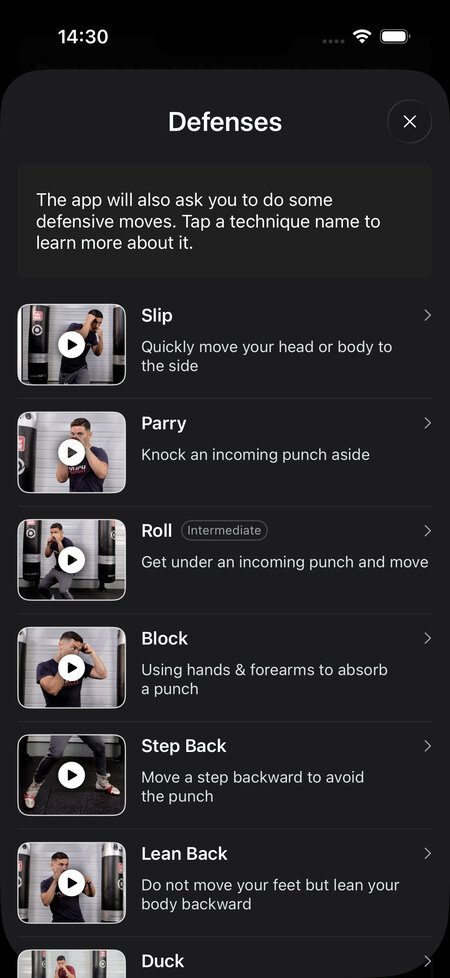
If you want a fuller picture of defensive movement, the technique catalogue covers slips, rolls, and guards in the same place so you can see how they connect.
Defence takes longer to feel natural than offence. That’s normal. Most people never drill it as seriously as their punching, which is exactly why a basic slip still fools experienced fighters. Put the time in early and it becomes instinct.