
Common Mistakes Beginners Make in Boxing
Most people starting boxing make the same handful of errors. Knowing what they are early saves you months of building bad habits you’ll have to undo later.
Dropping the guard
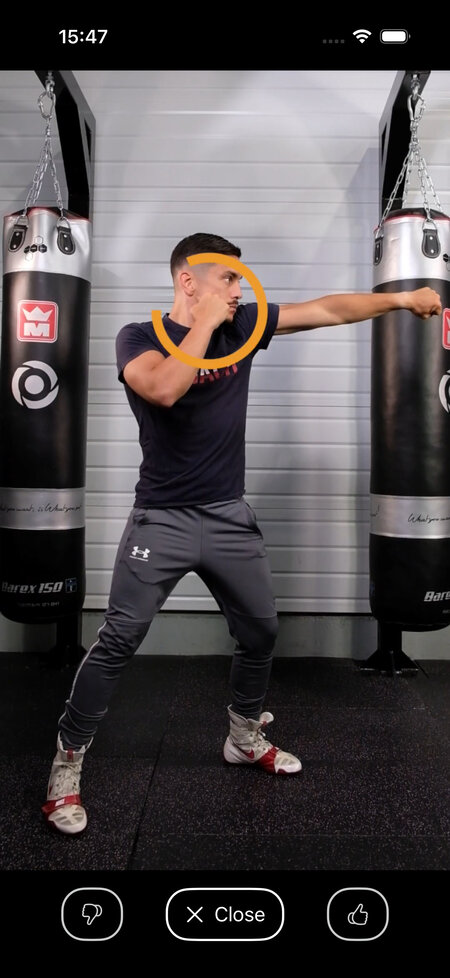
This is the most universal beginner mistake. After throwing a punch, the hand that just fired comes back slowly, drifts down to the waist, or doesn’t come back at all. The guard drops. Coaches correct this every single session with every new student.
The fix sounds simple: keep your hands up. In practice it takes deliberate repetition to build. Your arms get tired, you focus on throwing, and the guard collapses without you noticing. Shadow boxing in front of a mirror helps because you can actually see when it happens. Drill the retraction of every punch as carefully as the extension.
Standing flat-footed
New boxers tend to plant their feet and stop moving between combinations. They hit, then pause in place. In sparring this gets you countered immediately. In solo training it just reinforces a static habit that’s hard to break.
Good footwork isn’t complicated at the beginning: stay on the balls of your feet, keep a small bounce or shift of weight, and move after you throw. Even a small step left or right after a combination resets your position and keeps you from becoming a stationary target.
The footwork doesn’t need to be fancy early on. The goal is just to not be frozen.
Holding tension throughout the body
Beginners often punch with their whole body clenched the entire time. Shoulders up, jaw tight, arms stiff. It feels like effort but it’s the opposite of how boxing works.
Power comes from relaxation and snap, not constant tension. Your arm should be loose until the moment of impact. Tight muscles are slow muscles. You also gas out much faster when you’re carrying tension through every movement.
The cue most coaches use: shake out your hands between combinations. If you can’t do it, you’re too tight.
Focusing on power before technique
The instinct for most new boxers is to hit hard. Big swings, arm punches, loading up on everything. It feels satisfying but it builds the wrong foundation.
Technique first means developing the mechanics of a jab, cross, hook, and uppercut properly before adding power. A technically sound punch with moderate effort lands better and faster than a big haymaker with poor form. Power develops naturally once the movement is right. The reverse isn’t true: a powerful arm punch stays an arm punch.
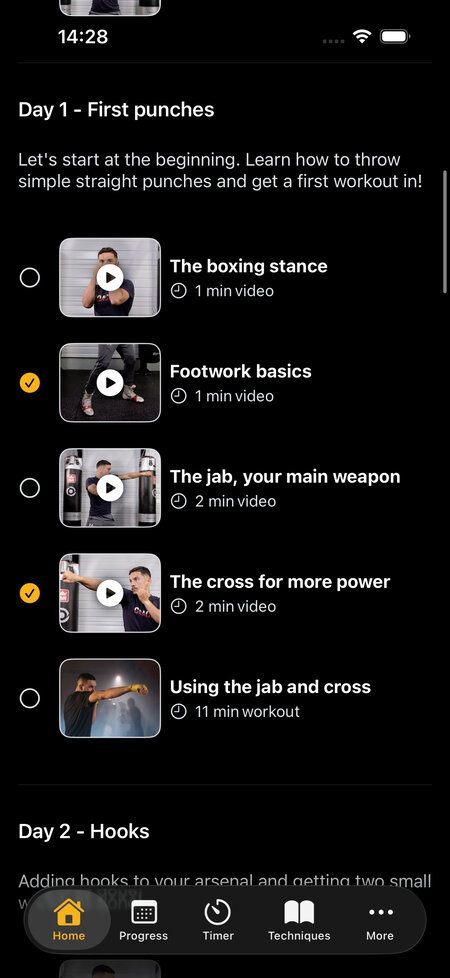
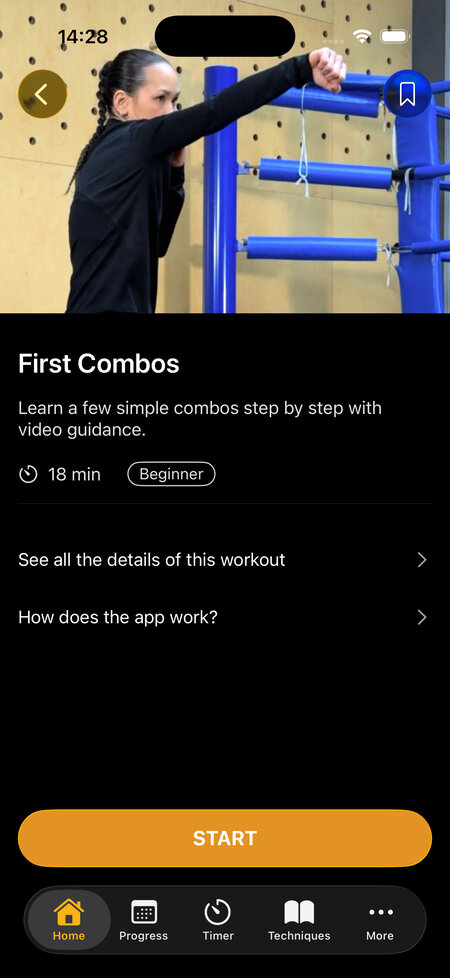
The Shadow Boxing App includes beginner programs that focus specifically on learning correct form before increasing intensity, which is the right order to do things.
Neglecting defence entirely
Most beginners spend their early months learning to punch and skip defence almost entirely. Blocking, slipping, rolling get treated as advanced topics, something to get to later. But the habits you build first are the ones that stick, and training with no defensive awareness creates a reflex of just standing and trading.
You don’t need to master every defensive technique right away. But learning a basic slip and a standard guard from the start means defence becomes part of how you box, not an afterthought added later.
Telegraphing punches
A telegraphed punch is one that announces itself before it arrives: cocking back the arm before the jab, dipping the shoulder before the hook, winding up the cross. At the beginner level this is almost universal and feels natural, because it seems like it should generate more power.
In practice it does the opposite. It slows the punch down, warns your opponent, and removes the element of surprise that makes combinations work. Clean punches come from the guard position directly, without any preparatory movement.
Shadow boxing in front of a mirror is again the tool here. Watch for the tells and consciously remove them.
Forgetting to breathe
Breathing sounds automatic until you’re actually throwing punches and you realise you’ve been holding your breath for a full combination. Thirty seconds of that and you’re already gassed.
The habit to develop is exhaling sharply with each punch. It keeps your breathing rhythm tied to your movement, engages your core, and prevents the breath-holding that drains you faster than the cardio should.
If you’re consistently winded much faster than you expect, check your breathing before assuming it’s fitness. It often is.
None of these mistakes are embarrassing or unusual. They’re exactly what every coach expects to see from someone new to boxing. The advantage of knowing about them early is that you can watch for them in your own training rather than waiting for someone to point them out after the habit is already set. The technique section covers the mechanics of each punch and movement in detail if you want to go deeper on any of these.