
How to Structure a Shadow Boxing Home Workout
Shadow boxing at home is one of the most practical workouts you can do: no equipment, minimal space, and the full range of boxing skills available to train. The problem most people run into isn’t motivation, it’s structure. Without a coach calling combinations or a timer on the wall, sessions tend to drift into aimless movement that doesn’t build much. Here’s how to avoid that.
What you actually need
A space roughly six feet by six feet is enough. You need room to step forward, back, and laterally without hitting furniture, nothing more. Hard floors work fine; you don’t need a mat.
No gloves needed for shadow boxing, though some people like the weight. No mirror required either, though it’s useful for checking your guard and posture if you have one available.
A timer is the most important piece of kit, and your phone covers that. The app includes a free round timer if you want one built for boxing specifically.
A basic session structure
Three-minute rounds with one minute of rest is the standard, and it works well for home training. Start with four rounds for a beginner session, six to eight as your fitness builds. Here’s how to use each round rather than just throwing punches for three minutes.
Round 1: movement only. No punching. Work your footwork: step in, step out, circle left, circle right. Stay on the balls of your feet, keep your guard up, breathe. This doubles as your warm-up and forces you to actually practice movement instead of treating it as an afterthought.
Round 2: jab and cross only. Pick two or three short combinations built around the 1-2. Throw them, reset your stance, move, throw again. Focus on snapping the punch back to guard rather than leaving your hand out. Quality of the individual shots matters more than volume here.
Round 3: full combinations. Introduce hooks and uppercuts. Work longer sequences: 1-2-3, 1-2-3-2, 1-2-body-head. Don’t just go through the motions; visualise an opponent, time your punches, move your head after combinations.
Round 4: defence and counters. Throw a punch, then slip or roll the imaginary return. Step off-angle after combinations. This is the round most people skip entirely when training alone, which is exactly why it matters.
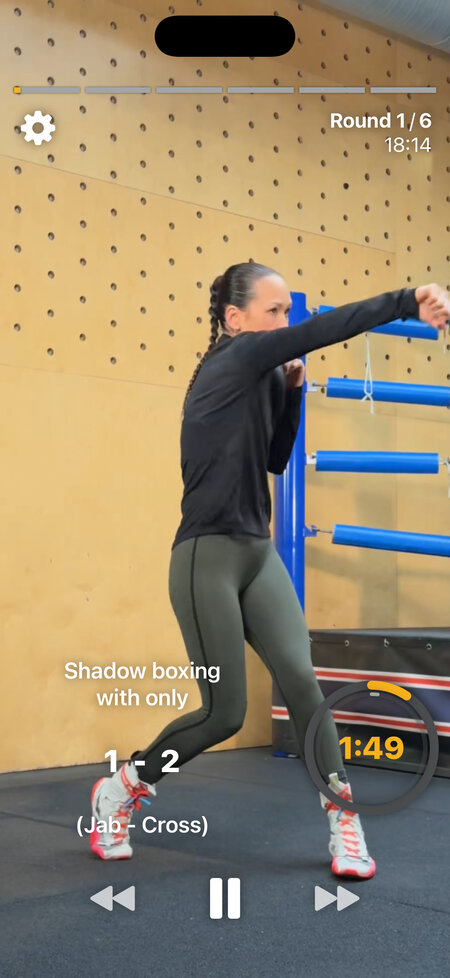
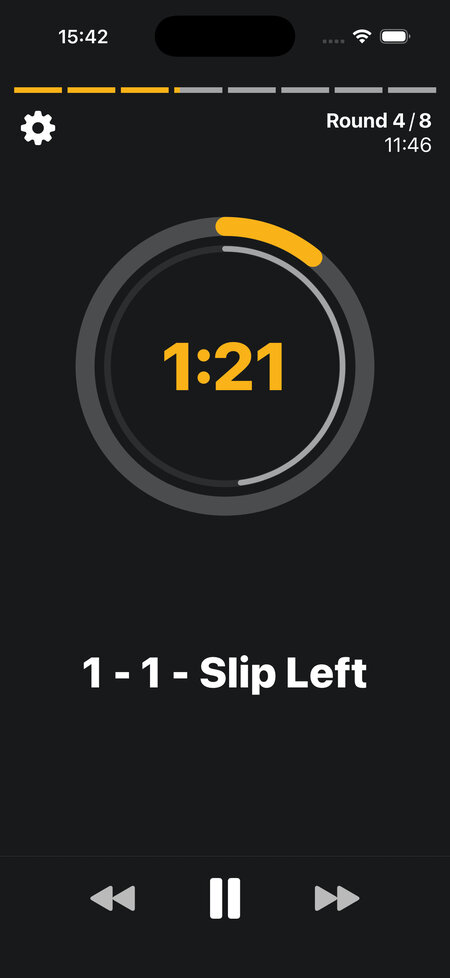
Add rounds as your fitness allows, cycling between these themes or repeating the ones you most need to work on.
What to focus on when there’s no coach watching
Without external feedback, it’s easy to develop bad habits without noticing. A few things worth checking regularly:
Guard position after every combination. Hands come down naturally under fatigue. After each sequence, pause for half a second and confirm both hands are back at chin height before moving.
Breathing. Exhale with each punch. If you’re gassing out faster than expected, check whether you’ve been holding your breath through combinations.
Stance after movement. After footwork, check that your feet are still in the right position. It’s common to gradually square up and lose the orthodox or southpaw stance without realising.
Head movement. In a gym, you move your head because punches are coming. At home, there’s no consequence for standing still, so the habit doesn’t develop naturally. Make it deliberate: slip after every jab, roll after every hook, at least during the defence round.
Using an app to replace the structure
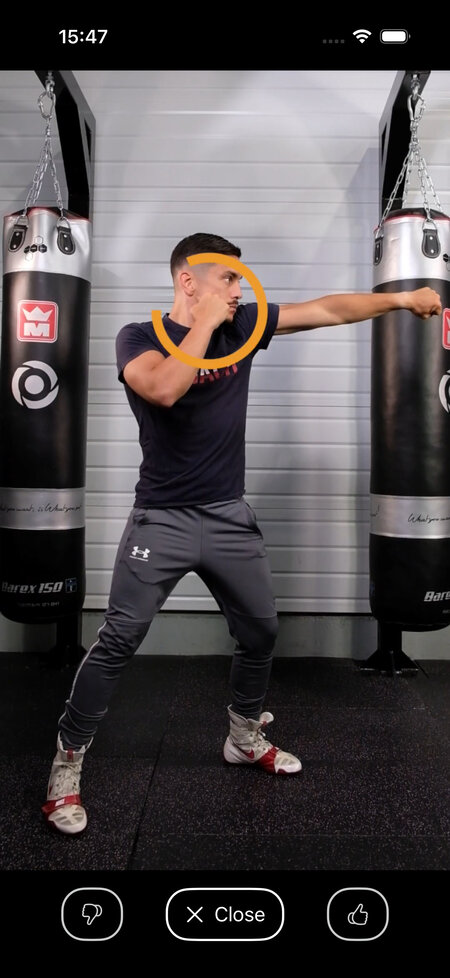
The hardest part of solo training is providing your own direction for the full session. It’s mentally tiring to both train and coach yourself at the same time. That’s where the Shadow Boxing App helps: it calls out combinations, manages the round timer, and tells you what to work on so you can focus on actually boxing.
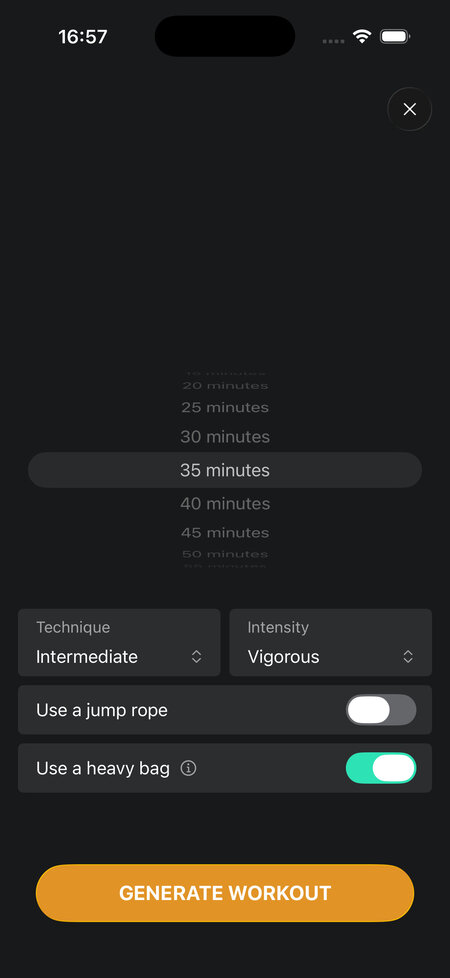
The beginner programs start with short, simple sessions and build from there, which is a reasonable way to learn the structure before running your own rounds. The quick start feature generates a varied workout from a few basic parameters, so each session is different without requiring you to plan it yourself.
How often and when
Three sessions a week is a solid starting point. Shadow boxing is lower impact than bag work or sparring, so recovery is less of a concern, but you still need rest days for the skill to consolidate.
Morning works well for most people because the session is done before the day intervenes, but the timing matters less than the consistency. A short session you actually complete beats a long one you keep postponing.
Twenty minutes including rest periods is enough to see real progress. You don’t need an hour.