
Why Drilling a Few Combos Beats Memorizing a Hundred
Watch enough boxing YouTube and you’ll come across “50 Boxing Combinations You Need to Know” videos. They rack up millions of views. But talk to anyone who’s actually sparred, and they’ll tell you the same thing: when things get fast and you’re tired, you throw what you know without thinking. That’s usually about five combos.
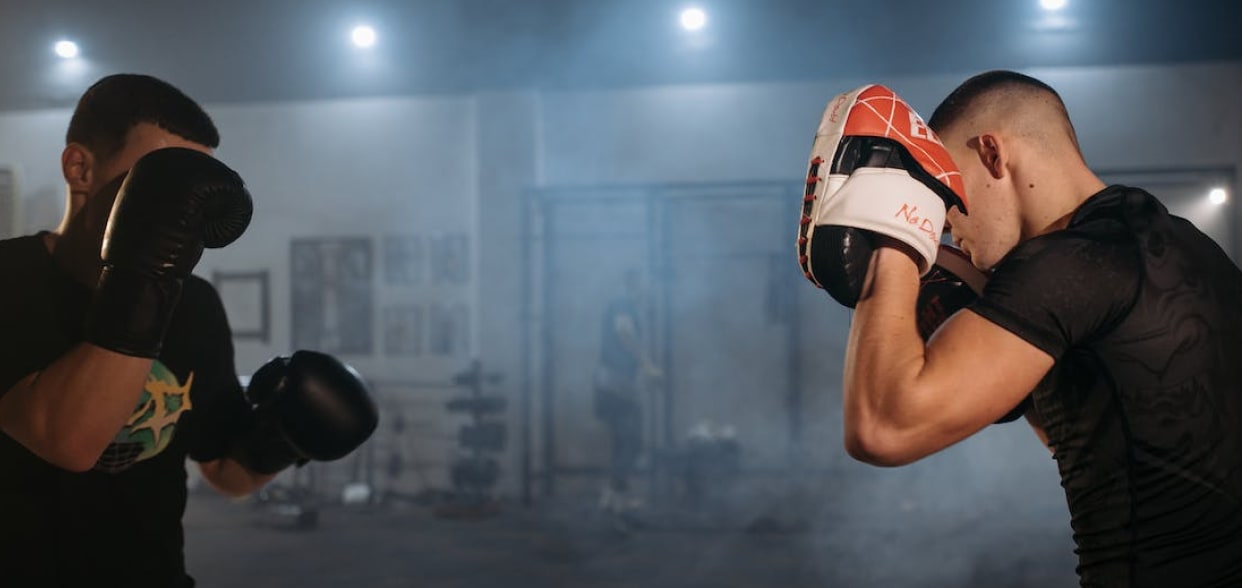
The problem with collecting combos
Learning a new combo is satisfying. It feels like progress. But there’s a gap between knowing a combo and owning it, and that gap only closes through repetition.
When you’re fresh and focused, you can run through almost anything. Add some fatigue, add a moving target, add some pressure, and your brain starts pulling from a much shorter list. Only the sequences that are truly automatic survive that filter.
A 10-punch combination you’ve drilled twice is worse than a 3-punch combination you’ve thrown ten thousand times. The second one comes out clean, at the right moment, without you having to think. The first one stalls mid-sequence and leaves you hanging.
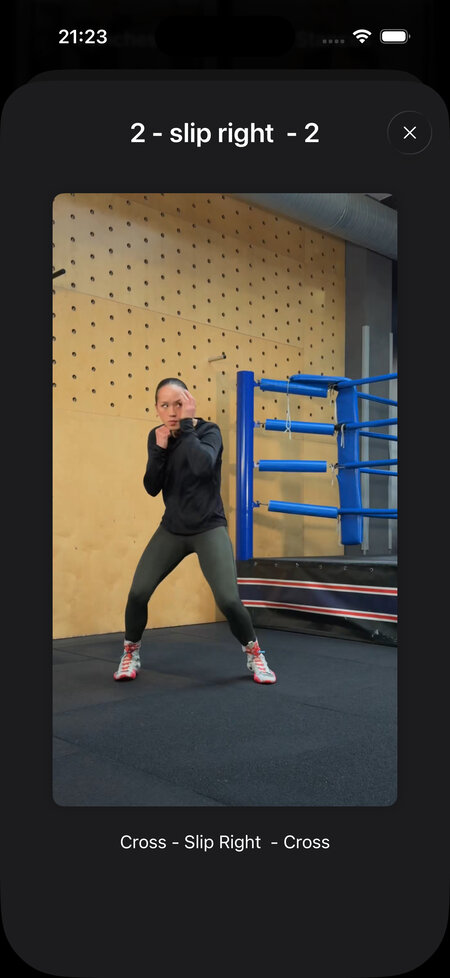
Some combos just don’t make sense
Not every combo you’ll find on a list is worth drilling. Some of them look fine in isolation but fall apart in any realistic context.
A few things to watch out for:
Combos that end in a bad position. If you finish a sequence and your weight is loaded on the wrong foot, or your rear hand is nowhere near your face, you’ve handed someone a free shot. The ending of a combo matters as much as the beginning.
Combinations that are just too long. Eight or nine-punch sequences exist mostly as conditioning drills, not as realistic fighting patterns. Your opponent isn’t going to stand still while you run the whole thing. Long combos have their place in training, but they shouldn’t be your foundation.
Combos built for pad work, not for actual use. Pad sessions with a cooperative coach can drift toward choreography. You call the number, the coach holds the pad there, you hit it clean. That’s useful for drilling movement and timing, but the combo itself might only work because the pads were exactly where you needed them. Some of those sequences just don’t translate.
Flows that feel unnatural. If you have to consciously think about the transition between two punches every single time, that’s a signal. Some punch pairings are just awkward, and drilling an awkward sequence for years doesn’t make it feel better, it just makes it a deeply ingrained awkward sequence.
How to pick your core list
You don’t need many. Five or six solid combinations is enough to build a whole training session around. Here’s a rough way to think about it:
Start with the jab-cross. It’s everywhere because it works. Range control, timing, sets up everything else. If you own nothing else, own this.
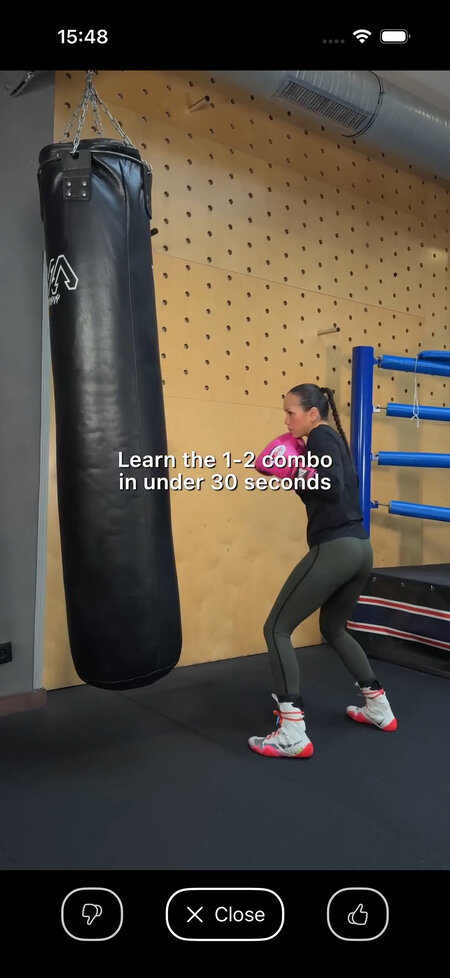
Add something that changes levels. A jab-cross-body shot, or a jab-body-head combination. Mixing targets keeps you harder to read.
Add something that uses a hook. The 1-2-3 (jab-cross-lead hook) is a classic. Get it tight and fast.
Add a shorter entry for when you’re close. Not everything needs to start with a jab from the outside. A rear hook to body, rear uppercut can work from a clinch break.
After that, build based on what you’re actually working on. If you’re improving head movement, add a combo that ends with a slip. If you’re working counters, drill a simple two-punch answer to the most common attacks you see.
That’s it. Five or six. Write them down if it helps.
How to actually drill them
Knowing your list is the easy part. Drilling is where most people skip steps.
Slow first. Throw each combo at maybe 40% speed and focus entirely on technique: weight transfer, hand recovery, guard position at the end. This is when you catch and fix bad habits before they get permanent.
Then add speed gradually. Once the technique holds at 70-80%, push the pace. Don’t jump straight to full speed before the mechanics are solid, or you’ll just reinforce whatever you’ve already been doing wrong.
Then add movement. Throw the combo, step out at an angle, reset your stance. Static drilling has limits. Your combinations should eventually work while you’re moving.
Shadow boxing is genuinely the best tool for this, because you can throw the same combo 40 times in a round without needing a partner, pads, or a bag. The feedback is internal: does it feel clean? Is the last punch leaving you balanced?
Repetition isn’t boring, it’s the point
There’s a tendency to confuse variety with progress. Doing the same combo over and over can feel like you’re not going anywhere. But that repetition is exactly how you get to the point where it’s automatic. That’s what muscle memory actually means: you’ve done something so many times it no longer requires conscious effort.
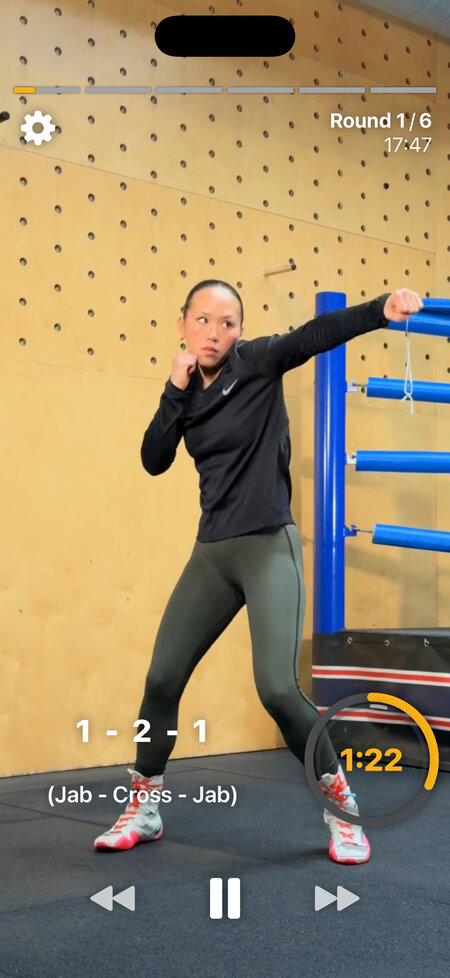
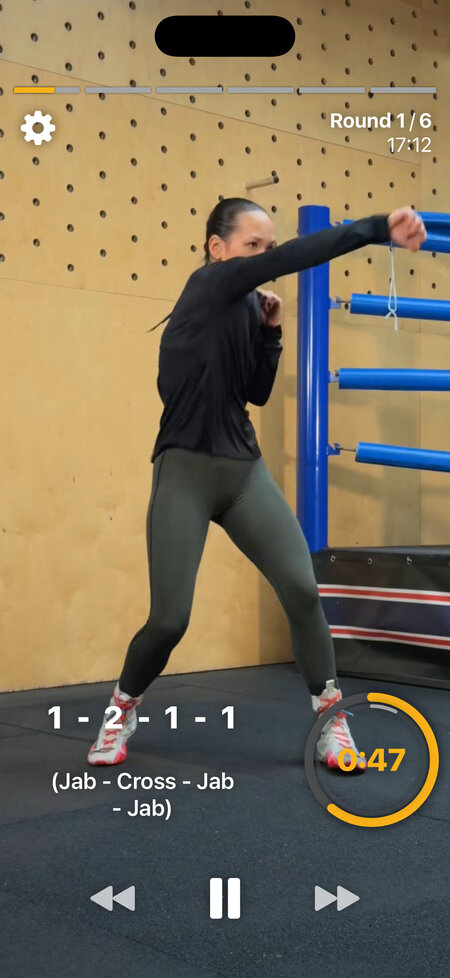
The Shadow Boxing App has a feature that calls out combinations during your rounds, which helps if you want to work on specific sequences without having to stop and check your notes. You can also build your own combos in the Combo Creator and have the app call them out, which is useful when you want to focus on your personal shortlist rather than a random selection.
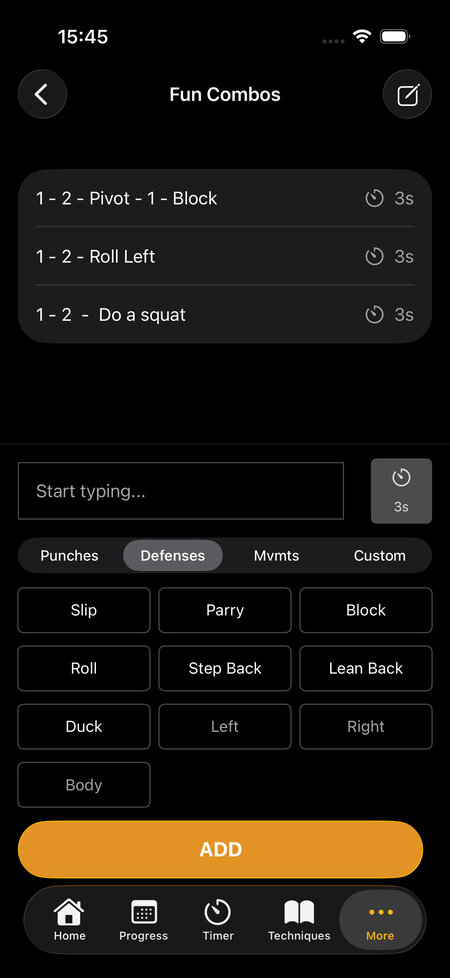
One thing that works well is building a combo up in layers. Start with the 1-2. Just that, clean and fast. Once that’s solid, add a step back after it: 1-2, step back. Then add a punch off the exit: 1-2, step back, 2. Each layer adds something new, but you’re always building on something you already own. The app supports this approach directly: you can create a version of the combo with just the first two punches as its own exercise, then create a second exercise with the full sequence, and work through them in order during the same session.
The goal isn’t to have a long list. It’s to have a short one you can actually use.