
Jump Rope for Boxing When You Can't Jump Rope Yet
Most adults starting boxing find the jump rope harder than the punching. That’s not a failure of coordination. It’s just that jump rope is a skill most people haven’t touched since school, and adult bodies don’t relearn motor patterns as automatically as kids do. The good news is the progression is predictable, and the beginner phase doesn’t last long if you approach it properly.
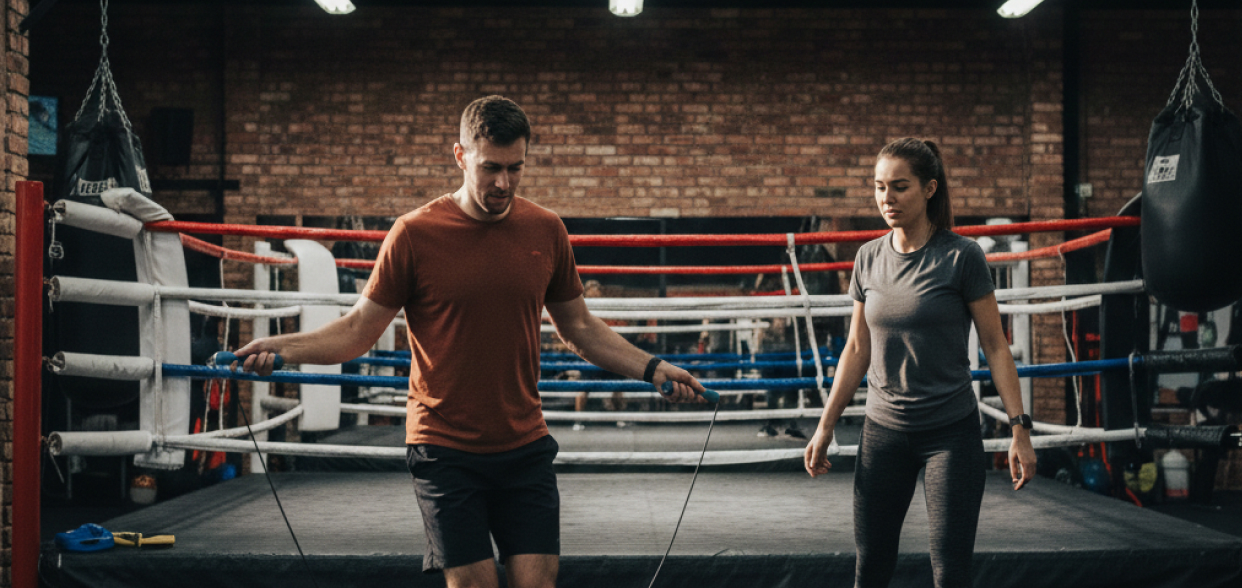
Why adults struggle with it
Kids learn jump rope by doing it constantly, in short bursts, without overthinking. Adults tend to do the opposite: they try it a few times, trip, get frustrated, and either quit or avoid it by warming up on the bike instead.
The problem usually isn’t fitness. It’s timing. The rope comes around faster than expected and you either jump too early, too late, or too high. Your arms get tense, the arc gets uneven, and the whole thing collapses. The fix isn’t trying harder. It’s slowing down and building the timing separately.
Start without the rope
This sounds odd but it works. Before worrying about the rope, practice the jump itself. Stand in your boxing stance, relax your shoulders, and do a small repeated bounce on the balls of your feet. Not a full jump: barely leaving the ground, like you’re staying light between combinations.
This is actually the motion you want under the rope. Most beginners jump too high, which is tiring and throws off the timing. The right movement is barely a bounce, an inch or two off the ground, landing softly on the balls of your feet.
Once that feels natural, add imaginary arm circles. Loose wrists, small circles at hip height. Get the rhythm of arms and feet together before the rope enters the picture.
When you do pick up the rope
Hold the handles at hip height, not shoulder height. Keep your elbows slightly bent and close to your body. The rope should turn from your wrists and forearms, not your whole arms.
Start with single jumps: one rotation of the rope, both feet landing together, then pause. Don’t try to string together a full minute yet. Ten or fifteen consecutive rotations without tripping is a real benchmark at the start. Work toward that before worrying about duration.
The most common errors at this stage:
- Jumping too high: wastes energy and breaks rhythm
- Looking down at the rope: fixes your gaze and collapses your posture; look straight ahead
- Arms drifting wide: the circle gets bigger and the rope hits your feet; keep elbows close
- Holding your breath: same problem as with punching; exhale and stay loose

The boxer skip
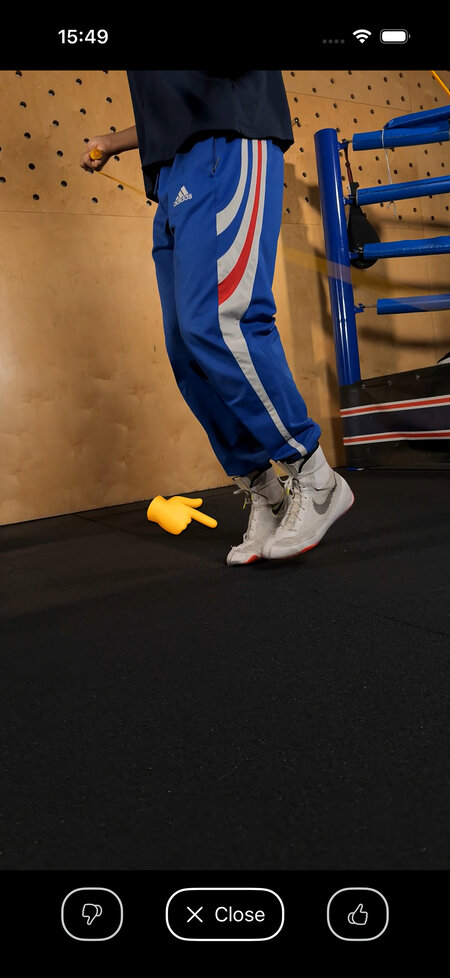
Once you can do a few dozen consecutive rotations, start learning the boxer skip. Instead of both feet landing together each time, you shift your weight slightly from foot to foot in a small rocking motion. It’s not a full alternating run, more of a subtle weight transfer.
This is the style you see boxers using. It looks effortless because the movement is minimal. It also happens to be easier to sustain than the two-foot bounce once you’re comfortable with the timing, because it reduces impact and lets you stay looser.
Don’t rush it. If you’re still tripping regularly with the basic bounce, the boxer skip will just add confusion.
How much to do and when
Jump rope early in a session, after a light warm-up but before the main work. Your timing and coordination are better when you’re fresh. Starting a session with five minutes of rope is enough at first: it’s active warm-up and skill practice at the same time.
As your consistency improves, build toward longer stretches. Most boxing warm-ups involve two or three rounds of rope (three minutes each with a short rest), but that’s a target for several weeks out, not day one. Five minutes straight without stopping is a reasonable first goal.
Don’t skip rest days from it. Jump rope is repetitive impact and the calves in particular need recovery time, especially when you’re getting started.
What it unlocks
Jump rope doesn’t just develop cardio. The timing, the rhythm, and the light footwork carry over directly to shadow boxing and bag work in ways that are hard to get any other way. Boxers who can move well almost always have solid rope work underneath it.
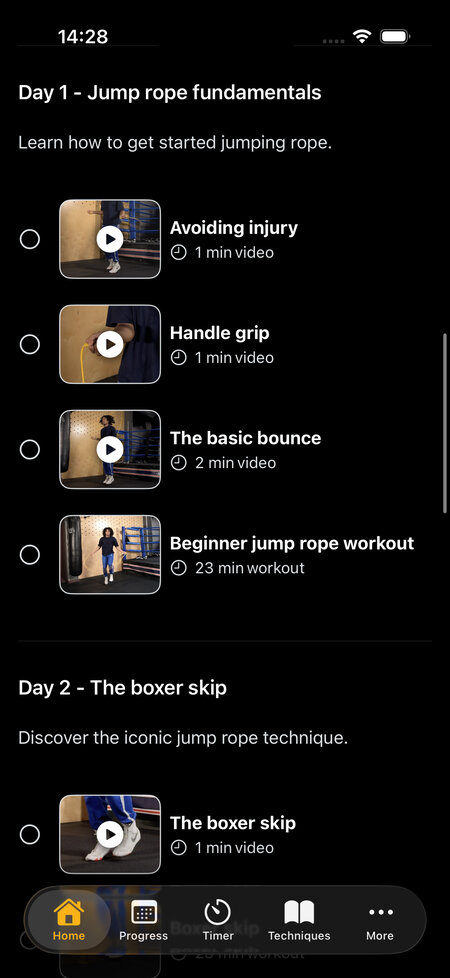
The Shadow Boxing App has structured jump rope programs that progress from beginner to advanced, useful once you have the basic mechanics down and want to train with guidance rather than just free skipping. The technique section also covers the main rope styles if you want a reference for what you’re building toward.